Holiness is Enduring God's Glance
A reflection for Good Friday
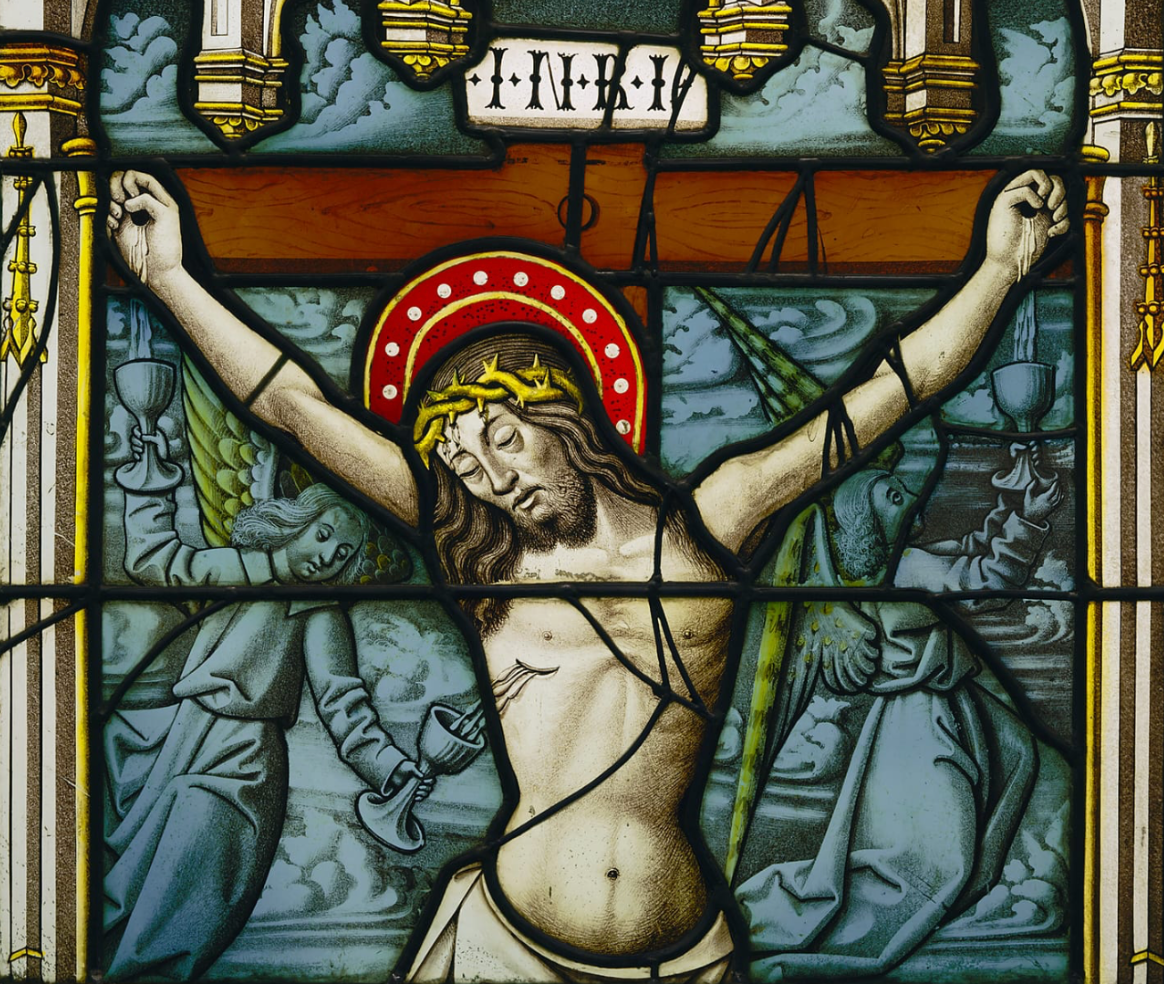
Whether you are Catholic, Protestant, or Orthodox, this weekend marks a critical turning point in the season of Lent. For the last forty days, the Church has invited us to take up our own crosses, to voluntarily suffer, in order to become free of our passions (anger, lust, selfishness, etc.) that lead us to sin and, instead, in our suffering, call again upon Christ our God. But now, the time is no longer about us. It is not about our efforts. Orthodox Christians feel this turn in the celebration of Lazarus Saturday tomorrow and Palm Sunday the day after that, but Christians in the West feel this especially today as they enter Good Friday, the day of Christ's crucifixion.
We wanted to leave you today with a moving passage from the Catholic theologian, Hans Urs von Balthasar, on what holiness is: the ability to endure God's glance. Today or this week: can we endure Christ's glance from the Cross? Or in the words of St. Augustine, can we "look back at Him who is looking at us"?
Holiness consists in enduring God's glance. It may appear mere passivity to withstand the look of an eye; but everyone knows how much exertion is required when this occurs in an essential encounter. Our glances mostly brush by each other indirectly, or they turn quickly away, or they give themselves not personally but only socially. So too do we constantly flee from God into a distance that is too theoretical, rhetorical, sentimental, aesthetic, or most frequently, pious. Or we flee from him to external works.
And yet, the best thing would be to surrender ones naked heart to the fire of this all-penetrating glance. The heart would then itself have to catch fire, if it were not always artificially dispersing the rays that come to it as through a magnifying also. Such enduring would be the opposite of a stoic's hardening his face; it would be yielding, declaring oneself beaten, capitulating, entrusting oneself, casting oneself into him. It would be childlike loving, since for children the glance of the father is not painful: with wide-open eyes they look into his.
Share this Post on Your Preferred Platform