Gone the Light the World Knew!
A reflection for Orthodox Great and Holy Friday
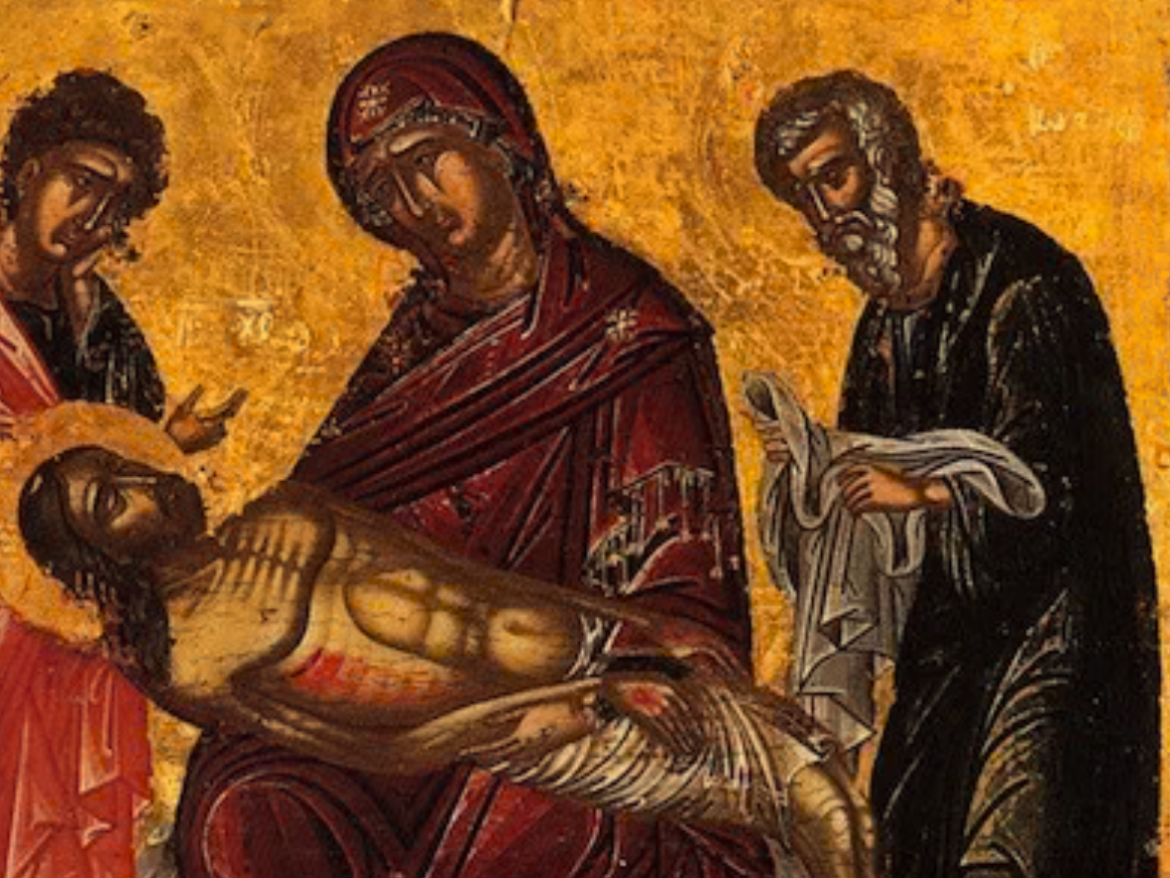
I've always taken Athanasius' On the Incarnation as a Christmas (not an Easter) book, but as I found myself reading from it this week, I was struck by Athanasius' total and complete resolve in the power of the Cross. He masterfully goes into so many elements of Christ's crucifixion and resurrection and why each of these are absolutely essential for Christ's saving act: the vertical appearance of the Cross as opening a gate between us and the Father in Heaven, the necessary day between His death and resurrection, in case we had any doubts that Christ had truly and completely died before He rose again. Athanasius isn't even twenty years old and already he has zero doubt in the necessity of what needed to happen for Christ to save the world.
It was Athanasius' confidence that exposed my lack. No matter how many times we journey through Holy Week, there always comes a moment in the Church's dramatic invitation, Her re-membering of the most sacred events of the story of Her Bridegroom, that I get turned around. Whether I know the ending of the story or not, there always comes a moment in which I still think something is going wrong.
If you ever have the chance to attend an Orthodox Holy Friday Lamentations service, happening this evening across the globe and featuring ancient hymns sung from the perspective of Mary, I haven't found anything else that so clearly and beautifully voices this same sense of unease, of sincere tragedy. For who else could feel the seeming tragedy of Our Lord's crucifixion more acutely than His own mother?
When the Ewe that bare him
Saw them slaying her Lamb,
Tossed by swelling waves of pain she wailed forth her woe
And moved all the flock to join her bitter cries.
Gone the Light the world knew!
Gone the Light that was mine!
O my Jesus, that art all of my heart's desire:
So the Virgin spoke lamenting at thy grave.
And yet, if you follow these hymns long enough, you see the constant back and forth from grief to resolve. Even Mary knows her own grief is shortsighted; she knows, somehow, that the suffering of her Son is not the end.
When, O Christ our Maker,
Thou was laid in thy tomb,
The foundation stones of Hades with ruin shook,
And the graves of mortal men were opened wide.
If Athanasius is right that every aspect of Christ's journey to and through the Cross was ordained, maybe our wavering from the heights of Palm Sunday to the depths of Holy Friday (as it must have been, too, for His disciples) is ordained, too. Maybe we are supposed to feel this inevitable unease, even two thousand years later, only that our final hope in the resurrection may be all the sweeter.
Share this Post on Your Preferred Platform