What Warren Gave Me
In Memory of Warren Farha, 1955-2026
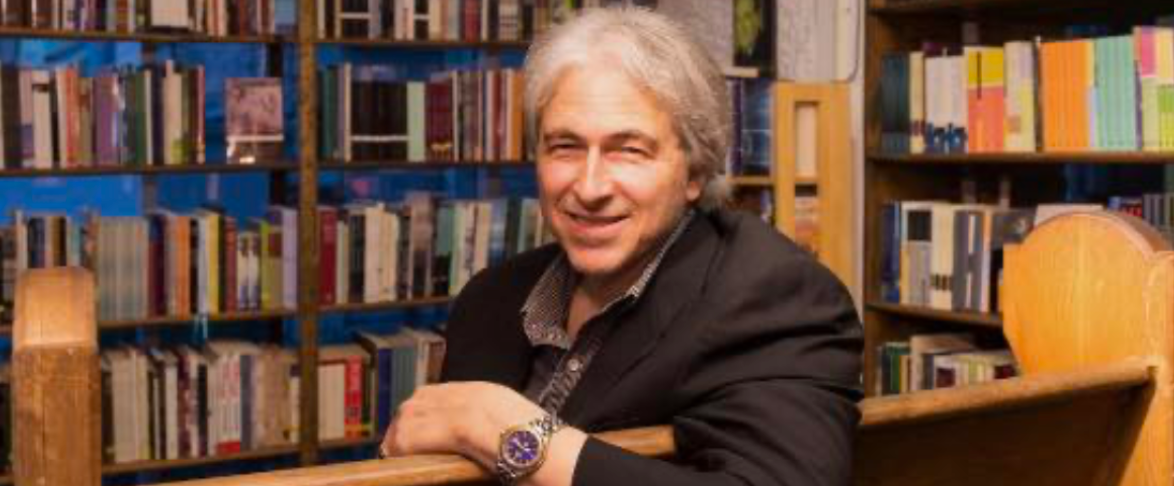
Once, while I was still working at Eighth Day Books, I traveled with Warren to The Glen Workshop in Santa Fe, where hundreds of artist-seekers from across the country came to love and expect him there. Only, this year the community was mourning one of their most beloved artists, Dana Dawkins, and on the opening night of the event, Warren was to give a eulogy for her in the packed auditorium. I don't remember what he said about her; I only remember wishing Warren wrote and spoke publicly more often, because the room pulsed with significance. He left everyone mourning and yet with a kind of radiance.
For me, the radiance didn't end there. Mourning Dana continued once we were back home in Wichita, because her family had donated her volumes of art books to be sold at Eighth Day. By his example, without saying so, Warren taught me to hold these books, each with her iconic signature on the title page, with complete reverence. When you shelved or sold one of Dana's books, more than the book itself, you were holding the weight of this person and the weight of what she had done and meant for a community far greater than herself.
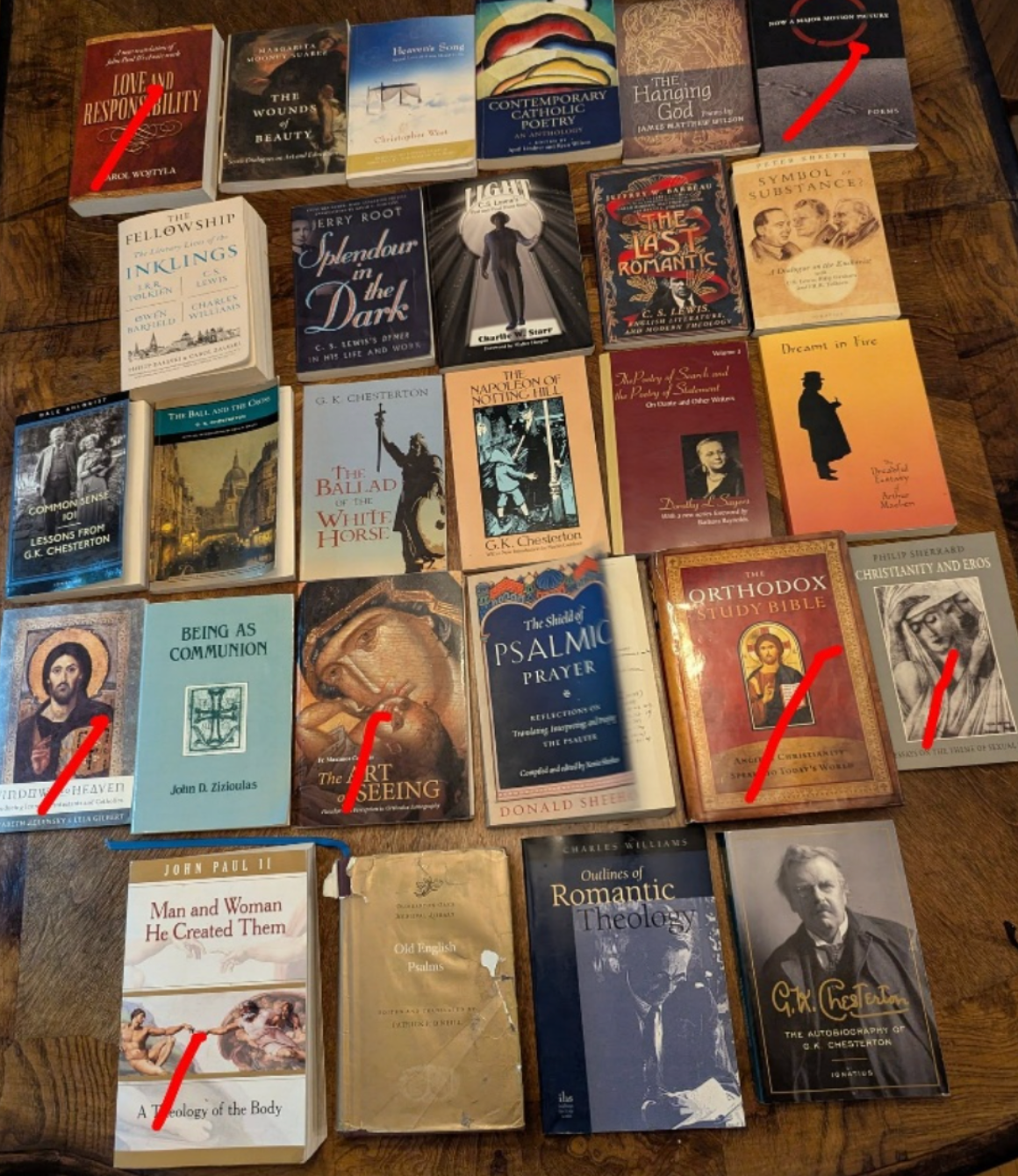
Since our beloved Warren John has passed away on May 20, 2026, my home has become what the bookstore was then in Dana's wake: a collection of gifts from Warren. Once, when my frazzled parents planned to spontaneously drive to the Black Hills of South Dakota the next morning and I rushed inside the bookstore before closing time to beg Warren for a car ride recommendation, he gave me Jayber Crow by Wendell Berry and, still, the most rapturous reading experience of my life, consuming the novel in one backseat sitting. At Eighth Day Institute's first Inklings Festival, when Warren had set up an Inklings book table outside the lectures at St. George Cathedral, only to realize that everyone partying at the bookstore later that afternoon would want to shop precisely these books, he shyly asked me to pull of a week's worth of unloading and reshelving in a few hours. It was 100+ degrees outside, and I looked it. Once the job was done, though, Warren gave me a deluxe copy of The Lord of the Rings as my payment. Now I cannot hold either of these books without remembering Warren.
Neither can I hold The Ascetical Homilies of St. Isaac the Syrian or The Ethics of Beauty or The Complete Cosmicomics or All the Light We Cannot See without also holding Warren. Nor my favorite coffee mug(s) or nearly every icon at our prayer corner, which all passed directly from his hands to mine. Physically holding these things lately has been a comfort.
The problem is however large this collection of physical gifts from Warren is, most of what Warren gave me are things I can't hold onto. When I was afraid to apply to graduate school for creative writing and, after reading my sample chapter for the application, looking at me with all sincerity, and saying, "I'm sorry, I just didn't know you were a real writer," in one sentence Warren gave me my vocation. Warren also gave me the conviction I needed to journey through my first Orthodox Holy Week, and another (lighter) time Warren gave me the incontestable, fist-pounding fact that the cherry Tootsie Roll Pop is "the classic pop!" When doctors confirmed my wife and I were miscarrying, or when we wanted to have the best birthday possible, or when we wanted to show our out-of-town friends we loved them, Warren gave us a place to go.
I am not exaggerating when I say that for every one of my closest communities now, Warren is the link. When I was spiritually rescued by one Protestant community, well, the church's founders had all been lifelong friends with Warren. Later, when God was calling me to Orthodoxy, Warren was the first voice He used. And the fellowship of theologically-bent novelists, poets, and essayists I belong to now have all been touched by Warren, whether they live in Wichita or across the country.
The communities that Warren gave me; I think this gets to the heart of the matter. At least this is what I was thinking about as I waited shoulder-to-shoulder with over a thousand people in complete silence for Warren's funeral to begin, one of the most sacred experiences I will likely ever have. Beyond the books, the ancient texts, his presence to the homeless and mentally ill, his hugs or head squeezes, beyond all of these, Warren's greatest gift to me, sincerely, is you. He has given us to each other. I saw it in the friends laughing together at his bookstore memorial last Monday night, and I saw it in the hour-long line of people waiting to kiss his casket, singing and embracing each other after saying their final goodbyes to Warren.
In the meal following the burial service, Warren's son, Tim, compared his father's life to a magnifying glass of the light of the Holy Spirit, specifically "a hand being willing to hold up the glass." Tim spoke of the duty we all have now to likewise "hold up the glass," and I added this, importantly, to the list of gifts Warren has left me to hold. When we at Eighth Day Institute talk about "faith, learning, and friendship" as the pillars of cultural renewal, all we are really trying to do is name what Warren has given us, steward his gift, and offer it to others as freely as Warren gave to us. We are trying to hold up the magnifying glass. And now, in these first weeks following Warren's journeying into the true and final eighth day of the Resurrection, we are simply wanting to hold each other up, too. Our prayers remain with the Farha family, the strongest family I know.
My story is not unique; hundreds of other tributes to Warren (like this and this) say so. So we encourage you, to take some time soon to gather all Warren has given you. Like you, I am blessed to have known Warren John and, like you, I am blessed to be a part of this vital season of our community.
LUKE TAYLOR GILSTRAP is the Vice President of the Eighth Day Institute Board of Directors and a husband, father, and writer happily living in Wichita, Kansas.
Share this Post on Your Preferred Platform