What is Given and Given Up
On St. Benedict and the Making of Vows
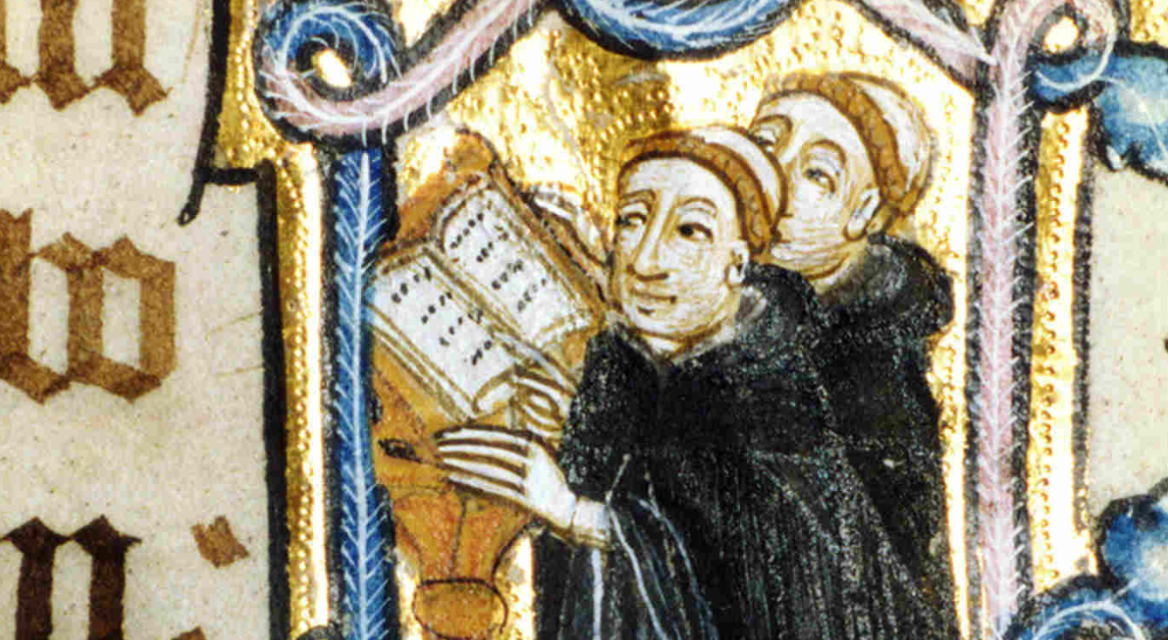
"Listen carefully my child, to my instructions, and attend with the ear of your heart. This is advice from one who loves you; welcome it and faithfully put it into practice." The Rule of St. Benedict, Prologue to the Rule, 1-2
On July 11, tomorrow, we celebrate the feast of St. Benedict. This time last year I was at St. John's Abbey in Collegeville, Minnesota, on a writing retreat. During mass that day, I watched as a new monk, Brother Travis, professed vows to his Benedictine community: vows of obedience, stability, and conversatio, a willingness to be changed. He vowed to follow The Rule of St. Benedict.
St. Benedict of Nursia wrote The Rule of St. Benedict for monks nearly 1500 years ago, around the year 530, as a guide for how to live and seek Christ together in the monastery. Benedictine life focuses on a handful of principles: Ora et Labora, a balance of daily prayer and work; growing deep roots in a community; doing everything in moderation. Above all, to seek God continually.
Throughout the prologue and 73 chapters of the Rule St. Benedict proposes a structure for prayer and work that places God in the center. St. Benedict's Rule builds off other rules of the time, but encourages compassion, empathy, and care for those who follow it. St. Benedict challenges monks while allowing them to be who they are: human. The result? The Rule of St. Benedict is generative instead of suffocating.
That day, as I watched Brother Travis, I couldn't help but consider the surprising number of vows I've made in my life: of marriage, to raise up my children in the Church, to love God above all else. A vow on the jungle gym to buy my childhood friend, Katie, a pony (sorry Katie).
My husband, Kevin, and I have been married for nearly 16 years. Before we got married, an older couple in our church shared with us the most difficult part of being married: when you get married, you commit to loving versions of this other person you do not yet know. But you vow to be there.
There's an inherent vulnerability in that, a faith. But also a stability. Stability, of course, being one of the three vows that Benedictines make.
Joan Chisstiner writes, "The vow of stability is not intended to attach a person to a place. Stability is intended to attach a person to a group, as family does, as nation does...life is an enterprise to be undertaken together, not an entertainment to be indulged in alone."
What must we give up, and what is gained, when we make vows? What blessings await us when we do so? Today, on the vigil of the Feast of St. Benedict, I'm grateful for how my own engagement with The Rule merges and collides with my everyday life. How sitting in a mass, watching a monk profess vows one year ago, has me thinking, once again, about the vows in my own life.
SARAH ORNER is an essayist at the intersection of art, faith, and life. Her work has been published in Image Journal, The North American Review, and The Well. Sarah holds an MFA in Creative Nonfiction and is at work on a book about The Rule of Benedict. Originally from Florida, she lives with her spouse and children in Morgantown, West Virginia.
Share this Post on Your Preferred Platform