An Explanation of the Seven-Fold Prayer Taught by Our Lord Jesus Christ
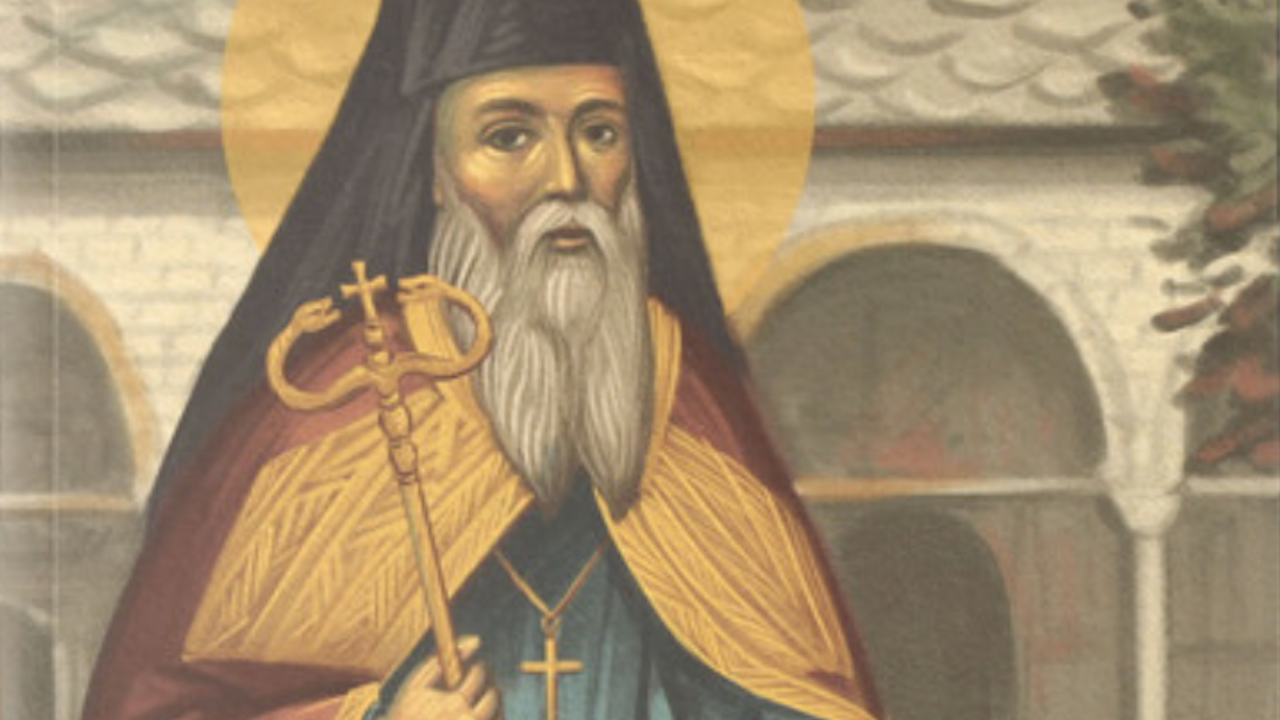
by St Gennadios Scholarios
Feast of the Nativity of Our Most Holy Lady the Theotokos and Ever-Virgin Mary
Anno Domini 2023, September 8
OUR FATHER who art in heaven, mighty and all-powerful Lord, our creator and tireless provider, giver of the good things of this present age, preparer of future and eternal blessings, we beseech your imperial and supernatural yet fatherly goodness that you would hear us, the least of your servants, who flee to your compassion seeking your succour with faith, hope, and reverence befitting a servant. Though he remained silent, you heard Moses and will hear anyone else who fulfils your will like Moses, or in a manner approaching him [Cf. Origen, Homilies on Exodus, 5: “But meanwhile Moses cries out to the Lord. How does he cry out? No sound of his cry is heard and yet God says to him, ‘Why do you cry out to me?’ I should like to know how the saints cry out to God without a sound. The Apostle teaches, ‘God has given the spirit of his Son in our hearts crying: Abba, Father!’ And he adds, ‘The Spirit himself intercedes for us with indescribable groans.’ And again, ‘he who searches the heart knows what the Spirit desires because he pleads for the saints according to God.’ So, therefore, when the Spirit intercedes with God the cry of the saints is heard through silence.”]. Being far removed from such uprightness and purity, and full of filth and impurity, yet we pray words of petition and supplication that we might find what we seek. Your love toward mankind both gives to us and urges us to ask, as if to ask is also given by your right hand; we knock that the door of mercy might be opened unto us. And all our requests and petitions being summed up in the number seven, we therefore address this very number of petitions to you, or better, your eternal Word and Son, your wisdom and power having composed this prayer and the number of its petitions for us, through him and in him we humbly and. yet boldly address this to you as our one God and creator.
Our Lord and heavenly Father, firstly we beseech you that you would hallow your holy name in us. It is holy in and of itself and eternally from before the world’s creation, and now it is participated in by your creations differently, each according to their differing place in the universal order. It is holy and supremely hallowed in all things, not sharing in any of the meanness of those things that participate in it—found in these either by nature or by disposition, but more so by disposition. These, too, are holy by participation in your holy name in their order before you, their creator, for you made all things good and holy, and, having thus created, you called them good. But some of these, abandoning a good will for perverse desire, become polluted and impure rather than remaining holy. This is what passion does to rational creatures, to whom you gave reason and deliberative ability for their good benefit. As many as are made worse by the gift are evil of their own fault. I myself am one of these, using your holy gifts in ways contrary to your purpose, which has been set out at many times and in many ways. But I beseech you, most-kindly Father, that your holy name be hallowed in me from this moment on, just as it has been hallowed in all your true servants and children, these having first been sanctified in your holy name and by pure participation in your fatherly direction and care. And if I become holy, then your name—always and everywhere all-holy—is hallowed in me.
Our Lord and heavenly Father, secondly, we beseech that your kingdom should come. In the beginning your kingdom prevailed over the whole created order and you reigned over the whole world, but the wickedness and apostasy of those who sided with evil and hostility against you, the lord and father of true subjection, drove these out. After this, your kingdom came into the whole world even more plainly, though not all wanted to accept it, but only those who believed. Accepting it by faith, they yet reject and spurn it by works. Thus, on the one hand, by faith I know your kingdom which extends throughout the whole world and I proclaim it, but my eyes have been dimmed by a personal blindness affected in me by sin toward this present and apparent kingdom, and though it speaks and calls I will not hear. For this reason I beseech you that your kingdom would come also to me, your faithful servant who is yet enslaved to useless works, or, better, to sin. Let my reason be subject to your will, and let your grace illumine it. Bring the passions which reside in me under the rule of reason once and for all. Thus I will be wholly your servant and ruled by you alone. Moreover, this gives me cause to hope in the enjoyment of the otherworldly and heavenly kingdom, for your kingdom in this world, being well-participated in, is a prelude of the former and a path leading toward it.
Our Lord and heavenly Father, thirdly, we beseech you that your will be done in us. Your divine will is done in heaven and on earth by all heavenly and earthly things which yield to it. But of us men who walk in this life according to disposition (something given by you for our good), many are often found disregarding your will. Seeing and knowing it, being foolish, they do not fulfil it. For my part, I am of this sort. But grant me, Father, that my whole will might be conformed to your will from this moment on, and, should I do this by the aid of your grace you will immediately add a second grace unto me, by means of which I will hang my whole self on your will, accept your will in every aspect of my life, and, this being done, I will fall down and worship.
Our Lord and heavenly Father, fourthly, we beseech you to give us this day our daily bread. First, we do not ask for various foods which are for the sake of luxury and not sustenance, but for bread alone, which is the support of the human heart. This is adequate for the day’s needs and sufficient for us, and we are able to sustain both our essence and life by means of it alone. Next, we ask for this today, since today’s bread is what we need. Tomorrow you, the Lord of All and Giver of All, will give even to those children who did not ask, but we will pray in like manner tomorrow and each and every day following in accordance with our obligation. And if you shold ever provide us with more than this, we will receive your providential care readily and joyfully, acquiescing to the needs of the body.
Our Lord and heavenly Father, just as you freed us from our debts, and, you having forgiven us, we became debtors to you to the tune of that great price paid for many sins, fifthly, we beseech you to release us from the price paid solely out of your love for mankind. But we must first forgive our debtors, and then flee boldly to your compassion. What comparison is there between the things our brothers and fellow servants owe us, and what we ourselves owe to the creator, judge, and lord? Your all-good compassion takes our small, reasonable concession and renders it an occasion of great forbearance and longsuffering toward us. But if we do not forgive our brothers their sins, you, O Lord our heavenly father, will not forgive us, nor will we be able to pray effectively for the forgiveness of our own debts, having not first forgiven others. Wherefore this having first been promised and then done by us having been strengthened by grace, we then ask that the forgiveness of our debts be granted to us out of your love for mankind.
Our Lord and heavenly Father, sixthly, we beseech you that you would not lead us into temptation. We ask not to be altogether untempted—for without sorrows it is impossible to enter into eternal life, sorrow being the product and fruit of temptations—but instead we ask not to be led into an immeasurable depth of temptations which would exceed our strength as is wont to happen with those who have been abandoned to these, nor to be encompassed and surrounded by temptation. We ask that you permit us to be tempted in accordance with your will for our benefit, for the sake of our instruction and healing, for neither the depth, nor the multitude, nor the duration of such temptation exceeds our strength. We are near the door and close to the exit, since we find deliverance and escape through repentance, contrition of heart, tears, and the awareness of the causes of the temptation which are connected with your beneficent justice on the one hand, and through certain and faithful hope of deliverance on the other. Asking not to be surrounded by temptation, by means of one word we denote the various and diverse genera or kinds of temptations, amongst which are those temptations that come from the demons. These we pray to be set completely free from, but we do not ask to be released completely from other temptations, but only that they be brief in duration, light, and restrained, and that we be quickly delivered from them.
Seventh, if it is your will, we beseech you that you would deliver us forthwith from this wearisome and wretched body for the benefit of our soul. The speedy release from this represents the loosing from every temptation, since every kind of temptation arises in us in connection with the body. You gave the body that it might be a tool for spiritual progress to those who make wise use of it, but this being rare—indeed, it is a thing very difficult for me on account of my great inattentiveness and carelessness—swift release from it is a worthy prayer. We pray in this manner according to the human mind; in this and the other thing previously mentioned, may your will always be done, for yours is the kingdom, and the power, and the glory unto the ages. Amen.
*From Ashes and Ruin: Selections from the Writings of St. Gennadios Scholarios, tr. Rev. Dr. John Palmer (Columbia, MO: Newrome Press, 2022), pp. 209-215. Available for purchase at Eighth Day Books.
Share this Post on Your Preferred Platform