Too Little Romance, Good News, Christopher Columbus & Crisis in the West
by Erin Doom
Feast of the Venerable Andronicus, and his wife Athanasia, of Egypt
Anno Domini 2020, October 9
1. Bible & Fathers: “The Good News as New” by G. K. Chesterton
Friday – James the Apostle, Son of Alphaeus: 1 Cor. 4:9-16. Matt. 9:36-38; 10:1-8. Online here.
Saturday: 1 Cor. 15:39-45. Lk. 5:27-32. Online here.
Sunday of the Seventh Ecumenical Council: Titus 3:8-15. Lk. 8:5-15. Online here.
I realize G. K. Chesterton isn’t an early Church Father, but like Lewis, in their own ways they both are sorts of fathers for today’s Church. So, as we gear up for the Inklings Festival next weekend, here’s the opening paragraph from a passage in Chesterton’s Everlasting Man:
It is not easy to regard the New Testament as a New Testament. It is not at all easy to realize the good news as new. Both for good and evil, familiarity fills us with assumptions and associations; and no man of our civilization, whatever he thinks of our religion, can really read the thing as if he had never heard of it before. Of course it is in any case utterly unhistorical to talk as if the New Testament were a neatly bound book that had fallen from heaven. It is simply the selection made by the authority of the Church from a mass of early Christian literature. But apart from any such question, there is a psychological difficulty in feeling the New Testament as new. There is a psychological difficulty in seeing those well-known words simply as they stand and without going beyond what they intrinsically stand for. And this difficulty must indeed be very great; for the result of it is very curious. The result of it is that most modern critics and most current criticism, even popular criticism, makes a comment that is the exact reverse of the truth. It is so completely the reverse of the truth that one could almost suspect that they had never read the New Testament at all.
Read the rest of that passage here.
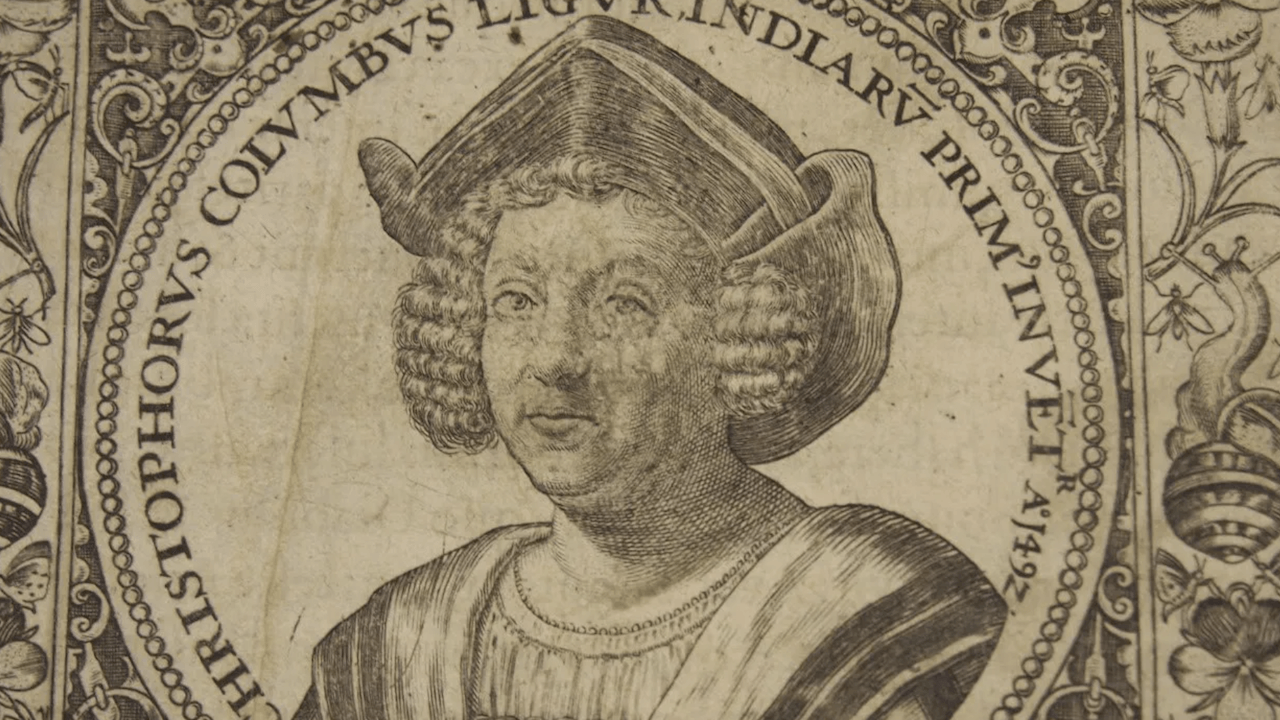
2. Books & Culture: Columbus and the Crisis of the West by Robert Royal with “Columbus Day: An Italian Irony” by Mark Mosley, plus Mars Hill Audio and Mermaids
Monday, October 12, is Columbus Day, or as Mexico celebrates it, dia de la Raza (Day of the Race) in honor of the emergence of Mexicans as a confluence of the Native American Aztecs and the conquering European Spaniards. Back in 1992, in anticipation of the quincentenary of Columbus’s arrival in the Americas, Robert Royal published a book titled 1492 and All that: Political Manipulations of History. At that time, almost thirty years ago, there was already a growing taboo to say anything positive about Columbus. So Royal set out to recover, in his words, “both the glory and the agony that attended the arrival of Europeans on this continent.” And then 2020 happened, i.e., the toppling of statues, including those of Columbus. So a slightly revised edition, with a new introduction and a new title—Columbus and the Crisis of the West—was recently released. Here’s an excerpt from the original 1992 introduction:
This book concentrates mainly on a range of moral questions about the European settlement of the Americas. In doing so, it necessarily also tries to get some facts straight that have become distorted by polemics. In the approach to 1992, many books have already been written to show the depravity of the Europeans and the purity of the native peoples. Some readers may think this book attempts the contrary. But instead of using Renaissance Europe or neolithic indigenous societies as a stick with which to beat the present, this brief study aims at examining what happened when widely divergent cultures—each with its share of human individuals and cultural riches, as well as ruthless tyrants and cultural monstrosities—met and mingled. […]
It is one of the major premises of this book that there are various forms of imperialism. and none, perhaps, is so insidious as the imperialism that tries to defend some portion of the past at the cost of distorting it to satisfy the imperious, and seemingly noble, emotions of the present. Whatever their flaws or accomplishments, the Europeans and native people who first met and began the process in which we are now all living at least deserve to be understood in their own fullness. When we make them over into our own image and likeness, or redefine them in contemporary terms, we use other human beings, now dead, rather than working, as we should, to understand them.
Only when we have far more of the story straight, and are at ease in facing a nonidealized America with a concrete history, will it be appropriate to take stock of what happened in the past—and seek to draw some lessons from it for our collective and common future.
And here’s an excerpt from the new 2020 introduction:
When the first edition of this book appeared, the contrary view was already starting to take hold. During the 1992 quincentenary of the first voyage of Columbus, which is examined in detail in these pages, many of us who had tried to think through what it meant—both good and bad—found it difficult to say anything positive about it in print, on television and radio, or even in academic settings. In the almost three decades since, scholars have done what they are meant to do: uncovered even more of the rich, sad, inspiring, frightening, appalling, glorious, and inglorious features of the Age of Exploration. But there exists something approaching a taboo about saying anything positive about Columbus or any of the other European explorers. People ready to condemn Columbus for every ill that has occurred on these shores, strangely, would never think of crediting him with the many indisputable goods that have been achieved as well, including the freedom to criticize past and present. And it would not be stretching things to say that the blanket rejection of Columbus has become a symbol for the uninformed repudiation of much of Western—and human—history.
The implications of that repudiation are legion. As historian Wilfred McClay has observed: “The pulling down of statues, as a form of symbolic murder, is congruent with the silencing of dissenting opinion, so prevalent a feature of campus life today. In my own academic field of history, in which the past is regarded as nothing more than a malleable background for the concerns of the present and not as an independent source of wisdom or insight or perspective.” […]
What is at stake is not merely the historical evaluation of Columbus or Europe or “white privilege.” It goes to the heart of what civilization means: given the universal evidence of human sinfulness and imperfection, we put ourselves in the position of preferring to have no cultural roots at all if we demand to allow into public spaces and permissible discourse only what we believe—on unclear grounds—is now the perfection of moral vision. One of the central things that this book seeks to demonstrate is that the radical critique of the West could not have happened without the very values—equality, human dignity, liberty—that spring from the Western tradition itself, and more specifically the Christian universalism that sees every human person, however imperfect, as a child of God, something that has existed in no other civilization.
You can read the entire 2020 introduction here. And be sure to get a copy from Eighth Day Books so you can read the whole book.
On a related note, I received an email today from our friends at Mars Hill Audio and today’s Friday Feature also happens to be on Royal’s book. I’m not sure if you have to be a subscriber or not, but I encourage you check it out on the Mars Hill Audio app by searching for “Robert Royal: Columbus & the New Iconoclasm.” And if you're not already a subscriber, subscribe here.
Also, be sure to read the following reflection on Columbus by our friend (and Eighth Day Member) Mark Mosley. Both Royal and Mosley appreciate the complexity of history. Both are willing to admit the good and the bad. And as you’ll see at the end of Mosley’s piece, even if they don’t agree on every single Columbus related point (I'd sure love to overhear them in a conversation on Columbus), neither would condone statue toppling. Read the whole thing: “Christopher Columbus: An Italian Irony.”
And finally, just for fun, did you know that Columbus’ log for Tuesday, January 8, 1493 says that he saw three mermaids? And not just any mermaids; according to Columbus, they were ugly. Here’s a short and amusing article on that encounter.
3. Essays et al: “I’m Already Free” by Jack Korbel with “Too Little Romance: Making the Ordinary Extraordinary” by David Fagerberg
From the very beginning The Jack Korbel Confluence has been a staple for EDI events. With a wide array of his musically gifted friends, Jack has played at all eleven Feasts of St. Patrick. And come Oct 18 he will have played at all six of our Inklings Festivals. He just released a great song that you should check out here before joining us at the festival next week.
And here’s a bit from the opening of a piece offered by David Fagerberg for our inaugural Inklings Festival back in 2015:
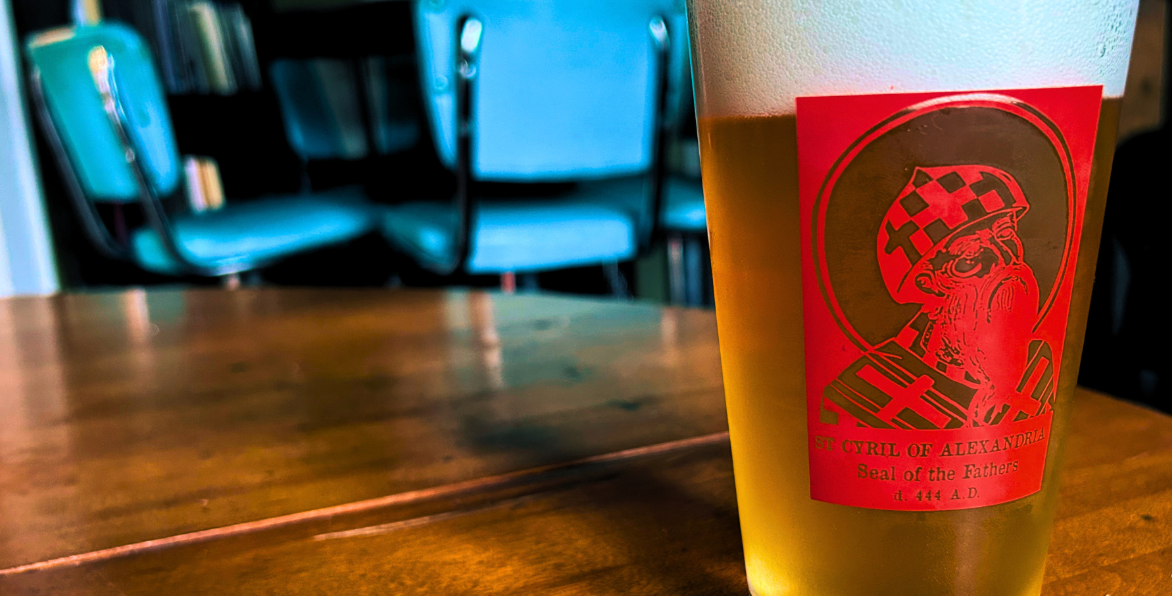
First of all, there is the pen. And the pipe. And the pint.
But I hope to suggest a fourth connection.
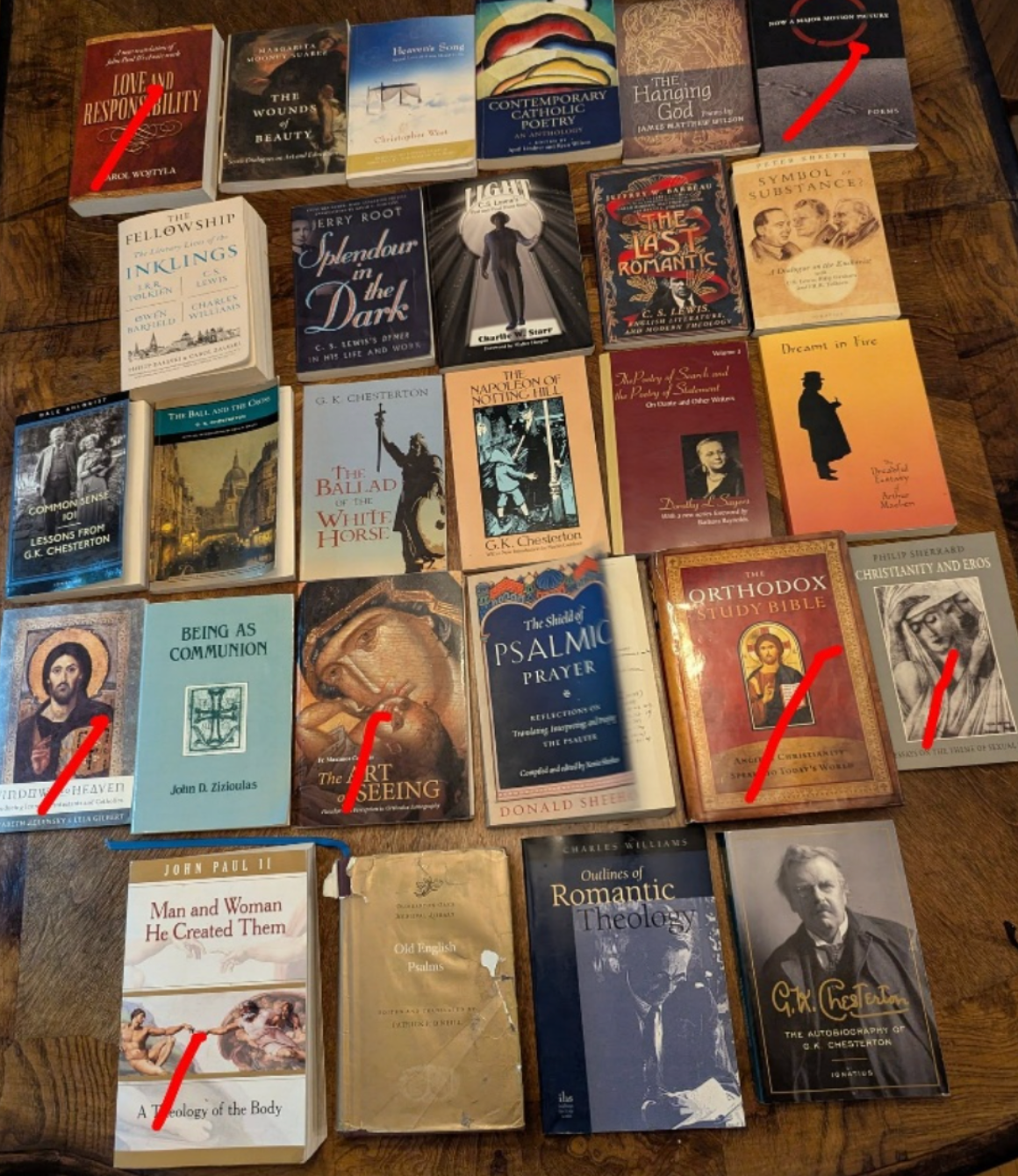
Tolkien recalls Lewis saying to him one day (over a pipe and a pint, I don’t doubt) “Tollers, there is too little of what we really like in stories. I am afraid we shall have to write some ourselves.” What is this thing, of which there is too little? Tolkien called it the mythopoeic, and he was not wrong. But there could be a simpler word, one explored by two other Inklings, and recognized by Chesterton. There is too little Romance.
We certainly don’t mean the version of Romance offered by Hollywood and cheap paperbacks. Lewis and Charles Williams spent some time defining exactly what they meant. Williams got the ball rolling when he reflected upon the figure of Beatrice in Dante. She created a desire in him that drew him through his journey. That experience led Williams to write a collection of essays under the title “Romantic Theology.” (As Mystical theology is applied to mystical experiences, and Dogmatic theology is applied to dogmas, so Romantic theology is theology as applied to romantic experiences.) Williams admits that “chief among these is sexual love . . . but that there are other human experiences of this same far-reaching nature is undeniable—nature and friendship are perhaps the chief” (Outlines of Romantic Theology).
Share this Post on Your Preferred Platform