Imitating the Saints

by Archimandrite Vasileios
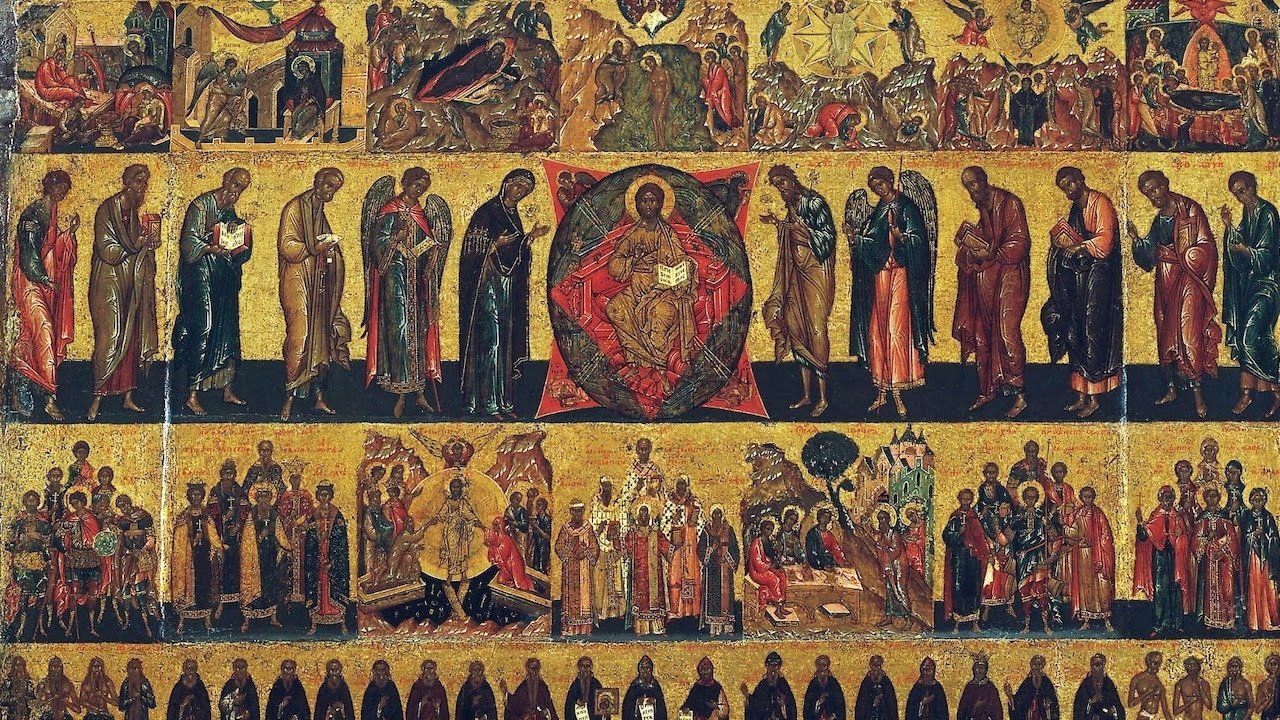
THE SAINTS saw the true light. They gained spiritual health. They were freed from themselves. They enjoyed the freedom of the age to come. They are satiated with grace. They trust in God's love. They have seen what end everything is leading to. They have reached the point of saying consciously: “Lord, now lettest Thou Thy servant depart in peace (Lk. 2:29)” (p. 13). 


And God the Word goes outside Himself and comes to dwell in all through His intense longing, that all may become partakers of His grace and His divinity. He does not come to advertise the wealth of His divinity and reveal our worthlessness and poverty. Instead, He becomes poor, though He was rich, so that by His poverty we might become rich (2 Cor. 8:9). He becomes man and takes on everything that is ours, apart from sin, so as to give us everything that is His, apart from identity in essence. So that all may become sons of God [glorified creatures] by grace.


This self-emptying, as a work of unfathomable love, is a theophany—a revelation of the truth of God as a communion of persons who love each other.


This is the gospel of the new creation, the message of life which the Fathers [and Saints] proclaim by their existence. They show the way of existence. And they teach you how to live


They allow everything to move freely. They wait for the other person to find his own rhythm, to find his path. They sacrifice their lives, in the likeness of the God-man, for the life of the other. They pour out grace. They hide their virtue out of modesty. They know that everything true is given from above. They have given to God what little they had. And they have received everything. They receive it constantly, they accept it without ceasing. And they cannot bear the abundance of life. They want to withdraw to the sidelines, to be quiet, to vanish, to calm down, not to be commented on. All they want is for others to live.


[. . .] The root of their being is watered by mystical streams [. . .] They contract—“He must increase, and I must decrease” (Jn. 3:30)—in order for divine love to circulate, to flow, to pour forth. For the earth to be watered. For the shadow to be illuminated. For the sorrow of the world to be comforted, to be turned to rejoicing.


They sought first the Kingdom of God, and everything else was given them as a free gift. They are not simply thinkers, orators, writers, poets. They are free people, true, real; they are united with God. They moved spontaneously. They expressed themselves honestly. They loved humility. They were filled with wisdom. They became golden-mouthed orators, theologians, poets, architects of the word. They developed hidden talents. Their being shone out of them. They did not learn things divine, they experienced them; they underwent them. These things changed them, deified them. They have become a revelation of God—in other words, a true revelation of man. They show what man is, and what he is able to become. [. . .] Each one, in his own personal way, reveals the same Truth… (pp. 8-9).


[…] there are no ancient or modern people. There are only true or false people.


A saint, a true person, is always living, regardless of whether he is ancient or contemporary, learned or illiterate. The power of the truth and the vitality of the Spirit does away with distances in time and differences in “education.” It passes right through the created and visible with uncreated grace, making even the clothing of a holy person’s words to shine like light (cf. Mt. 17:2). A simple elder from the Sayings of the Desert Fathers, who wandered round the wilderness like a wild animal (Abba Bessarion, 12), has no less grace and daring in faith than someone like Maximus the Confessor. [Nor than] a humble believer today who really has the grace of Pentecost . . . and . . . manifests God’s love for mankind and his own pure heart with a comforting word or a smile (pp. 19-20).


*Excerpted from Archimandrite Vasileios, The Light of Christ Shines upon All through all the Saints, pp. 13, 18-20. Available for purchase at Eighth Day Books.

Share this Post on Your Preferred Platform
By Luke Taylor Gilstrap July 31, 2026
"What is it that has ordered the things of heaven and those of earth, the things which move through the air and those which move in the water; nay, rather the things which proceeded them: heaven and earth and the natures of fire and water? What is it that combined and arranged them...set them into motion and put them on their unceasing and unhindered course?..But who is the architect of these things? Or did not he who made them also bring them into being? We shall certainly not attribute such power to spontaneity." On the Orthodox Faith, Chapter 3 This comes after St. John of Damascus sets out to delineate between the created and the uncreated, a fact which, while at the core of existence, seems for him to be, for this very reason, the simplest to believe. Everything but God is created and, thus, susceptible to change. This means people, but this also means demons, angels, the rest of the created order across the entire cosmos. Everything is vulnerable to unrest. Except for God. If you have ever tried to explain the Holy Trinity to a child for the first time, maybe you have felt as I have the weightier, inexpressible side of God's unchangeability: how do I possibly communicate this essential fact to the person in front of me? (This is usually when my faint stutter starts to pop up again.) I like that here, like St. Patrick reaching for a three-leaf clover, St. John brings us back to earth to better understand the cosmos. Fire and water are no less mysteries than heaven and earth. And yet here we are, cooking and washing, eating and drinking, filled and sustained on what we can neither fully explain nor claim to have created. Only God is unchanging. Vice versa, God is the only constant we need. Maybe the rest is better left unsaid. LUKE TAYLOR GILSTRAP is Vice President of the Board of Directors for Eighth Day Institute. His poems have appeared in Spiritus, Ekstasis (Christianity Today), and Relief Journal, among others. He lives happily in Wichita, Kansas with his wife and three sons.
By Luke Taylor Gilstrap July 24, 2026
"Now, one who would speak or hear about God should know beyond any doubt that in what concerns theology and the Incarnation not all things are inexpressible and not all are capable of expression, and neither are all things unknowable nor are they all knowable. That which can be known is one thing, whereas that which can be said is another, just as it is one thing to speak and another to know. Furthermore, many of those things about God which are not clearly perceived cannot be fittingly described, so that we are obliged to express in human terms things which transcend the human order. Thus, for example, in speaking about God we attribute to Him sleep, anger, indifference, hands and feet, and the like." On the Orthodox Faith, Chapter 2 When I was studying Fiction in graduate school, one of the first methods I learned to really situate the reader in the story you were about to tell them was disorientation; if you wanted to ground them in one story, first you had pull the rug out from under their feet. So it's fitting that in the beginning of St. John Damascene's On the Orthodox Faith, before rebuilding our foundation, he first puts us squarely in limbo, seesawing back and forth between certainty and uncertainty. To paraphrase, there is no doubt (certainty) that about God some things can be expressed...but not all things (uncertainty). Some things about God are truly knowable (certainty), but some are unknowable (uncertainty). Oh, and while we're speaking about God (certainty), let's admit there's a gap, too, between what we say and what we know (uncertainty). My favorite line in this spiraling excerpt, "...it is one thing to speak, and another to know," takes me back to the final lines in Wendell Berry's poem, "How to Be a Poet," which he wrote primarily as a reminder to himself: Accept what comes from silence. Make the best you can of it. Of the little words that come out of the silence, like prayers prayed back to the one who prays, make a poem that does not disturb the silence from which it came. Wherever your preferences fall on the cataphatic or apophatic spectrum of theology (whether you lean more toward what we can say about God or what we cannot), Berry's poem, I think, would nod along with St. John: before we say too much, let our words be preserved by the silence from which they came. I'm thinking of the silence, that filling, restorative quiet I feel when I step into a cathedral or in some of my favorite moments with my kids in the early hours. Even before praying, can we hear the One already praying in us? ​​​​​​​Let's start there. LUKE TAYLOR GILSTRAP is Vice President of the Board of Directors for Eighth Day Institute. His poems have appeared in Spiritus, Ekstasis (Christianity Today), and Relief Journal, among others. He lives happily in Wichita, Kansas with his wife and three sons.
By Mark C. Watney July 20, 2026
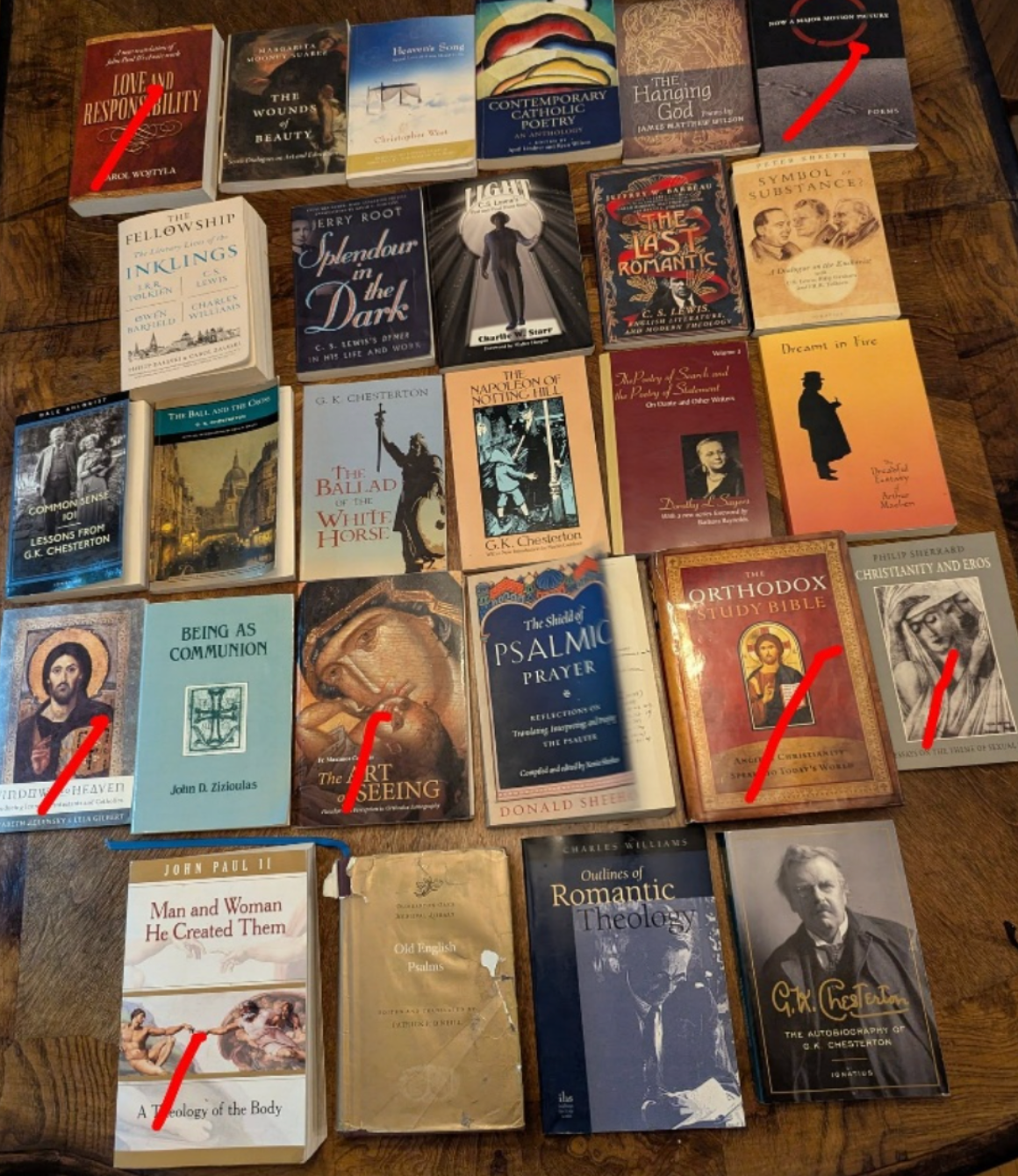
Late-Night Bookstores and Spiritual Reading
By Sarah Orner July 20, 2026
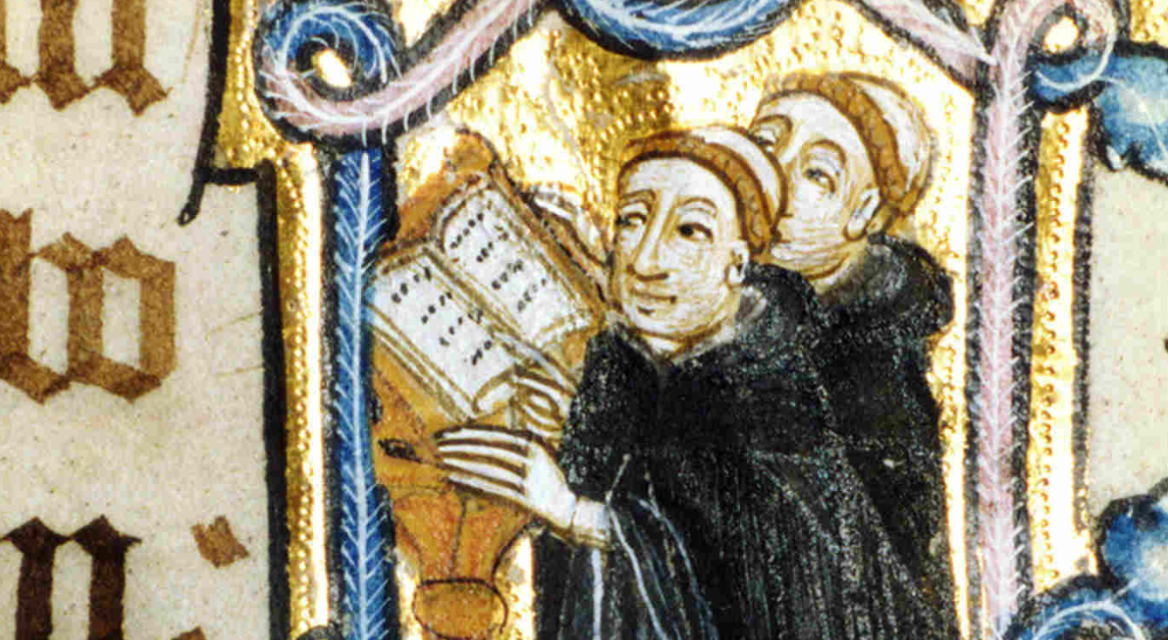
On St. Benedict and the Making of Vows
By Luke Taylor Gilstrap July 20, 2026
The Pursuit of Truth in the Age of AI
By Michael Simmon July 20, 2026
On the Theology of Raising Chickens
By Luke Taylor Gilstrap July 20, 2026
G.K. Chesterton and Raising Small Children
By Fr. Mark Lovett June 9, 2026
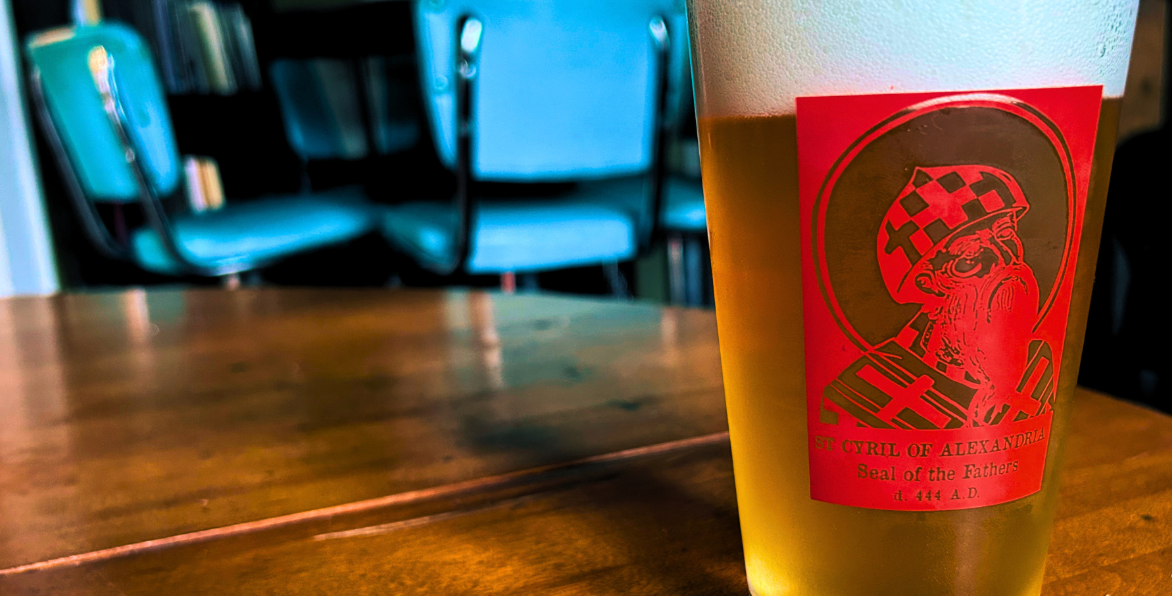
"Seal of the Fathers"
By Luke Taylor Gilstrap June 9, 2026
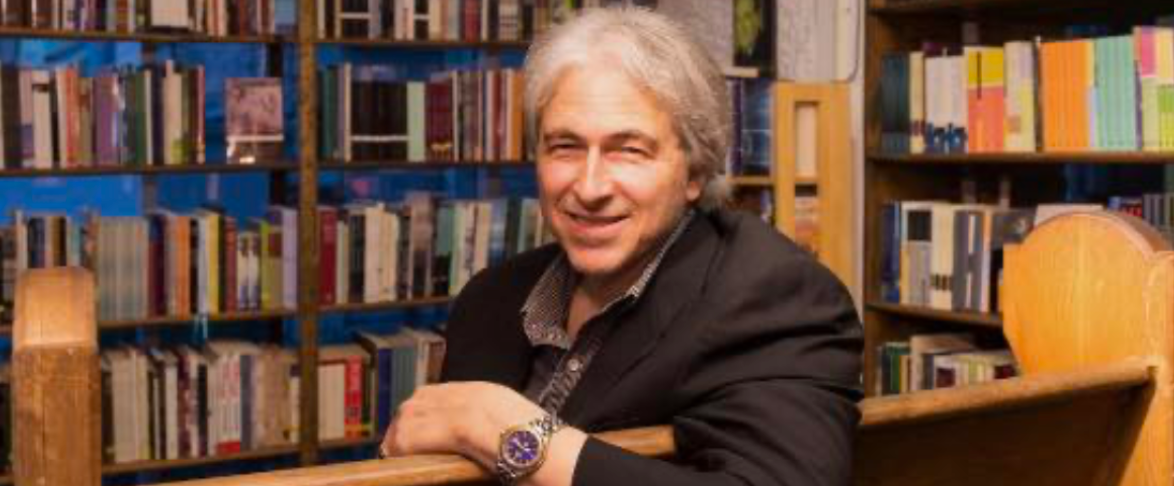
In Memory of Warren Farha, 1955-2026
By Jeremy Wagner May 15, 2026
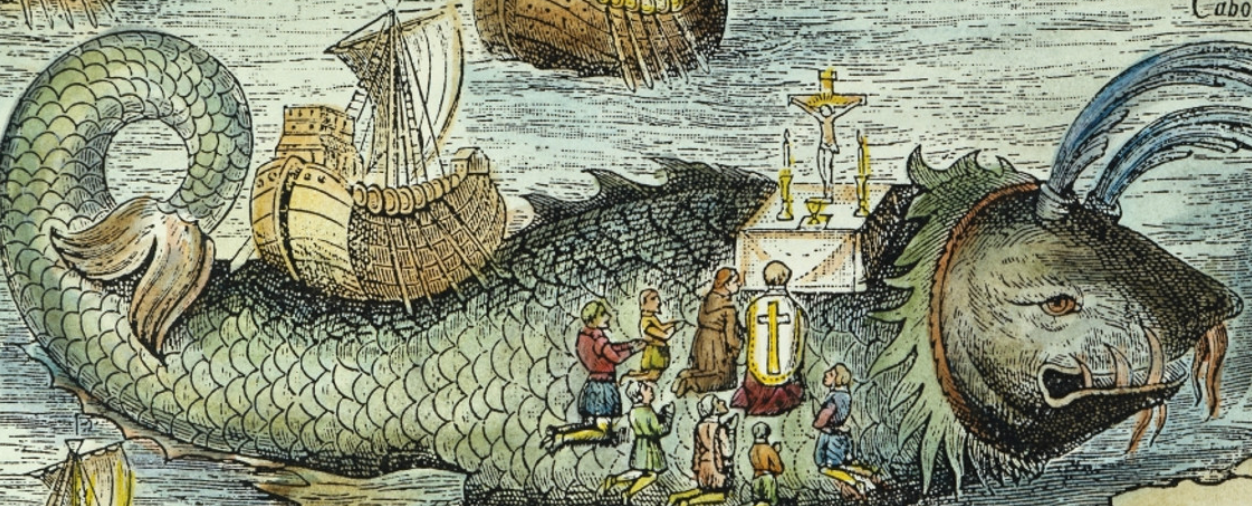
An Ode to St. Brendan the Voyager
More Posts