COVID-19: A Pilgrimage of Illness
by Mark Mosley, MD, MPH
Feast of the Dormition of St Anna, Mother of the Theotokos
Anno Domini 2020, July
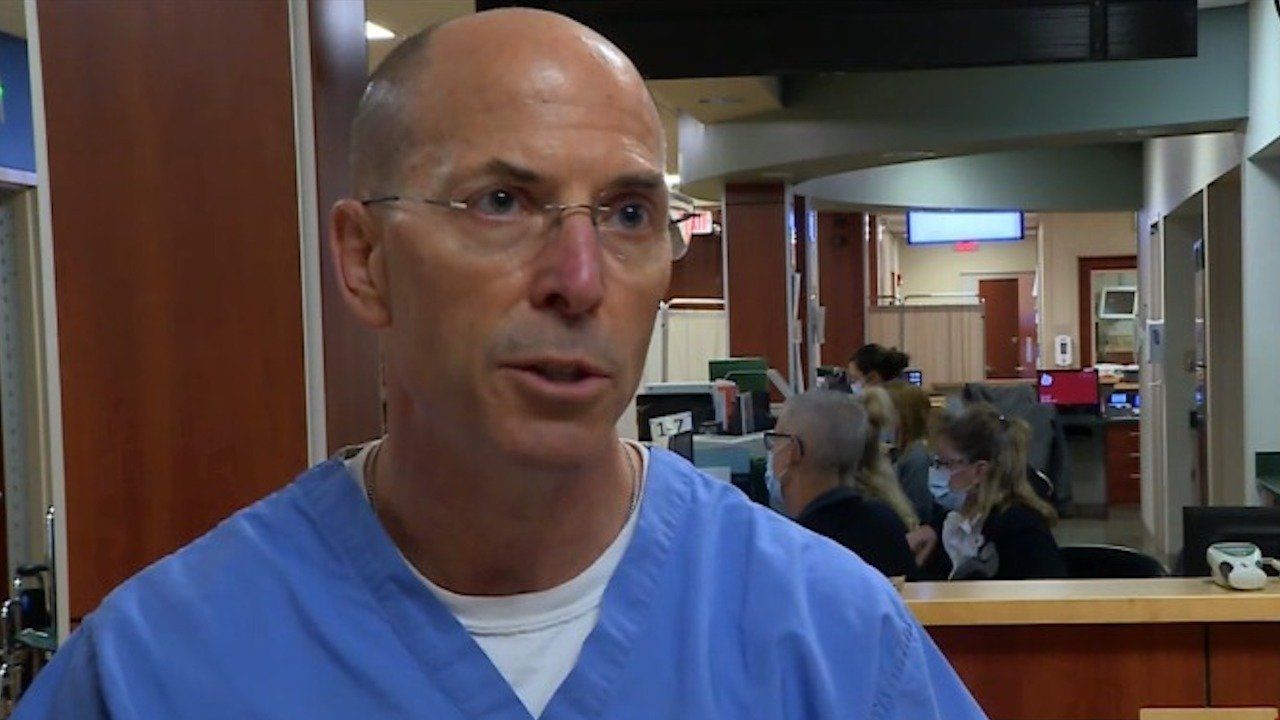
I tested positive for COVID-19 eight days ago. I wrote about this journey to keep me from going out of my mind while alone for ten days. I wanted to provide something for future generations to read. We are experiencing a world historic event and we should all be taking a few notes. I also wanted to take a dark moment and turn it into a gift for the people I know. In Oklahoma, we call it “burning manure.” You make heat, light, and something fertile out of the excrement dropped out of a beast’s anus.
It is fitting I should place my final journal entry on the eighth day. For the eighth day is a day that transcends the normal measure of a week. Eight is a number of infinity. Eight is an ancient symbol of resurrection. Eight reminds us that we can rise from any grave. It is also a number of balance, of giving back. On the eighth day, we envision a future—what is on the horizon by measuring the steps that fall below us.
A communal history of illness is really our only reliable map. We think of all the plagues of history and consider how impossible and unsuccessful humanity was without the knowledge of the germ theory. It is hard to imagine, but if it was 1650, or even 1890, I and almost all of the males reading this would have already been dead for many years. And some of our children would already be dead. The average age of an adult male’s death was 26 in some parts of Europe and the U.S. during those plagued times. In 1850, the male life expectancy was only 40 years old. Even up until 1950, a U.S. male died on average around the age of 68.
At the age of 57, walking for days down the dark path with COVID-19, it is humbling to simply consider being alive; to wonder at how lucky I am to have been given so many years to try and make my life have meaning. Consider all the Mozarts, Beethovens, Joan of Arcs, Phillis Wheatleys, Hannah Szenes, Eva Perons, Martin Luther Kings, Anne Franks, Van Goghs, the Apostles, Alexander the Greats, and many more people of all races and genders that the world has never heard of because they died in their 30s or younger—many due to simple infectious disease we take for granted, and even thumb our noses at by neglecting vaccinations. The bubonic plagues, syphilis, smallpox, tuberculosis, yellow fever, cholera, measles, and polio were all blindly battled by physicians and healers with virtually no understanding of how transmission occurred or how to treat it. Millions of children, pregnant women, working men, and the elderly were killed by physicians and surgeons doing blood letting, metallurgy, and “alternative natural medicine” during pandemics.
It is startling if not incomprehensible that the germ theory is barely 100 years old, at least in terms of being embraced on a popular level. While Pasteur and Koch laid scientific groundwork in 1860-1880, the clinical applications of “antibiotics” did not occur until the 1940s and widespread vaccination did not follow until decades after that. Antibiotics are just over 80 years old. The majority of epidemics throughout the history of the world have been viral. And yet the idea of a virus did not even exist until the twentieth century. The influenza virus was not discovered until the 1930s. And until the last fifty years or so, no one had been able to see a virus much less isolate it for study. Our American children who have never known measles, mumps, rubella, diphtheria, or polio, think of “viral” within the context of computers (1972).
If ever one needed proof of God, we would need to look no further than science. With the advent of the crude microscope (1590) and its modifications (1674), then the electron microscope (1931) and most recently the Hubble telescope (1990), the world as it had ever been known went from a place of “dirt and sky” to become both infinitesimally small and galactically expansive beyond measure or imagination. The world went from the defined bounties of a “7” to the infinity of an “8.” The greatest “big bang” that ever created the cosmos, occurred in our mind about the world—just within our lifetimes. This is not simply a “paradigm shift”; it is quite literally a “re-creation” of everything that we know about the world and our own body. It is hard to overstate the perspective of changing our view of the world from one in which the “world” we know is 99% visible, to the idea that 99.99% of the world is “invisible,” even as it lives and moves on our own flesh this moment. All knowledge literally exploded and became invisible.
We might assume that the advent of this miraculous information would set a path of sanitary progress and health. But strangely, the germ theory—as cataclysmic of an idea as any—did not effectively change disease incidence or mortality. Even when our ideas approach divinity, human beings tend to remain stubbornly entrenched in only what we have believed, and we believe only in what we choose to see. With regard to habits, humans have not done much evolving.
So using American history as our map for COVID-19, how did the last two generations of Americans look at all of our past plagues and pandemics in the face and yet survive? What map have our fathers and mothers handed down to us? What is our tradition of illness? Like a quest in which we must find a magic ring for survival, I think there are three required pieces:
1) The proximate experience of suffering and death provides motivation. This occurred throughout 1900-1950 as Americans watched infectious disease ravage their children, their soldiers, and their family and friends. And if you were not personally affected, there was a story in the paper or in a book that vicariously made you feel and know this experience. It shook you to your core. Experience motivated a change. It remains to be seen whether social media can perform that function with integrity of purpose during the age of COVID-19. But motivation alone is never enough. For peoples’ habits are never practiced as well as their ideals and beliefs are pronounced. As a people, we will not find an effective public health measure, or a medication, or a vaccine that will “work” until a critical mass of individuals has personally experienced death inside their own homes. The greater tragedy of this statement is the realization that death today represents the mild infections months ago. Our delayed motivation to really believe the virus is here and demands we change our behaviors will carry the heavy lament of months of unnecessary deaths.
2) Technology. Alfred North Whitehead said, “The reason we are on a higher imaginative level is not because we have finer imagination but because we have better instruments.” It was not the knowledge of the “germ theory” that decreased disease; it was the invention of the water pump and the toilet that changed the sanitation of water and the control of waste. It was not the knowledge of the germ theory in surgery as much as it was the invention of stainless-steel instruments. It was not the use of antibiotics for the sick as much as it was the marketing of soap and mass production of cheap clothing and bedding. In our own age, it was not the knowledge that multi-vitamins with iron is the number one cause of accidental death in children; it was the invention of child-resistant packaging. And so it will be with COVID-19. More lives will be saved with the technology of new kinds of face protection, rapid at-home testing, new air filter systems, new means of vaccine development and manufacturing, including “universal vaccines,” and other inventions not yet known. Technology will be the “shoes” that allow us to walk more safely in our bad habits during COVID-19.
3) Law. Once death motivates a sufficient force of will, then law will come forth that represents that will and propels it into the will of a culture. Black slave women raped by their plantation owners, people hung from a tree for the color of their skin, wives beaten by their drunk husbands, children dying on factory floors, mentally ill chained in insane asylums, prisoners used for medical experiments without consent….when death unleashes hell, then you begin to see the laws of civil rights, suffrage, temperance, child labor laws, mental health centers, and human rights laws. When COVID-19 unleashes enough hell, the laws using newer technology will come into play. It was not enough to have a child-resistant cap on multivitamins with iron that could voluntarily be used by the drug companies—it required federal law to mandate the cap. I think we will see this first among our children in public school systems. Pediatrics has always had this bizarre paradox. Children are always the first we save, as they are the first we experiment upon. Similar to required childhood vaccinations for school, I think we will see “technology and law” put in place in the schools first.
Personal Experience, Technology, & Law will create the necessary ingredients to survive this pandemic—at least that has been the map of history in which public health through those three doorways has saved the lives of populations (as opposed to medicine addressing the immediate conditions of sick individuals). But there are two modern barricades which make our current situation more concerning, even apocalyptic:
1) NEW DISEASES: Nature has not gone on vacation. She has been every bit as creative as humanity. Syphilis, measles, and now bubonic plague are all coming back. And just within a few decades nature has unleashed a brooding dark panoply of “Legionnaires disease,” “mad cow disease,” “HIV,” “West Nile Virus,” “Lassa Fever,” “Ebola,” “Bird flu,” “SARS-1,” “MERS,” and now SARS-CoV2. There are 31 new lethal illnesses since 1950 with very few treatments. Yes, the entire infectious and public health community has been yelling this from the mountaintops since early 2000. We absolutely knew this viral apocalypse was coming. We even rightly guessed from what part of the world it would spread (and no it wasn’t from a lab). This is nature’s new and creative “genetic technology” of adapting and spreading disease in a globally connected and globally affected world. If humanity is going to win, we must double down our efforts in the face of nature’s ferocious industry. And if history is our map, no one traditionally has done this better than Americans.
2) DISREGARD for TRUTH: Our gravest test is not COVID-19. It is not all the other novel viruses nature has cooked up and served us. Humanity is surprisingly adaptable, resilient, creative, and even hopeful under situations far worse than ours today. (You should read some journals of infectious disease from the 1700s-1800s. Ben Franklin’s account of his only four-year old son dying of small pox, which turned Franklin from an “anti-vaxxer” to the Apostle of vaccination, probably saved Philadelphia—the nation’s capital at that time). We will get through COVID-19, though it will be a monument of a different kind—a brain numbing cast iron one like the Civil War, World War I, the 1918 influenza pandemic, the holocaust, the atomic bomb, Vietnam…our ideals of progress, safety, and hope that exploded and incinerate our world and our place in it. It makes you go apneic… for a while. And then you take a breath; and sometime later, your breathing is back to normal.
But today may not be the same. We may have found ourselves stuck in a place saying, “I can’t breathe.” Hope may be more at risk. Scientific truth used to be harder to find. Only in the past 50 years have we developed methods like the randomized, controlled trial to minimize bias. And only in the past 30 years do we have the evidenced-based medicine movement that led to guidelines of standardization among medical specialties. The problem wasn’t finding truth. It became trusting the organizations of power and money to “print” the truth honestly. And while disheartening, history can work that out too. We have seen with big business and food safety that truth and safety can ultimately surface with motivating experience, technology, and law.
But today there is a large cultural “plague of cognition” where people “don’t care if there is truth.” When Jenny McCarthy is confronted with scientific facts about vaccines and autism, and she says, “I don’t care what your studies say. My child is my truth.” And that one statement on the Oprah Winfrey show stokes angry fires of rebellion, every bit as destructive as trashing the windows of downtown storefronts. Those fires of anti-vaccination are still burning everywhere in the U.S. There are people with no reasonable credentials making unverified statements about the dangers of wearing a mask on the internet which get gobbled up like Halloween candy scattered on a kitchen table. The President of the United States, when he is told by his own medical experts that hydroxychloroquine is “not scientifically proven” and “could be dangerous” until we have further studies, announces to the American public on national television that he takes it every day prophylactically!
Science is on the verge of devolving into private belief.
Very soon, you will see “doctor’s offices” take the same path as shopping malls. “Physician personalities” and slick marketing companies will take medicine online for health care the same way Amazon took everything else online. Patients will “shop” for a medical provider the way they look for a movie on Netflix. Pick your genre, pick your medicine, pick your provider, and “pick your truth.” If you can wave your phone and make it pay, what will stop you from getting the truth you want? And for those legitimate medical providers who choose not to sell their soul, how will they “compete” in a world of Las Vegas Health Care delivered to your door by Amazon? Today, health care professionals are already working in a prototype of this Brave New medical and scientific World.
Now is the time to cry out to God. Pray that empathy and truth will rise up on the eighth day. We are a people on pilgrimage and it’s a path unlike any we’ve ever traveled before. This illness and its death are the shackles on our ankles. This chain, its sound and its heaviness, helps us to know a freedom to move with grace, and to walk in the humility to find truth outside ourselves.
* Some of these thoughts were inspired by the book Dust: A History of the Small and Invisible
by Joseph Amato. Available for purchase at Eighth Day Books.
Share this Post on Your Preferred Platform
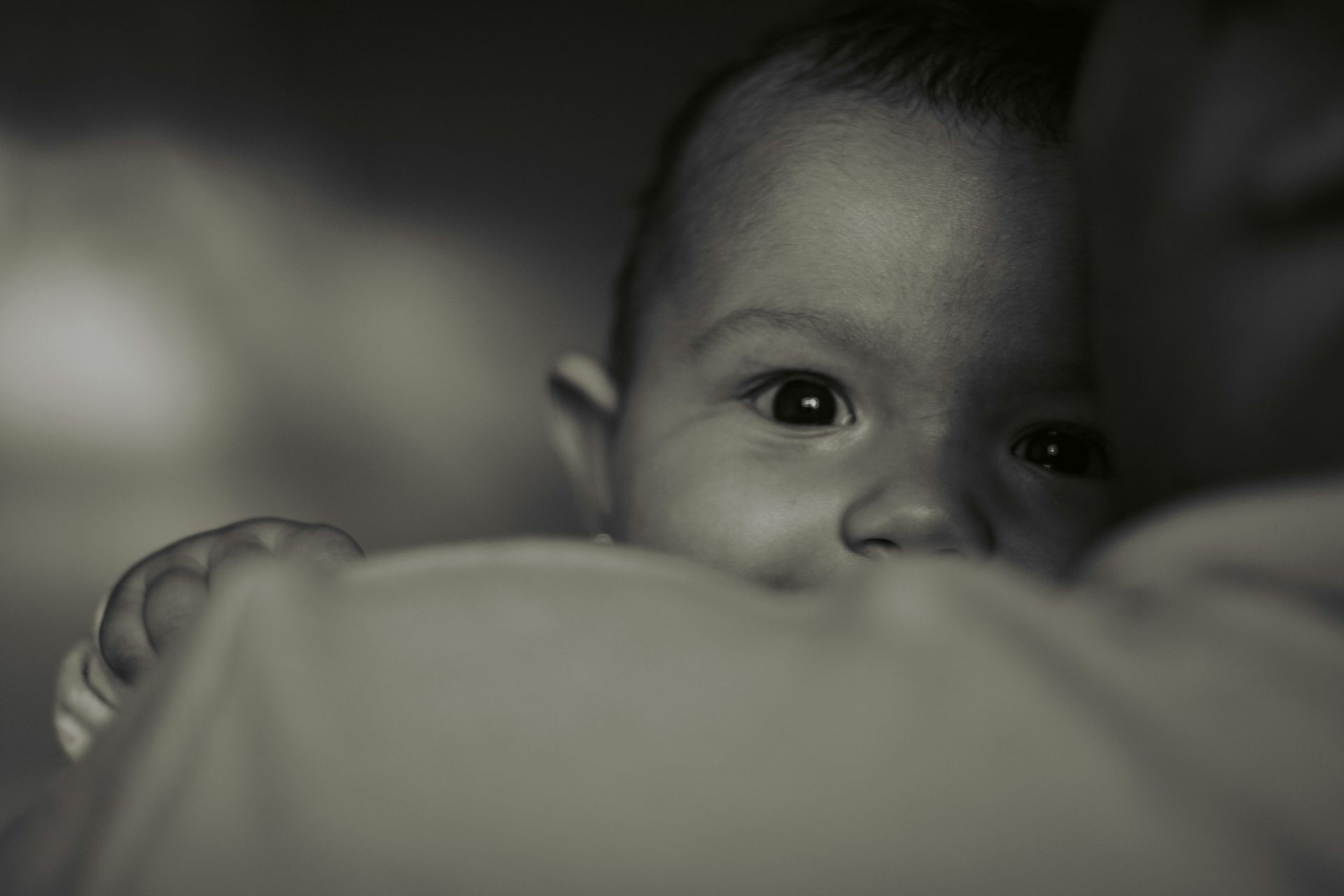
Inside the head of my three-month-old granddaughter, Lucy, said G.K. Chesterton is, "a new universe, as new as it was on the seventh day of creation...a new system of stars, new grass, new cities...and new seas." And this is because, he adds: The gravity of astonishment at the universe...dwells in the eyes of a baby three-months-old [and] the universe is put upon its trial and forces us actually to remodel our conduct...we seem to be dealing with a new race, only to be seen through a microscope...[with] delightful bulbous heads, three times too big for the body. But Chesterton's central thesis in this essay is not that babies are so marvelous, but that our treatment of each other as adults, in contrast, is so broken. "It is our attitude towards grown-up people that is wrong," he writes, because we no longer see each other with astonishment and wonder (unless, that is, we are falling in love). But babies remind us that humans really are astonishing, and this "revolutionary theory of the marvelousness of all things" should force us to "remodel our conduct" toward everyone we meet. A baby seems to be a necessary icon for us, correcting our eyesight which grows old and struggles to see "the weight of glory" in each other as teenagers, adults, and perhaps especially, as old people. Even though he did not reference icons in his essay, we seem to drift very easily into what could be called a type of iconoclasm, an inability to see each other as image bearers of God Himself. William Wordsworth describes us as "trailing clouds of glory" when we first arrive here "from God, who is our home." But soon, he says, "shades of the prison-house" begin to smother us, and we forget. "We bow to grown people," says Chesterton in this same essay, "take off our hats to them, refrain from contradicting them flatly, but we do not appreciate them properly." God speaks to us, like we are working through in St. John of Damascus , through the "cataphatic or apophatic spectrum of theology," or literally from the spoken word (cataphatic) or unspeakable word (apophatic). Apophatic I noticed has the same root in Greek as Infant does in Latin. Both mean "unspoken." God has given us both bibles and babies, speechless wonders through which He means to unglaze our eyes and fill us with astonishment. MARK C. WATNEY is professor emeritus at Sterling College, assisting in its newly established C. S. Lewis Center. He has given papers at Harvard's Center for Hellenic Studies and Dordt College
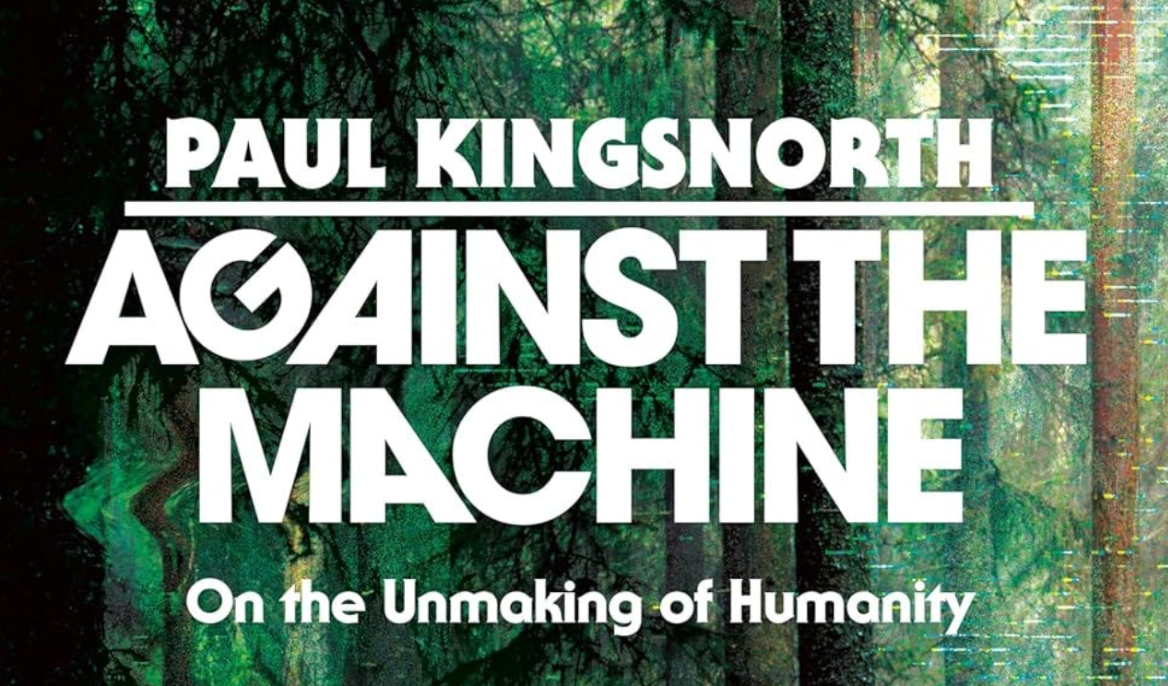
"God became man, so that man might become God." St. Athanasius the Great, On the Incarnation (54:3) These words from St. Athanasius may sound, at first blush, provocative. However, St. Athanasius is restating, perhaps more simply, what St. Peter says in his second epistle: the promise of being united to Christ is that men and women made in His image will partake in His divine nature (2 Peter 1:4). Paul Kingsnorth's latest book, Against the Machine, inverts this idea and opens our eyes to the world emerging at a rapid rate, the world dominated by what he calls The Machine. The new mantra of The Machine age is, instead, this: Man will become God by Man's own self-creation. Reading Kingsnorth is not for the faint of heart. It's easy to be overcome by despair. The goal of the Machine age is "transhumanism", to be liberated from the constraints of the body. For the transhumanist (self-described), the future is disembodied. The future is limitless. But this is not liberation. Because the Machine is not limited to the physical world, it follows naturally there is a spiritual nature to this lifestyle, what he ultimately identifies as a manisfestation and/or manipulation of the demonic. Whether or not you agree with his ultimate conclusion, we can see its effects. An entire generation, and many across generations, addicted to screens. Disintegration of communal life, most disastrously in the breakdown of the family. Increasing rates of loneliness, depression, and suicide, especially among children. It's clear we need a Savior, and the Machine isn't it. Instead, Kingsnorth encourages us toward a revival of community, men, women, and children living embodied lives in the same space and time: working together, eating together, worshipping together, loving each other, carrying each other's burdens. If this sounds like Eighth Day Institute...if this sounds like what the Church is meant to be, it is because this is exactly what the Church is. We are saved together in Christ. MICHAEL SIMMON currently serves as the Secretary of Eighth Day Institute Board of Directors and Coordinator for Hall of Men. He resides in Wichita, Kansas with his wife and four children.
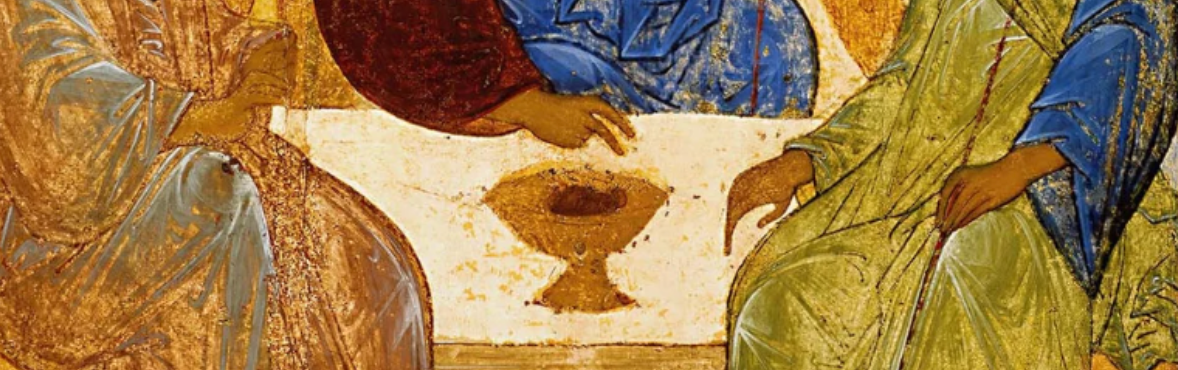
"What is it that has ordered the things of heaven and those of earth, the things which move through the air and those which move in the water; nay, rather the things which proceeded them: heaven and earth and the natures of fire and water? What is it that combined and arranged them...set them into motion and put them on their unceasing and unhindered course?..But who is the architect of these things? Or did not he who made them also bring them into being? We shall certainly not attribute such power to spontaneity." On the Orthodox Faith, Chapter 3 This comes after St. John of Damascus sets out to delineate between the created and the uncreated, a fact which, while at the core of existence, seems for him to be, for this very reason, the simplest to believe. Everything but God is created and, thus, susceptible to change. This means people, but this also means demons, angels, the rest of the created order across the entire cosmos. Everything is vulnerable to unrest. Except for God. If you have ever tried to explain the Holy Trinity to a child for the first time, maybe you have felt as I have the weightier, inexpressible side of God's unchangeability: how do I possibly communicate this essential fact to the person in front of me? (This is usually when my faint stutter starts to pop up again.) I like that here, like St. Patrick reaching for a three-leaf clover, St. John brings us back to earth to better understand the cosmos. Fire and water are no less mysteries than heaven and earth. And yet here we are, cooking and washing, eating and drinking, filled and sustained on what we can neither fully explain nor claim to have created. Only God is unchanging. Vice versa, God is the only constant we need. Maybe the rest is better left unsaid. LUKE TAYLOR GILSTRAP is Vice President of the Board of Directors for Eighth Day Institute. His poems have appeared in Spiritus, Ekstasis (Christianity Today), and Relief Journal, among others. He lives happily in Wichita, Kansas with his wife and three sons.

"Now, one who would speak or hear about God should know beyond any doubt that in what concerns theology and the Incarnation not all things are inexpressible and not all are capable of expression, and neither are all things unknowable nor are they all knowable. That which can be known is one thing, whereas that which can be said is another, just as it is one thing to speak and another to know. Furthermore, many of those things about God which are not clearly perceived cannot be fittingly described, so that we are obliged to express in human terms things which transcend the human order. Thus, for example, in speaking about God we attribute to Him sleep, anger, indifference, hands and feet, and the like." On the Orthodox Faith, Chapter 2 When I was studying Fiction in graduate school, one of the first methods I learned to really situate the reader in the story you were about to tell them was disorientation; if you wanted to ground them in one story, first you had pull the rug out from under their feet. So it's fitting that in the beginning of St. John Damascene's On the Orthodox Faith, before rebuilding our foundation, he first puts us squarely in limbo, seesawing back and forth between certainty and uncertainty. To paraphrase, there is no doubt (certainty) that about God some things can be expressed...but not all things (uncertainty). Some things about God are truly knowable (certainty), but some are unknowable (uncertainty). Oh, and while we're speaking about God (certainty), let's admit there's a gap, too, between what we say and what we know (uncertainty). My favorite line in this spiraling excerpt, "...it is one thing to speak, and another to know," takes me back to the final lines in Wendell Berry's poem, "How to Be a Poet," which he wrote primarily as a reminder to himself: Accept what comes from silence. Make the best you can of it. Of the little words that come out of the silence, like prayers prayed back to the one who prays, make a poem that does not disturb the silence from which it came. Wherever your preferences fall on the cataphatic or apophatic spectrum of theology (whether you lean more toward what we can say about God or what we cannot), Berry's poem, I think, would nod along with St. John: before we say too much, let our words be preserved by the silence from which they came. I'm thinking of the silence, that filling, restorative quiet I feel when I step into a cathedral or in some of my favorite moments with my kids in the early hours. Even before praying, can we hear the One already praying in us? Let's start there. LUKE TAYLOR GILSTRAP is Vice President of the Board of Directors for Eighth Day Institute. His poems have appeared in Spiritus, Ekstasis (Christianity Today), and Relief Journal, among others. He lives happily in Wichita, Kansas with his wife and three sons.
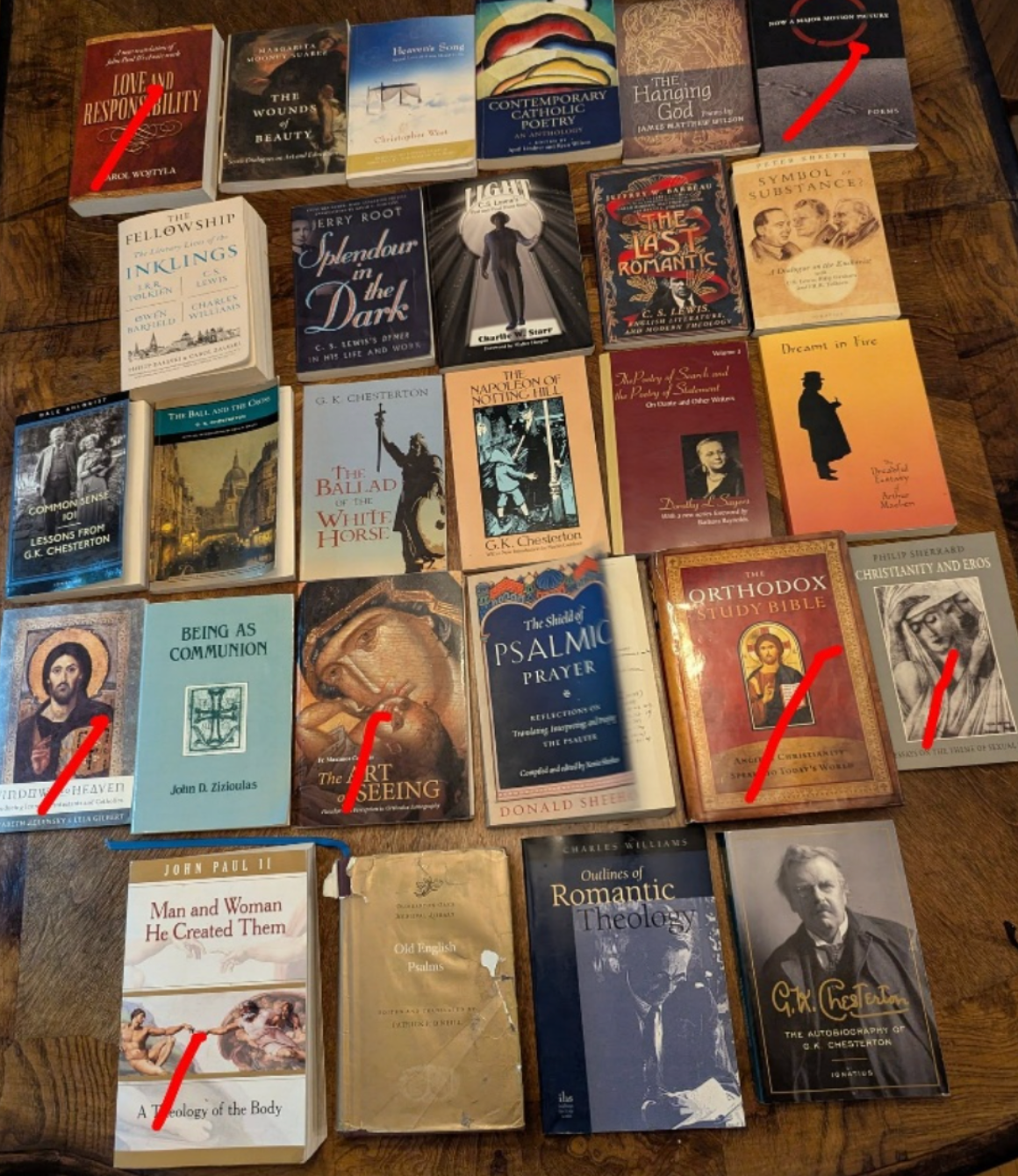
Late-Night Bookstores and Spiritual Reading
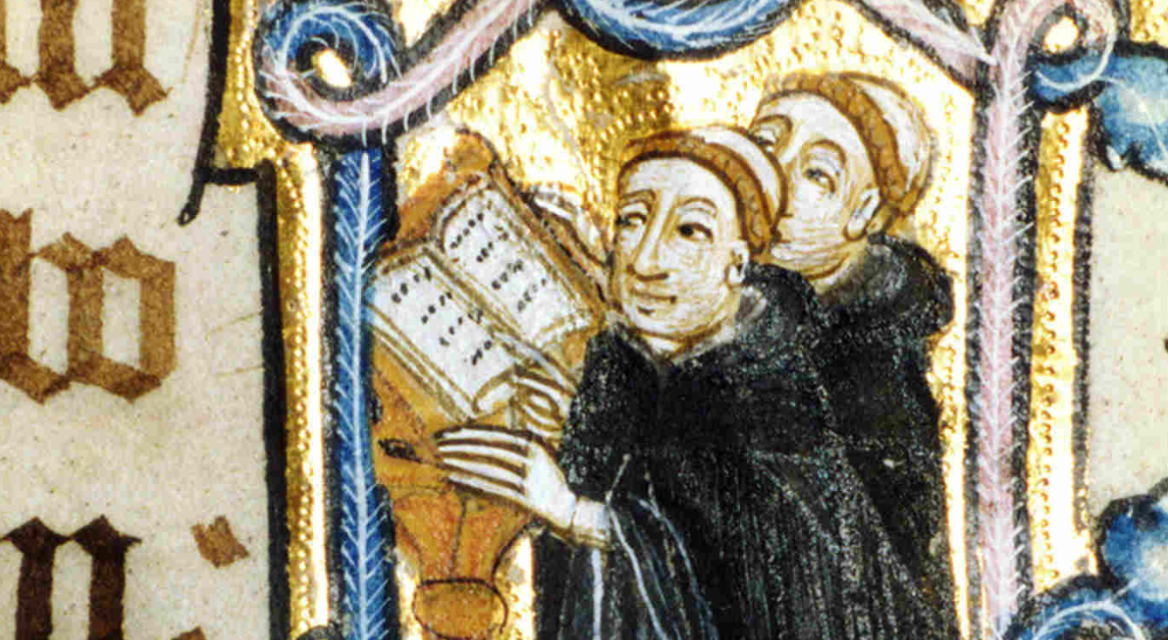
On St. Benedict and the Making of Vows

The Pursuit of Truth in the Age of AI

On the Theology of Raising Chickens

G.K. Chesterton and Raising Small Children
"Seal of the Fathers"