The Mystery of the Incarnation Loudly Proclaimed

St Ignatius of Antioch


Feast of St Ignatius of Antioch

Anno Domini 2017, December 20


13. Therefore make every effort to come together more frequently to give thanks and glory to God. For when you meet together frequently, the powers of Satan are overthrown and his destructiveness is nullified by the unanimity of your faith. There is nothing better than peace, by which all warfare among those in heaven and those on earth is abolished.


14. None of these things escapes your notice, if you have perfect faith and love toward Jesus Christ. For these are the beginning and the end of life: faith is the beginning and love is the end, and the two, when they exist in unity, are God. Everything else that contributes to excellence follows from them. No one professing faith sins, nor does anyone possessing love hate The tree is known by its fruit; thus those who profess to be Christ's will be recognized by their actions. For the work is a matter not of what one promises now, but of persevering to the end in the power of faith.


15. It is better to be silent and be real than to talk and not be real. It is good to teach, if one does what one says. Now there is one teacher, who spoke and it happened; indeed, even the things that He has done in silence are worthy of the Father. The one who truly possesses the word of Jesus is also able to hear His silence, so that he may be perfect, so that he may act through what he says and be known through his silence. Nothing is hidden from the Lord; even our secrets are close to Him. Therefore let us do everything with the knowledge that He dwells in us, in order that we may be His temples, and He may be in us as our God—as, in fact, He really is, as will be made clear in our sight by the love that we justly have for Him.


16. Do not be misled, my brothers and sisters: those who adulterously corrupt households will not inherit the kingdom of God. Now if those who do such things physically are put to death, how much more if by evil teaching someone corrupts faith in God, for which Jesus Christ was crucified! Such a person, having polluted Himself, will go to the unquenchable fire, as will also the one who listens to him.


17. The Lord accepted the ointment upon His head for this reason: that He might breathe incorruptibility upon the Church. Do not be anointed with the stench of the teaching of the ruler of this age, lest he take you captive and rob you of the life set before you. Why do we not all become wise by receiving God's knowledge, which is Jesus Christ? Why do we foolishly perish, ignoring the gracious gift that the Lord has truly sent?


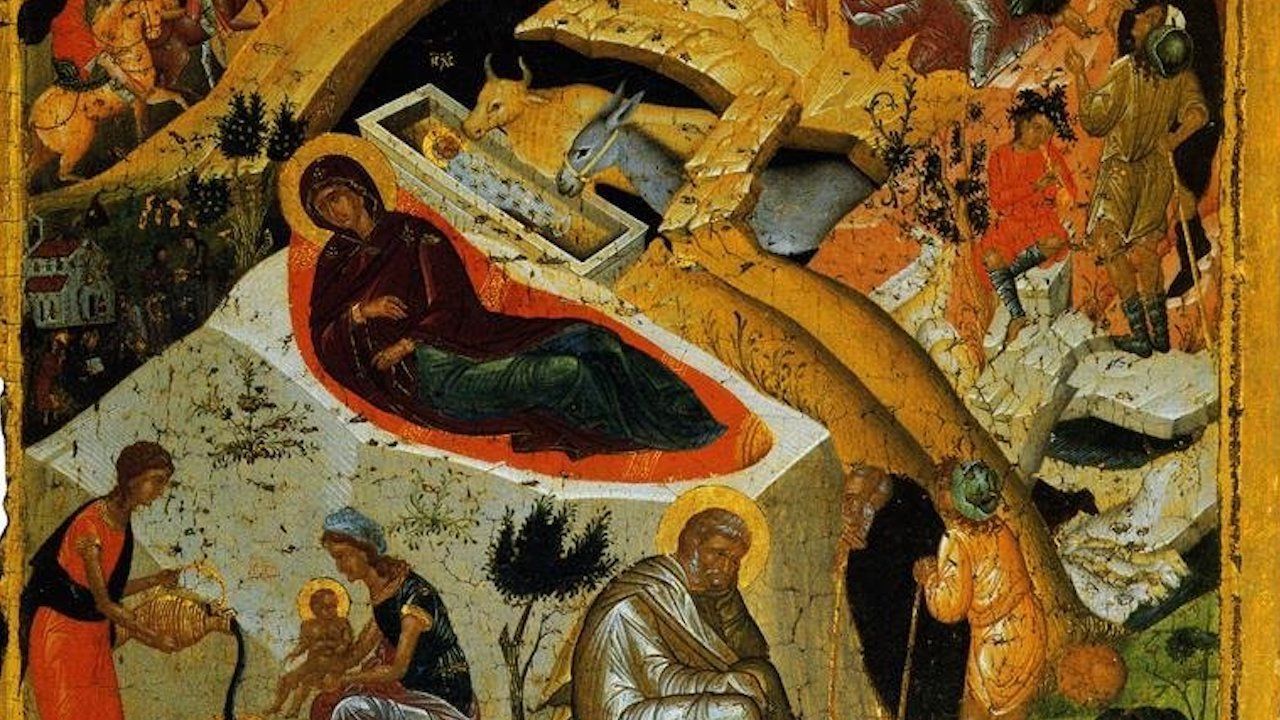
18. My spirit is a humble sacrifice for the cross, which is a stumbling block to unbelievers but salvation and eternal life to us. Where is the wise? Where is the debater? Where is the boasting of those who are thought to be intelligent? For our God, Jesus the Christ, was conceived by Mary according to God’s plan, both from the seed of David and of the Holy Spirit. He was born and was baptized in order that by His suffering He might cleanse the water.


19. Now the virginity of Mary and her giving birth were hidden from the rulers of this age, as was also the death of the Lord – three mysteries to be loudly proclaimed, yet which were accomplished in the silence of God. How, then, were they revealed to the ages? A star shone forth in heaven brighter than all the stars; its light was indescribable and its strangeness caused amazement. All the rest of the constellations, together with the sun and moon, formed a chorus around the star, yet the star itself far outshone them all, and there was perplexity about the origin of this strange phenomenon, which was so unlike the others. Consequently all magic and every kind of spell were dissolved, the ignorance so characteristic of wickedness vanished, and the ancient kingdom was abolished when God appeared in human form to bring the newness of eternal life; and what had been prepared by God began to take effect. As a result, all things were thrown into ferment, because the abolition of death was being carried out.


~St Ignatius of Antioch, Epistle to the Ephesians

Share this Post on Your Preferred Platform
By Luke Taylor Gilstrap July 31, 2026
"What is it that has ordered the things of heaven and those of earth, the things which move through the air and those which move in the water; nay, rather the things which proceeded them: heaven and earth and the natures of fire and water? What is it that combined and arranged them...set them into motion and put them on their unceasing and unhindered course?..But who is the architect of these things? Or did not he who made them also bring them into being? We shall certainly not attribute such power to spontaneity." On the Orthodox Faith, Chapter 3 This comes after St. John of Damascus sets out to delineate between the created and the uncreated, a fact which, while at the core of existence, seems for him to be, for this very reason, the simplest to believe. Everything but God is created and, thus, susceptible to change. This means people, but this also means demons, angels, the rest of the created order across the entire cosmos. Everything is vulnerable to unrest. Except for God. If you have ever tried to explain the Holy Trinity to a child for the first time, maybe you have felt as I have the weightier, inexpressible side of God's unchangeability: how do I possibly communicate this essential fact to the person in front of me? (This is usually when my faint stutter starts to pop up again.) I like that here, like St. Patrick reaching for a three-leaf clover, St. John brings us back to earth to better understand the cosmos. Fire and water are no less mysteries than heaven and earth. And yet here we are, cooking and washing, eating and drinking, filled and sustained on what we can neither fully explain nor claim to have created. Only God is unchanging. Vice versa, God is the only constant we need. Maybe the rest is better left unsaid. LUKE TAYLOR GILSTRAP is Vice President of the Board of Directors for Eighth Day Institute. His poems have appeared in Spiritus, Ekstasis (Christianity Today), and Relief Journal, among others. He lives happily in Wichita, Kansas with his wife and three sons.
By Luke Taylor Gilstrap July 24, 2026
"Now, one who would speak or hear about God should know beyond any doubt that in what concerns theology and the Incarnation not all things are inexpressible and not all are capable of expression, and neither are all things unknowable nor are they all knowable. That which can be known is one thing, whereas that which can be said is another, just as it is one thing to speak and another to know. Furthermore, many of those things about God which are not clearly perceived cannot be fittingly described, so that we are obliged to express in human terms things which transcend the human order. Thus, for example, in speaking about God we attribute to Him sleep, anger, indifference, hands and feet, and the like." On the Orthodox Faith, Chapter 2 When I was studying Fiction in graduate school, one of the first methods I learned to really situate the reader in the story you were about to tell them was disorientation; if you wanted to ground them in one story, first you had pull the rug out from under their feet. So it's fitting that in the beginning of St. John Damascene's On the Orthodox Faith, before rebuilding our foundation, he first puts us squarely in limbo, seesawing back and forth between certainty and uncertainty. To paraphrase, there is no doubt (certainty) that about God some things can be expressed...but not all things (uncertainty). Some things about God are truly knowable (certainty), but some are unknowable (uncertainty). Oh, and while we're speaking about God (certainty), let's admit there's a gap, too, between what we say and what we know (uncertainty). My favorite line in this spiraling excerpt, "...it is one thing to speak, and another to know," takes me back to the final lines in Wendell Berry's poem, "How to Be a Poet," which he wrote primarily as a reminder to himself: Accept what comes from silence. Make the best you can of it. Of the little words that come out of the silence, like prayers prayed back to the one who prays, make a poem that does not disturb the silence from which it came. Wherever your preferences fall on the cataphatic or apophatic spectrum of theology (whether you lean more toward what we can say about God or what we cannot), Berry's poem, I think, would nod along with St. John: before we say too much, let our words be preserved by the silence from which they came. I'm thinking of the silence, that filling, restorative quiet I feel when I step into a cathedral or in some of my favorite moments with my kids in the early hours. Even before praying, can we hear the One already praying in us? ​​​​​​​Let's start there. LUKE TAYLOR GILSTRAP is Vice President of the Board of Directors for Eighth Day Institute. His poems have appeared in Spiritus, Ekstasis (Christianity Today), and Relief Journal, among others. He lives happily in Wichita, Kansas with his wife and three sons.
By Mark C. Watney July 20, 2026
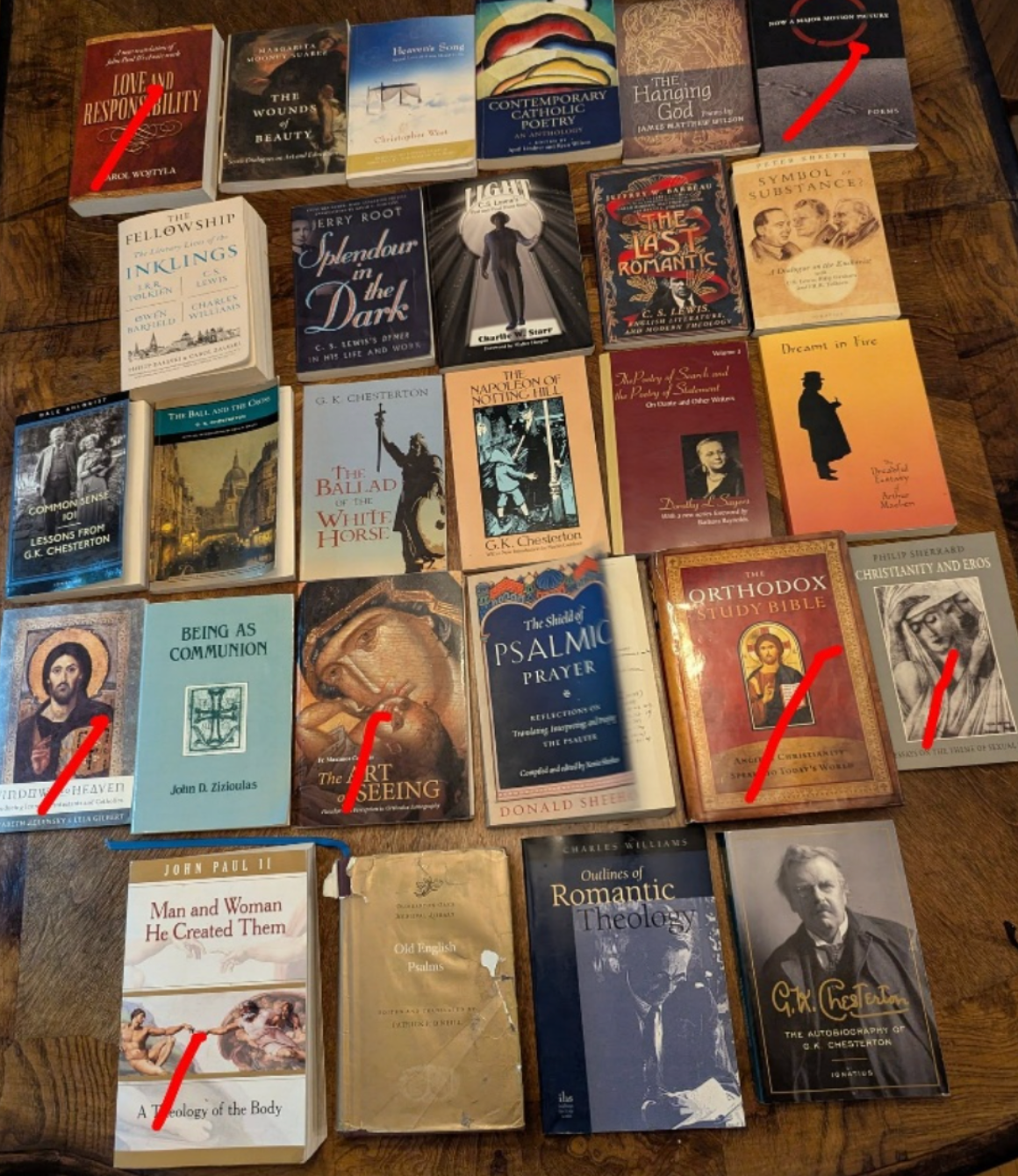
Late-Night Bookstores and Spiritual Reading
By Sarah Orner July 20, 2026
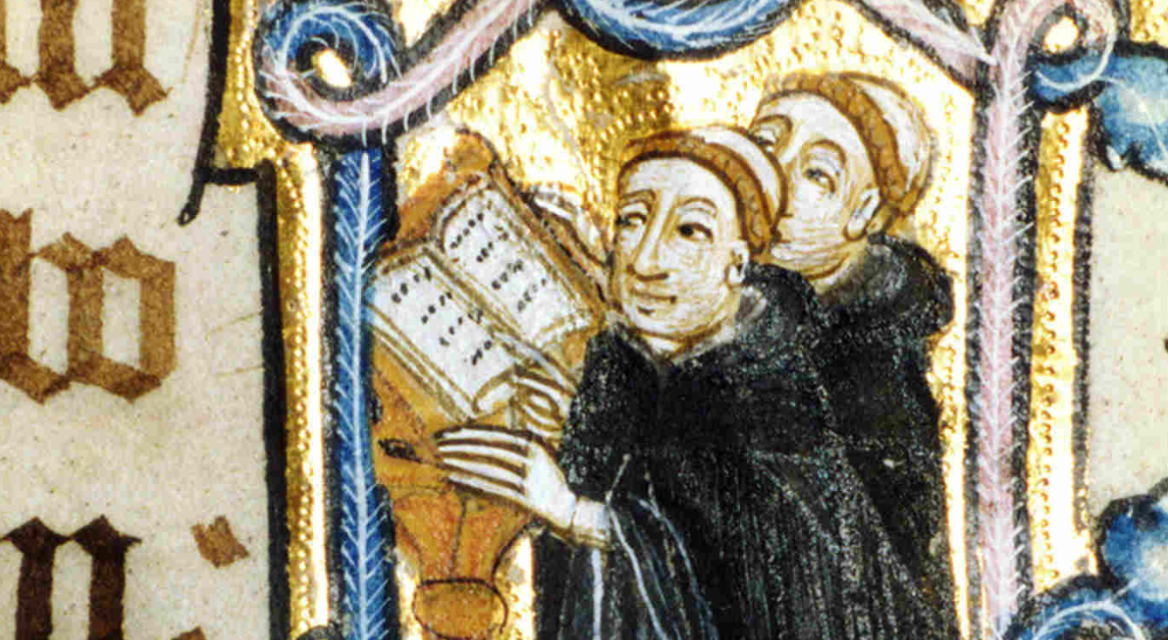
On St. Benedict and the Making of Vows
By Luke Taylor Gilstrap July 20, 2026
The Pursuit of Truth in the Age of AI
By Michael Simmon July 20, 2026
On the Theology of Raising Chickens
By Luke Taylor Gilstrap July 20, 2026
G.K. Chesterton and Raising Small Children
By Fr. Mark Lovett June 9, 2026
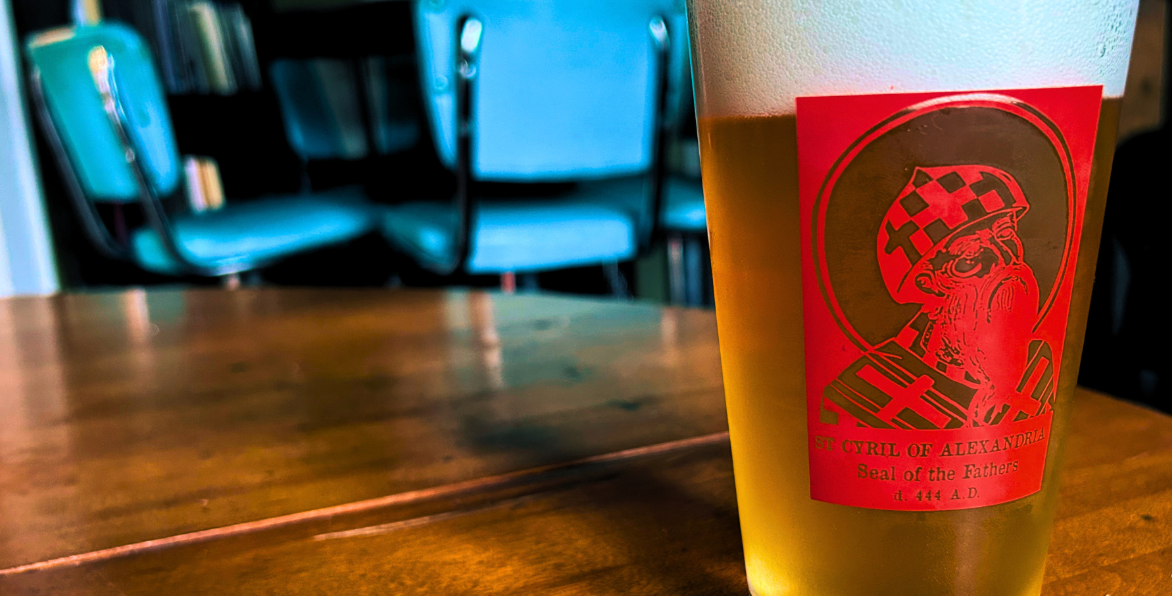
"Seal of the Fathers"
By Luke Taylor Gilstrap June 9, 2026
In Memory of Warren Farha, 1955-2026
By Jeremy Wagner May 15, 2026
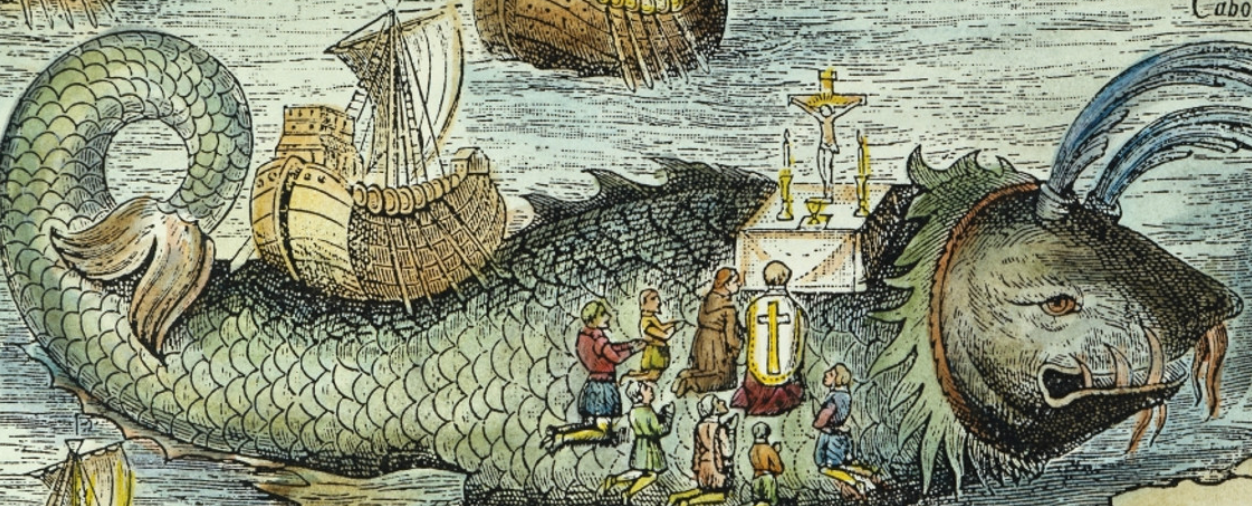
An Ode to St. Brendan the Voyager
More Posts