The Fathers - Part II
Saints See the Light, Reveal the Truth, & Show Us the Way
by Archimandrite Vasileios
Feast of the 20,000 Martyrs Burned in Nicomedia
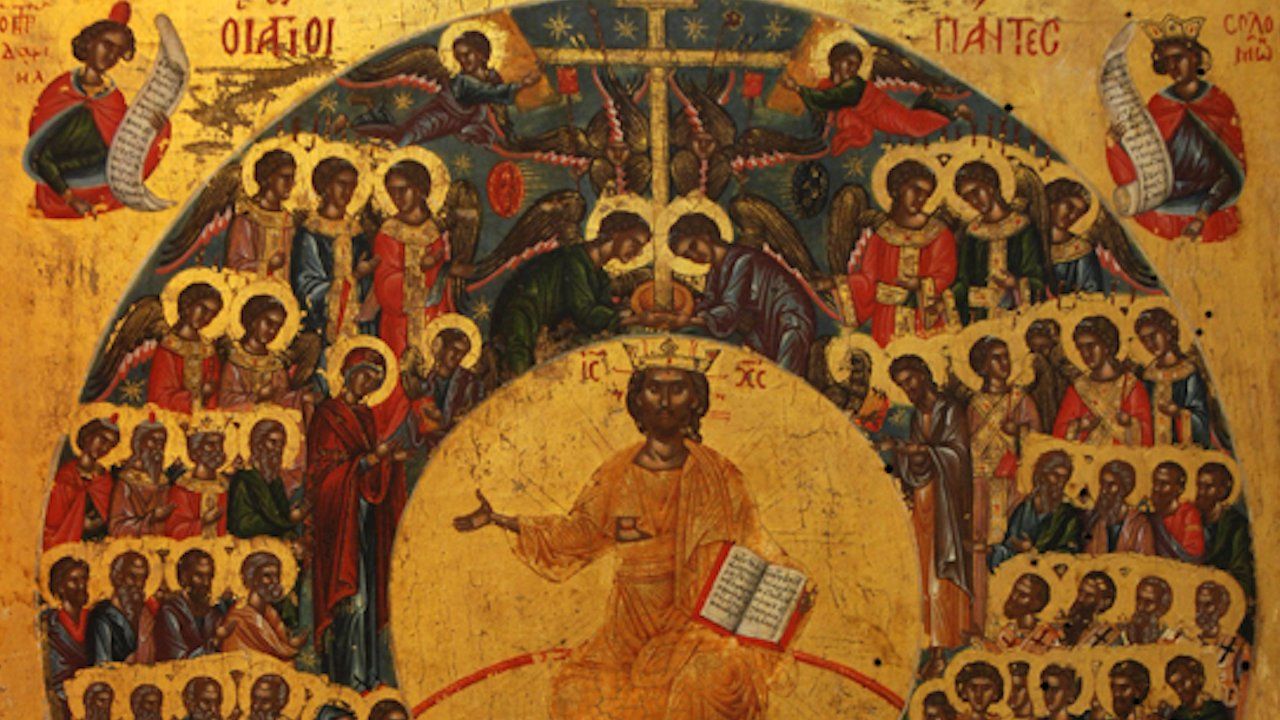
EACH FATHER, in his own personal way, reveals the same Truth. Thus we have a St Basil the Great who speaks in a kingly tone, with grandeur and sobriety, transmitting the message of the Kingdom.
We have a Chrysostom: like the nightingale that vibrates all over and lights up the whole night with the metallic sheen of its voice, so this inspired saint participates totally in the message he preaches; the little tabernacle of his body pulsates, and the crowds are divinely stirred down the ages. He sees the Lord, the God-man, in His Passion and in His Resurrection. He describes Him lifted up outside the city, outside the walls, on a high scaffold, so as to cleanse the air, the whole creation and the inhabited earth. Then he comes to his paschal Catechetical Oration in which he goes beyond the present age and makes everyone hear already today the ineffable words of the age to come. And amidst the great explosion of paschal light where the laws of nature are done away with, he calls all to the joy of the Lord.
We have Gregory, the theologian and poet, with his dense prose and his god-inspired eloquence. He is speaking on the Nativity, and he talks about other things. He formulates certain expressions which show the depth of his theology and his knowledge of what man is. These terse paragraphs (Hom. 38, On Nativity/Theophany, 7-13), taking in the mystery of creation and salvation, describe the essence of the Nativity. They reveal the truth of our being. They throw light on the mystery of the Incarnation of God. And he puts the same words, without change or addition, into his homily on Easter (Hom. 45, 3-9). Because he wants to be original as a poet, he says exactly the same thing. For in the realm of truth, repetition is surprise.
The theological writing of Gregory of Nyssa, with its god-inspired philosophizing and its clarity, is the clearest possible portrayal of the man who has formulated the vital questions. He has found the answer. He has overcome the obstacles. He has “crossed the Alps.” He has had experience of ravines becoming bridges for him and mountains becoming plain, so that he can progress unhindered. He hears God’s answer “through what He refuses’ (Life of Moses
2.232), through the questions which God refuses to answer. And the silence and failure to answer on God’s part are a clear explanation which enlightens Gregory and reassures him.
We have Maximus, the confessor who, true to his name, is indeed “greatest,” who in his liturgical experience comes close to “the God of ineffable and unseen mysteries” (Liturgy of the Presanctified Gifts). In few words, he speaks of things without end. And within the universe of his theology, you have the sense that there are stars of truth whose light has not yet reached your senses. He is the great theological lightening flash in history, who illuminates, liberates, and unites all things. he is the justification for the desperate longing of those who lived before him, who speak in the terse and complicated phraseology of Heraclitus.
The Fathers saw the true light. They gained spiritual health. They were freed from themselves. They enjoyed the freedom of the age to come. They are satiated with grace. They trust in God’s love. They have seen what end everything is leading to. They have reached the point of saying consciously: “Lord, now lettest Thou thy servant depart in peace” (Lk. 2:29).
[…] They believe, experience, and know that God loves every creature He has made. He loves the whole person, and his freedom. And it is of great importance to approach God in freedom, when your time comes. It is important to take a risk at some point in taking your personal step. To dare to express your objections or doubts, as did the Apostle Thomas. To confess the truth. To hear the Good Shepherd calling you by name. To cross the threshold of fear and hesitation. To tear up the contract of slavery. To go forward in freedom. And to take the next step: voluntarily to enslave yourself to God. To say: My God, I have no confidence in myself. My true self is You, who created me, who love me and who call me to the dangerous adventure of freedom so that I can find my soul by deliberately losing it. This is why I ask and want Your will to be done, and not my own.
Then you begin to tread different ground; to fly on the wings of the wind of the Spirit. And divine grace cares for you as a hen her chicks.
This is the way one starts off. One crosses oneself and sets out, giving oneself over to the divine will. And God gives grace and joys, without our deserving it. For in every age “He has not left Himself without witness, for He does good” (cf. Acts 14:17); He has always had His saints. “He has not left Himself without witness” to any human being; each one of us has an inner experience of His love.
~Archimandrite Vasileios, excerpt from “The Light of Christ Shines upon All” through All the Saints
;
available at Eighth Day Books
*Register for the Eighth Day Symposium("For I Am Holy: The Command to Be Like God") before regular registration rates begin on January 7.
Share this Post on Your Preferred Platform
"What is it that has ordered the things of heaven and those of earth, the things which move through the air and those which move in the water; nay, rather the things which proceeded them: heaven and earth and the natures of fire and water? What is it that combined and arranged them...set them into motion and put them on their unceasing and unhindered course?..But who is the architect of these things? Or did not he who made them also bring them into being? We shall certainly not attribute such power to spontaneity." On the Orthodox Faith, Chapter 3 This comes after St. John of Damascus sets out to delineate between the created and the uncreated, a fact which, while at the core of existence, seems for him to be, for this very reason, the simplest to believe. Everything but God is created and, thus, susceptible to change. This means people, but this also means demons, angels, the rest of the created order across the entire cosmos. Everything is vulnerable to unrest. Except for God. If you have ever tried to explain the Holy Trinity to a child for the first time, maybe you have felt as I have the weightier, inexpressible side of God's unchangeability: how do I possibly communicate this essential fact to the person in front of me? (This is usually when my faint stutter starts to pop up again.) I like that here, like St. Patrick reaching for a three-leaf clover, St. John brings us back to earth to better understand the cosmos. Fire and water are no less mysteries than heaven and earth. And yet here we are, cooking and washing, eating and drinking, filled and sustained on what we can neither fully explain nor claim to have created. Only God is unchanging. Vice versa, God is the only constant we need. Maybe the rest is better left unsaid. LUKE TAYLOR GILSTRAP is Vice President of the Board of Directors for Eighth Day Institute. His poems have appeared in Spiritus, Ekstasis (Christianity Today), and Relief Journal, among others. He lives happily in Wichita, Kansas with his wife and three sons.

"Now, one who would speak or hear about God should know beyond any doubt that in what concerns theology and the Incarnation not all things are inexpressible and not all are capable of expression, and neither are all things unknowable nor are they all knowable. That which can be known is one thing, whereas that which can be said is another, just as it is one thing to speak and another to know. Furthermore, many of those things about God which are not clearly perceived cannot be fittingly described, so that we are obliged to express in human terms things which transcend the human order. Thus, for example, in speaking about God we attribute to Him sleep, anger, indifference, hands and feet, and the like." On the Orthodox Faith, Chapter 2 When I was studying Fiction in graduate school, one of the first methods I learned to really situate the reader in the story you were about to tell them was disorientation; if you wanted to ground them in one story, first you had pull the rug out from under their feet. So it's fitting that in the beginning of St. John Damascene's On the Orthodox Faith, before rebuilding our foundation, he first puts us squarely in limbo, seesawing back and forth between certainty and uncertainty. To paraphrase, there is no doubt (certainty) that about God some things can be expressed...but not all things (uncertainty). Some things about God are truly knowable (certainty), but some are unknowable (uncertainty). Oh, and while we're speaking about God (certainty), let's admit there's a gap, too, between what we say and what we know (uncertainty). My favorite line in this spiraling excerpt, "...it is one thing to speak, and another to know," takes me back to the final lines in Wendell Berry's poem, "How to Be a Poet," which he wrote primarily as a reminder to himself: Accept what comes from silence. Make the best you can of it. Of the little words that come out of the silence, like prayers prayed back to the one who prays, make a poem that does not disturb the silence from which it came. Wherever your preferences fall on the cataphatic or apophatic spectrum of theology (whether you lean more toward what we can say about God or what we cannot), Berry's poem, I think, would nod along with St. John: before we say too much, let our words be preserved by the silence from which they came. I'm thinking of the silence, that filling, restorative quiet I feel when I step into a cathedral or in some of my favorite moments with my kids in the early hours. Even before praying, can we hear the One already praying in us? Let's start there. LUKE TAYLOR GILSTRAP is Vice President of the Board of Directors for Eighth Day Institute. His poems have appeared in Spiritus, Ekstasis (Christianity Today), and Relief Journal, among others. He lives happily in Wichita, Kansas with his wife and three sons.
Late-Night Bookstores and Spiritual Reading
On St. Benedict and the Making of Vows

The Pursuit of Truth in the Age of AI

On the Theology of Raising Chickens

G.K. Chesterton and Raising Small Children
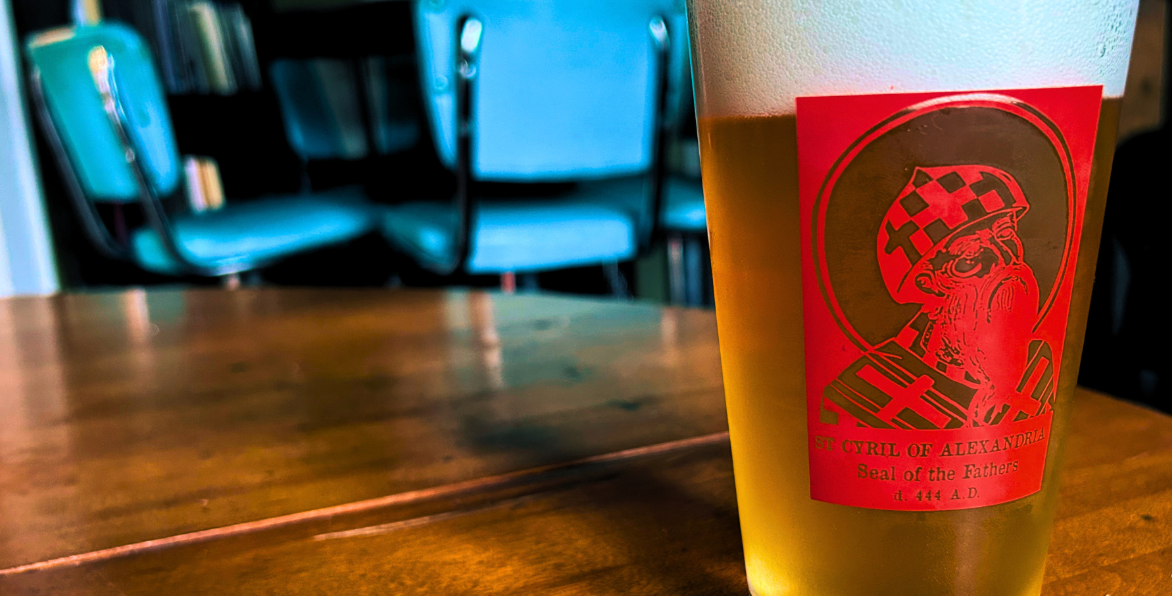
"Seal of the Fathers"
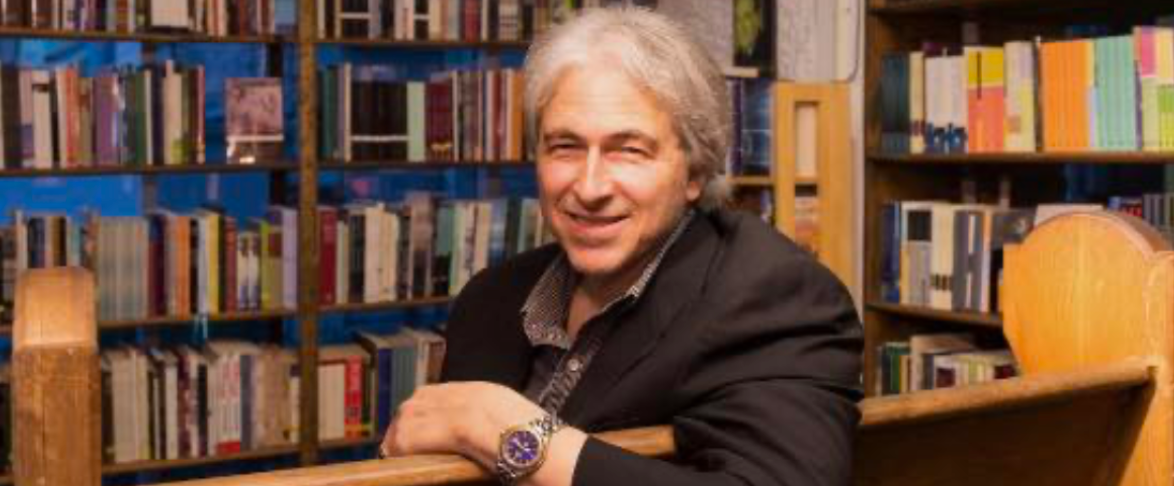
In Memory of Warren Farha, 1955-2026
An Ode to St. Brendan the Voyager