The Birth of the New Adam, Our Renewal

by Fr Calinic Berger


Feast of St Philip, Metropolitan of Moscow and All Russia

Anno Domini 2021, January 9


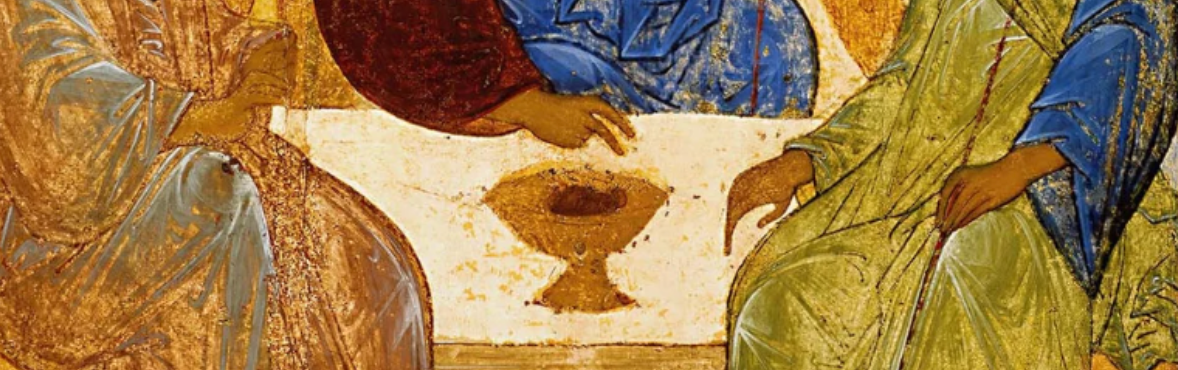
“God became man so that man might become god,” wrote St. Irenaeus in the second century. His saying has become a precept of the Orthodox Faith repeated by many Fathers. Through His birth, the Son of God “renewed nature”—brought it back to what it was meant to be. More than this, He gave human nature something it could have never obtained for itself: His own Divine Presence accessible from within it. The patristic axiom does not say, “God became man so that man might become man again,” but might “become god”—that is, one with the God in whose image we were created.


In fact, “becoming god” is engrained in human nature. It is both our original calling (Gen. 1:27) and our original sin (Gen. 3:5). Man can never be satisfied with the things of the earth or with anything that he has “obtained.” He will always seek for more, always seek to transcend, always strive for the infinite. Only God can ultimately satisfy man. The fall of Adam consisted of his misuse of his human capacity for infinite growth, for instead of seeking God and uniting with Him, Adam made himself and the things of the earth his goal. These things are finite and taken by themselves cannot satisfy man and will ultimately only lead to boredom.


The Son of God becomes man in order to redirect our human powers to God and thereby enable our divinely ordained destiny. Christ takes up once again the calling of Adam and so He is called the “second Adam” (1 Cor. 15:45ff.). He is both the restoration and the fulfillment, the source and the goal, of human life. This is why everything in His birth, life and death, parallels what happened in the life of the first Adam. Christ as the new Adam “undoes” what Adam did and fulfills what he did not do.


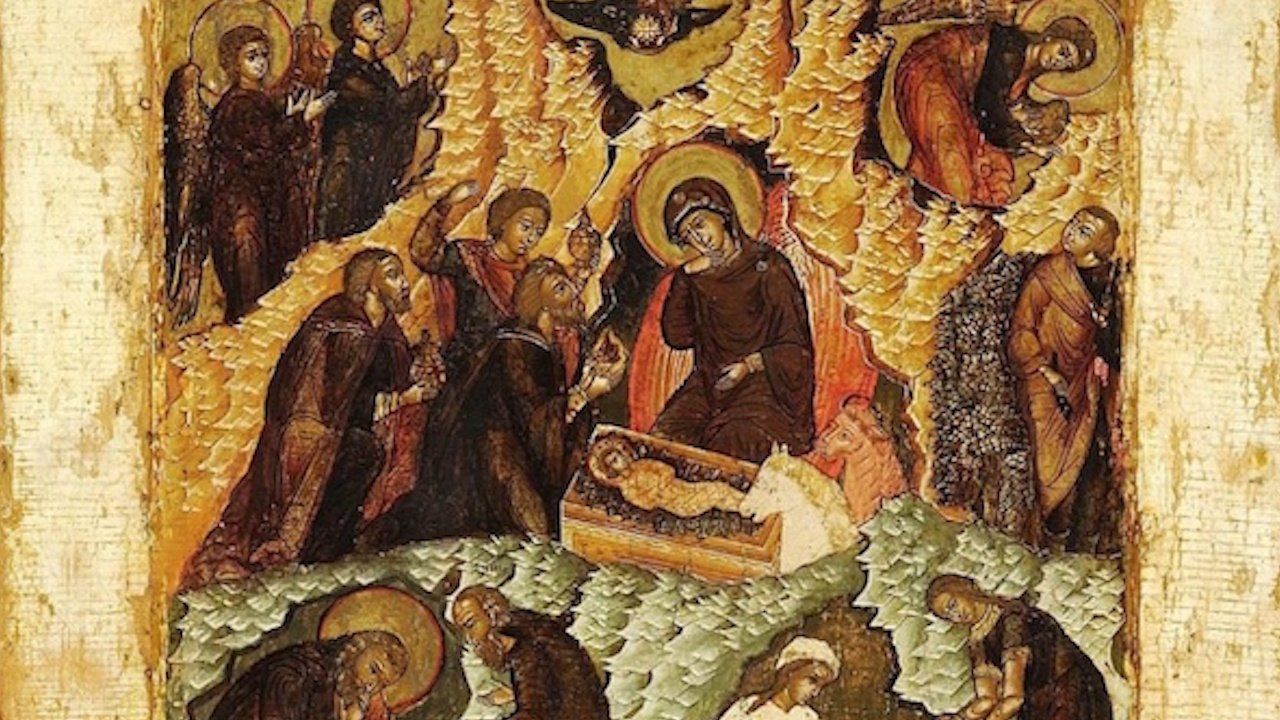
Seen from this perspective, many details in the birth of the Son of God begin to make perfect sense. Christ the New Adam was not born in a palace but in a cave of the earth, the earth from which the old Adam was created. The New Adam is born among animals in a manger, restoring the concord between man and beast that the first Adam was given (Gen. 2:19). The New Adam is born with angelic praise, as was the first Adam (Job 38:7), exhibiting the primordial harmony between the human and angelic worlds. The New Adam is born amidst both shepherds and kings, the rich and poor together, to show the fundamental brotherhood of all men.


Above all, the new Adam is born beyond all human egocentricity, in a manner which involves no self-interest and transcends natural law. Rather, His birth was the result of total obedience and self-sacrifice to the will of God. He was born from the freely offered obedience of the Virgin Mary. The first Adam had no human father and neither does the new Adam. Christ is born with Adam’s human nature, and hence He is subject to pain, weakness, etc., yet He received His human nature without any sin and remained free from sin even unto the death on the Cross. Christ’s birth was a result of free obedience with no necessity, and so was His death. His birth free of corruption ensured that His death was wholly voluntary and therefore it freed human nature from death. By being freed from corruption and death it is thereby fully renewed. Christ then offers His renewed and deified Body and Blood, permeated with God’s power, to each one of us in the Eucharist.


The birth of the Son of God is an occasion for reflection on our own rebirth and renewal. Through our baptism and our devotion to Christ, each of us is called to continue God’s incarnate presence among us, to “put on Christ” (Gal. 3:27). Each one of us has a potential from our baptism that we must labor to actualize in our lives. The “old man” in each of us must die, such that the “new man” might be free to live and grow (2 Cor. 5:17). That is why the Orthodox Church calls us to fast in the season before Christmas. Through this we seek to replace the unrestrained eating of the old Adam in Paradise with the self-controlled devotion to God of the New Adam. To prepare for Christmas in this manner is much different than the way it is done in contemporary society. We are also called to celebrate Christmas differently. St. Gregory the Theologian put it this way: “Therefore let us keep the Feast, not after the manner of a heathen festival, but in a godly manner; not after the way of the world, but in a fashion above the world; not as our own, but as belonging to the Master; not as of weakness, but as of healing; not as of creation, but as of re-creation.” This is the challenge of Christmas: to be reborn. It is a season of fasting, of the redirection of our human powers to God and of quietness of soul. Yet it is only in the quiet of the soul—in the quiet of the Bethlehem midnight—that angelic voices are heard, mysteries seen and worshippers are able to kneel before the Son of God. Let our Christmas be like the first Christmas and thereby an occasion for healing and spiritual renewal. Those who keep it thus have the promise of Christmas joy.


*Originally published in Hieromonk Calinic (Berger), Challenges of Orthodox Thought and Life: Reflections on Christian Foundations and Living Traditions (Jackson, MI: Romanian Orthodox Episcopate of America, 2011), 163-165. Available for purchase at Eighth Day Books.

Share this Post on Your Preferred Platform
By Luke Taylor Gilstrap July 31, 2026
"What is it that has ordered the things of heaven and those of earth, the things which move through the air and those which move in the water; nay, rather the things which proceeded them: heaven and earth and the natures of fire and water? What is it that combined and arranged them...set them into motion and put them on their unceasing and unhindered course?..But who is the architect of these things? Or did not he who made them also bring them into being? We shall certainly not attribute such power to spontaneity." On the Orthodox Faith, Chapter 3 This comes after St. John of Damascus sets out to delineate between the created and the uncreated, a fact which, while at the core of existence, seems for him to be, for this very reason, the simplest to believe. Everything but God is created and, thus, susceptible to change. This means people, but this also means demons, angels, the rest of the created order across the entire cosmos. Everything is vulnerable to unrest. Except for God. If you have ever tried to explain the Holy Trinity to a child for the first time, maybe you have felt as I have the weightier, inexpressible side of God's unchangeability: how do I possibly communicate this essential fact to the person in front of me? (This is usually when my faint stutter starts to pop up again.) I like that here, like St. Patrick reaching for a three-leaf clover, St. John brings us back to earth to better understand the cosmos. Fire and water are no less mysteries than heaven and earth. And yet here we are, cooking and washing, eating and drinking, filled and sustained on what we can neither fully explain nor claim to have created. Only God is unchanging. Vice versa, God is the only constant we need. Maybe the rest is better left unsaid. LUKE TAYLOR GILSTRAP is Vice President of the Board of Directors for Eighth Day Institute. His poems have appeared in Spiritus, Ekstasis (Christianity Today), and Relief Journal, among others. He lives happily in Wichita, Kansas with his wife and three sons.
By Luke Taylor Gilstrap July 24, 2026
"Now, one who would speak or hear about God should know beyond any doubt that in what concerns theology and the Incarnation not all things are inexpressible and not all are capable of expression, and neither are all things unknowable nor are they all knowable. That which can be known is one thing, whereas that which can be said is another, just as it is one thing to speak and another to know. Furthermore, many of those things about God which are not clearly perceived cannot be fittingly described, so that we are obliged to express in human terms things which transcend the human order. Thus, for example, in speaking about God we attribute to Him sleep, anger, indifference, hands and feet, and the like." On the Orthodox Faith, Chapter 2 When I was studying Fiction in graduate school, one of the first methods I learned to really situate the reader in the story you were about to tell them was disorientation; if you wanted to ground them in one story, first you had pull the rug out from under their feet. So it's fitting that in the beginning of St. John Damascene's On the Orthodox Faith, before rebuilding our foundation, he first puts us squarely in limbo, seesawing back and forth between certainty and uncertainty. To paraphrase, there is no doubt (certainty) that about God some things can be expressed...but not all things (uncertainty). Some things about God are truly knowable (certainty), but some are unknowable (uncertainty). Oh, and while we're speaking about God (certainty), let's admit there's a gap, too, between what we say and what we know (uncertainty). My favorite line in this spiraling excerpt, "...it is one thing to speak, and another to know," takes me back to the final lines in Wendell Berry's poem, "How to Be a Poet," which he wrote primarily as a reminder to himself: Accept what comes from silence. Make the best you can of it. Of the little words that come out of the silence, like prayers prayed back to the one who prays, make a poem that does not disturb the silence from which it came. Wherever your preferences fall on the cataphatic or apophatic spectrum of theology (whether you lean more toward what we can say about God or what we cannot), Berry's poem, I think, would nod along with St. John: before we say too much, let our words be preserved by the silence from which they came. I'm thinking of the silence, that filling, restorative quiet I feel when I step into a cathedral or in some of my favorite moments with my kids in the early hours. Even before praying, can we hear the One already praying in us? ​​​​​​​Let's start there. LUKE TAYLOR GILSTRAP is Vice President of the Board of Directors for Eighth Day Institute. His poems have appeared in Spiritus, Ekstasis (Christianity Today), and Relief Journal, among others. He lives happily in Wichita, Kansas with his wife and three sons.
By Mark C. Watney July 20, 2026
Late-Night Bookstores and Spiritual Reading
By Sarah Orner July 20, 2026
On St. Benedict and the Making of Vows
By Luke Taylor Gilstrap July 20, 2026
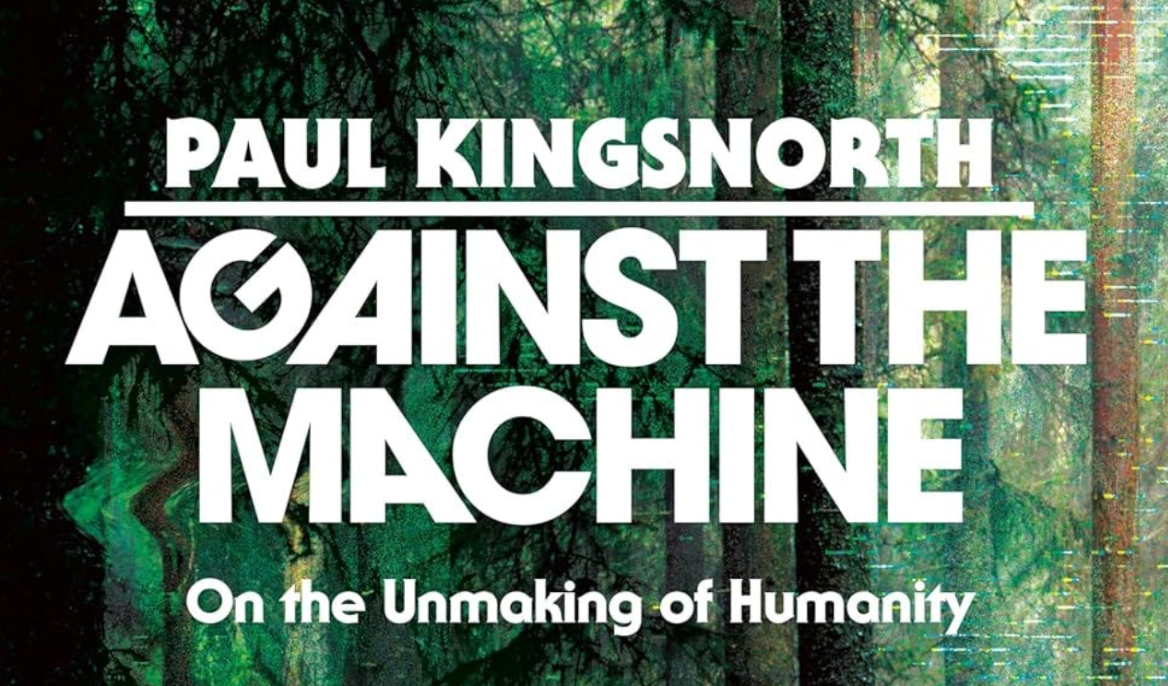
The Pursuit of Truth in the Age of AI
By Michael Simmon July 20, 2026
On the Theology of Raising Chickens
By Luke Taylor Gilstrap July 20, 2026
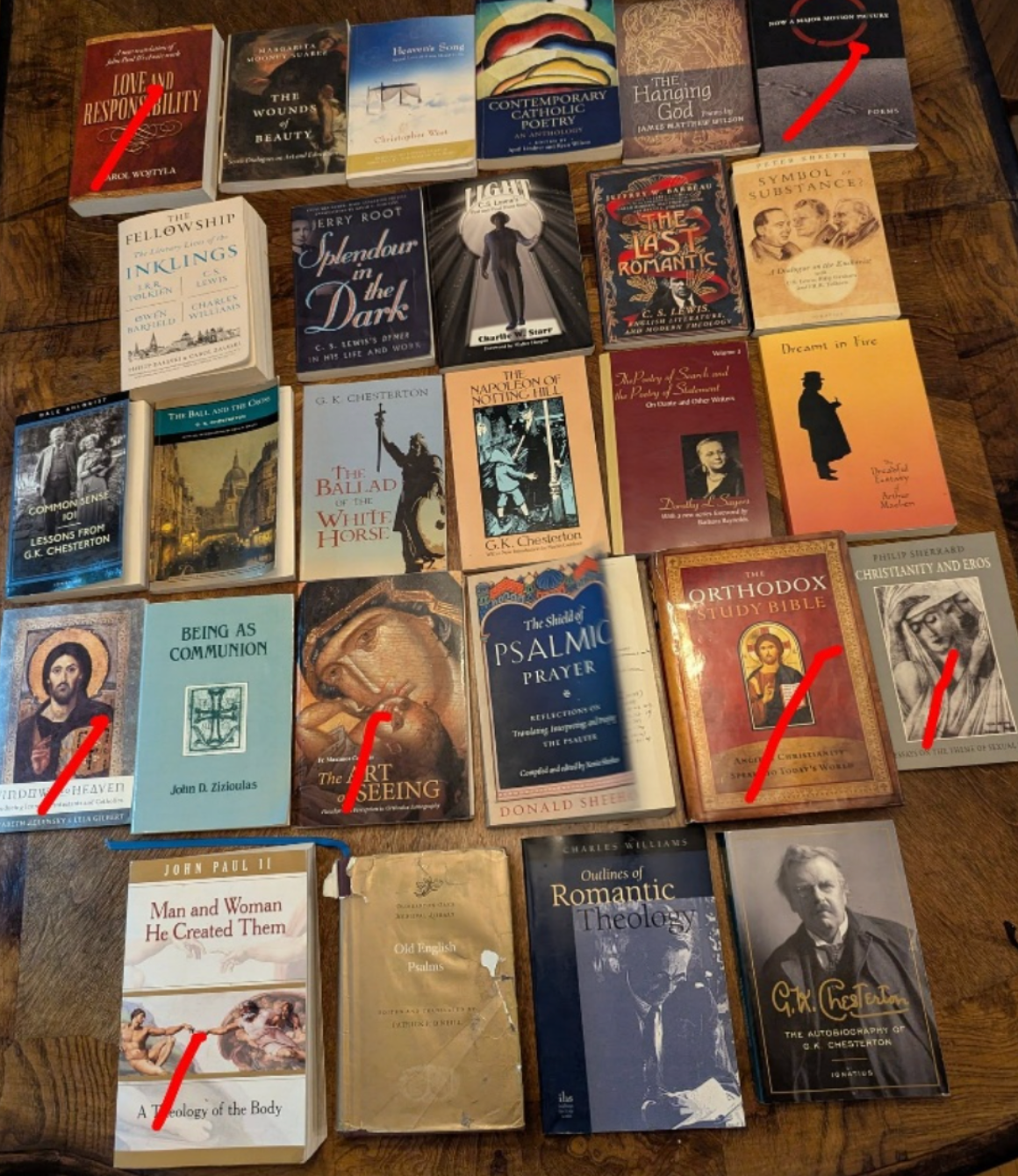
G.K. Chesterton and Raising Small Children
By Fr. Mark Lovett June 9, 2026
"Seal of the Fathers"
By Luke Taylor Gilstrap June 9, 2026
In Memory of Warren Farha, 1955-2026
By Jeremy Wagner May 15, 2026
An Ode to St. Brendan the Voyager
More Posts