Our True and Final Home: An Inklings Walking Tour Toast
by Richard Rohlin
Feast of the Seven Holy Martyred Youths of Ephesus
Anno Domini 2021, October 22
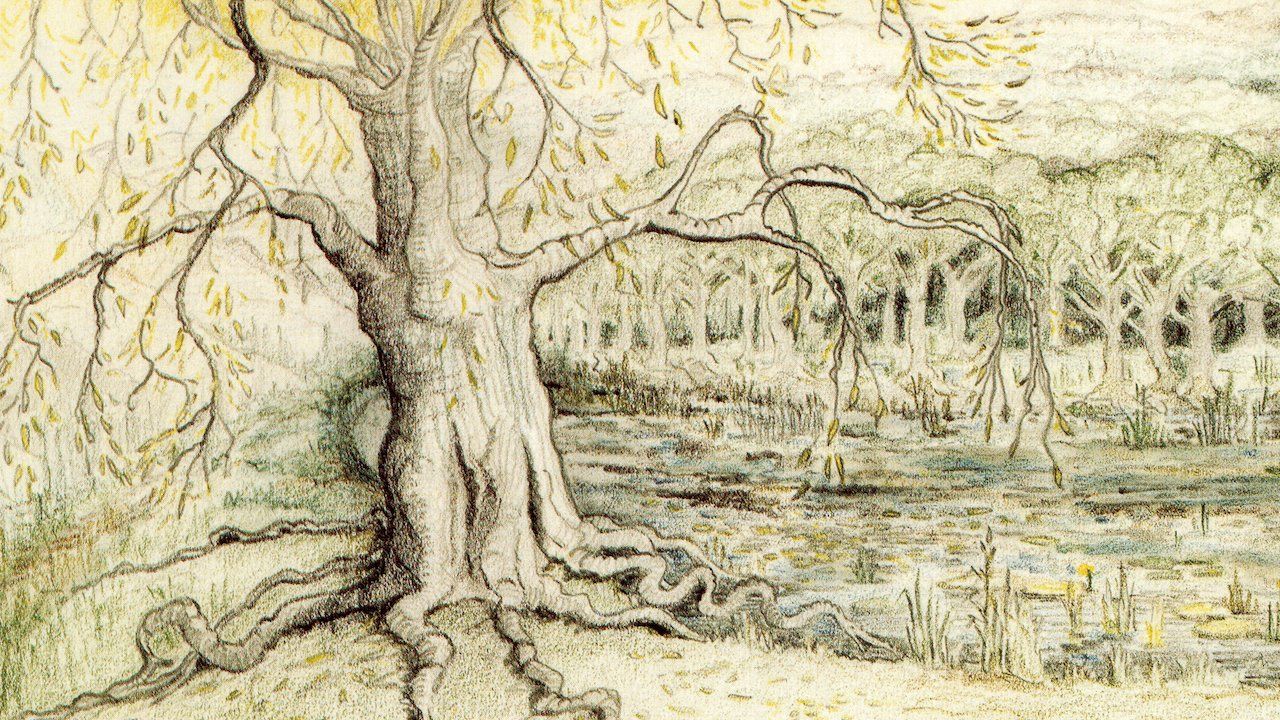
One of the most beautiful ideas that belongs to Tolkien is the idea that all of our creative endeavors in this life will have a place in the life of the age to come, even if that place is “as like and unlike” as we ourselves hope to be versus what we are now. This is an idea that he talks about in his famous essay On Fairy Stories, but Tolkien is a better storyteller and poet than he is an essayist. One of the stories that most beautifully explores this idea is his short story Leaf, by Niggle. It is the story of Niggle, a perfectionist painter who not very successful, partly because of his tendency (like Tolkien) to “niggle” at his work, and partly because he always ends up having to interrupt his work to help take care of his short-sighted, prosaic, grumpy neighbor by the name of Parish. Niggle’s great painting, alas unfinished, is a tree, of which eventually only a single leaf survives. In the end, both Niggle and Parish die, and Niggle passes through a painful purgatorial period in a hospital, followed by a workhouse, during which time the wounds of life are healed and the selfishness is worked out of him. Only then, they are sent to some sort of “valley of the shadow of life,” where the remainder of their work is carried out in a paradisical garden reminiscent of the place the shades visit in C. S. Lewis’s The Great Divorce. But here, there is work to do.
In this garden, Niggle finds his own tree, the one he had spent his whole life painting—here it is completed, and real, and growing beyond his own imagination. But there is much work to do yet, and Niggle and Parish set to work together, ordering and beautifying, until the time comes for them to move on:
As their work drew to an end they allowed themselves more and more time for walking about, looking at the trees, and the flowers, and the lights and shapes, and the lie of the land. Sometimes they sang together; but Niggle found that he was now beginning to turn his eyes, more and more often, toward the Mountains.
The time came when the house in the hollow, the garden, the grass, the forest, the lake, and all the country was nearly complete, in its own proper fashion. The Great Tree was in full blossom.
"We shall finish this evening," said Parish one day. "After that we will go for a really long walk."
They set out next day, and they walked until they came right through the distances to the Edge. It was not visible, of course: there was no line, or fence, or wall; but they knew that they had come to the margin of that country. They saw a man, he looked like a shepherd; he was walking towards them, down the grass-slopes that led up into the Mountains.
"Do you want a guide?" he asked. "Do you-want to go on?"
For a moment a shadow fell between Niggle and Parish, for Niggle knew that he did now want to go on, and (in a sense) ought to go on; but Parish did not want to go on, and was not yet ready to go.
"I must wait for my wife," said Parish to Niggle. "She'd be lonely. I rather gathered that they would send her after me, some time or other, when she was ready, and when I had got things ready for her. The house is finished now, as well as we could make it; but I should like to show it to her. She'll be able to make it better, I expect: more homely. I hope she'll like this country, too." He turned to the shepherd. "Are you a guide?" he asked. "Could you tell me the name of this country?"
"Don't you know?" said the man. "It is Niggle's Country. It is Niggle's Picture, or most of it: a little of it is now Parish's Garden."
"Niggle's Picture!" said Parish in astonishment. "Did you think of all this, Niggle? I never knew you were so clever. Why didn't you tell me?"
"He tried to tell you long ago," said the man; "but you would not look. He had only got canvas and paint in those days, and you wanted to mend your roof with them. This is what you and your wife used to call Niggle's Nonsense, or That Daubing."
"But it did not look like this then, not real," said Parish.
"No, it was only a glimpse then," said the man; "but you might have caught the glimpse, if you had ever thought it worth while to try."
"I did not give you much chance," said Niggle. "I never tried to explain. I used to call you Old Earth-grubber. But what does it matter? We have lived and worked together now. Things might have been different, but they could not have been better. All the same, I am afraid I shall have to be going on. We shall meet again, I expect: there must be many more things we can do together. Good-bye!" He shook Parish's hand warmly: a good, firm, honest hand it seemed. He turned and looked back for a moment. The blossom on the Great Tree was shining like flame. All the birds were flying in the air and singing. Then he smiled, and nodded to Parish, and went off with the shepherd.
He was going to learn about sheep, and the high pasturages, and look at a wider sky, and walk ever further and further towards the Mountains, always uphill. Beyond that I cannot guess what became of him. Even little Niggle in his old home [his life on earth] could glimpse the Mountains far away, and they got into the borders of his picture; but what they are really like, and what lies beyond them, only those can say who have climbed them.
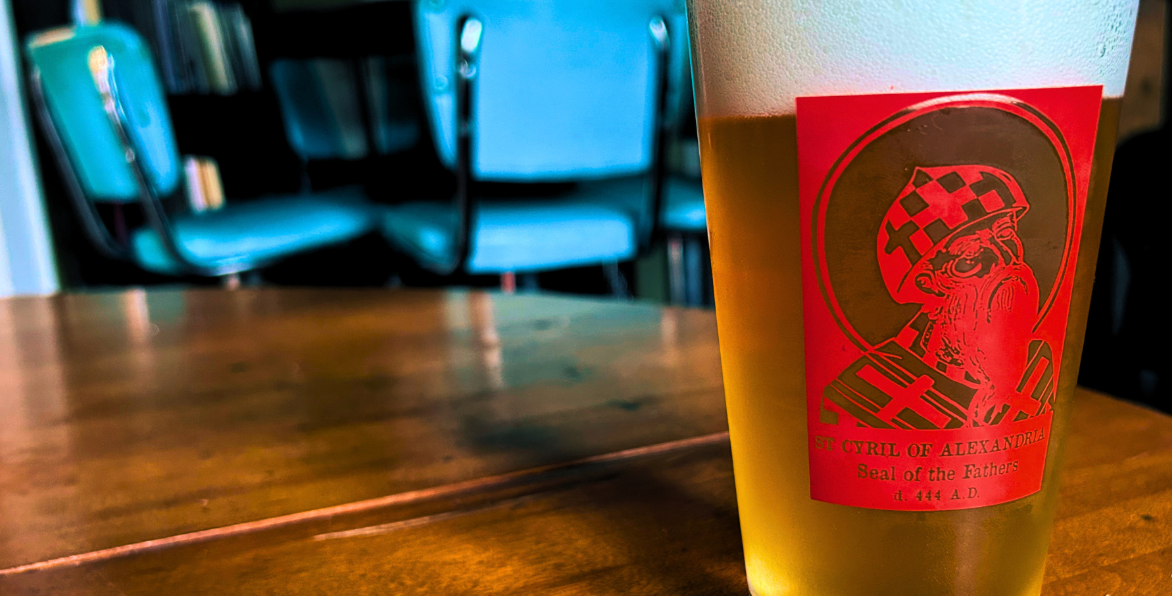
This, then, is the second Inklings toast: Let us drink to the poor labors of our hands in this world under the sun, which are only shadows of what they may yet be in the great Kingdom of God. Let us drink to the Mountains, and to what lies beyond: our True and Final Home.
*Delivered at the sixth annual Inklings Festival Walking Tour in the year of our Lord 2020.
Share this Post on Your Preferred Platform