Mortality: Selections
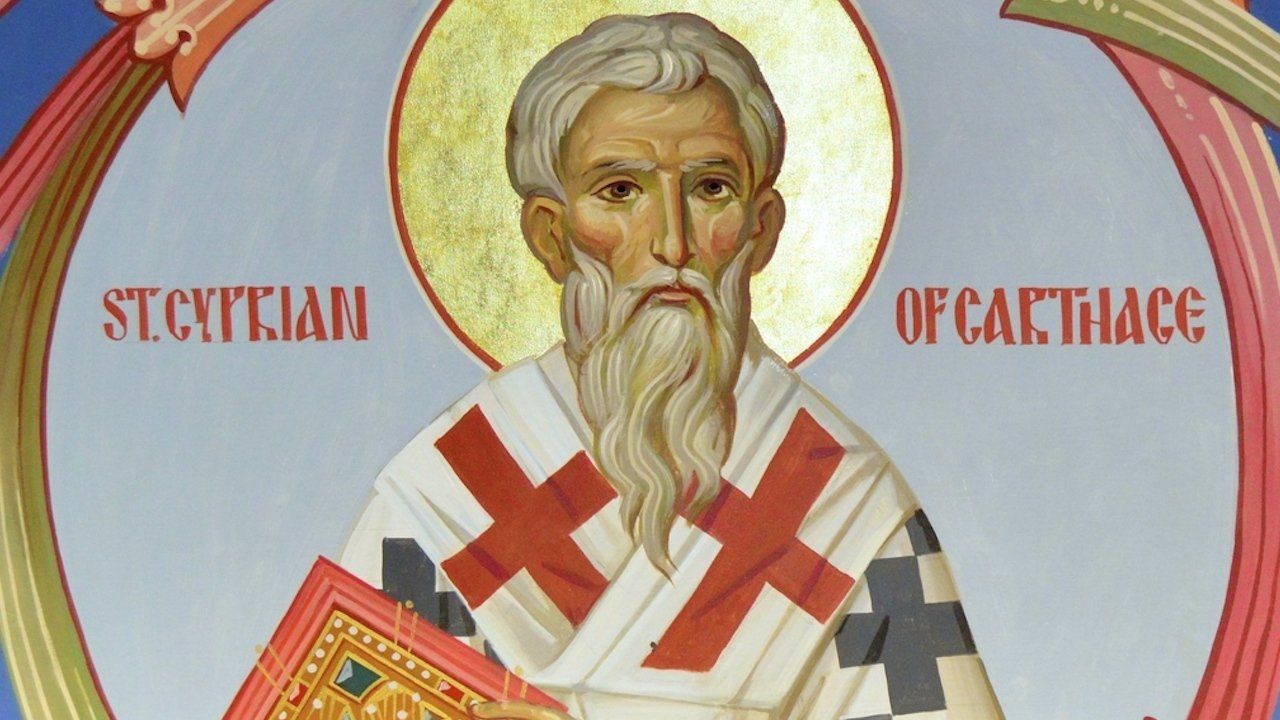
by St Cyprian of Carthage
Feast of St Tikhon, Patriarch of Moscow & Enlightener of North America; Holy Tuesday in WestAnno Domini 2020, April 7
12. The fear of God and faith ought to make you ready for all things. Though it should be the loss of private property, though it should be the constant and violent affliction of the members by wasting diseases, though it should be the mournful and sorrowful tearing away from wife, from children, from departing dear ones, let not such things be stumbling blocks for you, but battles; nor let them weaken or crush the faith of the Christian, but rather let them reveal his valor in the contest, since every injury arising from present evils should be made light of through confidence in the blessings to come. Unless a battle has gone before there cannot be a victory; when a victory has been won in the conflict of battle, then a crown also is given to the victors. The pilot is recognized in the storm, in the battle-line the soldier is tested. Light is the boast when there is no danger; conflict in adversity is the trial of truth. The tree which is firmly held by a deep root is not shaken by onrushing winds, and the ship which has been framed with strong joints is beaten by the waves but is not staved in; and when the threshing floor treads out the harvest the strong hard grain scorn the winds; the empty straw is whirled and carried away by the breeze.
14. That now the bowels loosened into a flux exhaust the strength of the body, that a fever contracted in the very marrow of the bones breaks out into ulcers of the throat, that the intestines are shaken by continual vomiting, that the blood-shot eyes burn, that the feet of some or certain parts of their members are cut away by the infection of diseased putrefaction, that, by a weakness developing through the losses and injuries of the body, either the gait is enfeebled, or the hearing impaired, or the sight blinded, all this contributes to the proof of faith. What greatness of soul it is to fight with the powers of the mind unshaken against so many attacks of devastation and death, what sublimity to stand erect amidst the ruins of the human race and not lie prostrate with those who have no hope in God, and to rejoice rather and embrace the gift of the occasion, which, while we are firmly expressing our faith, and having endured sufferings, are advancing to Christ by the narrow way of Christ, we should receive as the reward of His way and faith, He Himself being our judge! Let him certainly be afraid to die who, not having been reborn of water and the spirit is delivered up to the fires of hell. Let him be afraid to die who is not listed under the cross and passion of Christ. Let him be afraid to die who will pass from this death to a second death. Let him be afraid to die whom, on departing from the world, the eternal flame will torment with everlasting punishments. Let him be afraid to die to whom this is granted by a longer delay, that his tortures and groans meanwhile may be deferred.
16. What a significance, beloved brethren, all this has! How suitable, how necessary it is that this plague and pestilence, which seems horrible and deadly, searches out the justice of each and every one and examines the minds of the human race; whether the well care for the sick, whether relatives dutifully love their kinsmen as they should, whether masters show compassion to their ailing slaves, whether physicians do not desert the afflicted begging their help, whether the violent repress their violence, whether the greedy, even through the fear of death, quench the ever insatiable fire of their raging avarice, whether the proud bend their necks, whether the shameless soften their affrontry, whether the rich, even when their dear ones are perishing and they are about to die without heirs, bestow and give something! Although this mortality has contributed nothing else, it has especially accomplished this for Christians and servants of God, that we have begun gladly to seek martyrdom while we are learning not to fear death. These are trying exercises for us, not deaths; they give to the mind the glory of fortitude; by contempt of death they prepare for the crown.
*From Cyprian's treatise Mortality. Click here to read the entire treatise (coming soon)
Share this Post on Your Preferred Platform
"What is it that has ordered the things of heaven and those of earth, the things which move through the air and those which move in the water; nay, rather the things which proceeded them: heaven and earth and the natures of fire and water? What is it that combined and arranged them...set them into motion and put them on their unceasing and unhindered course?..But who is the architect of these things? Or did not he who made them also bring them into being? We shall certainly not attribute such power to spontaneity." On the Orthodox Faith, Chapter 3 This comes after St. John of Damascus sets out to delineate between the created and the uncreated, a fact which, while at the core of existence, seems for him to be, for this very reason, the simplest to believe. Everything but God is created and, thus, susceptible to change. This means people, but this also means demons, angels, the rest of the created order across the entire cosmos. Everything is vulnerable to unrest. Except for God. If you have ever tried to explain the Holy Trinity to a child for the first time, maybe you have felt as I have the weightier, inexpressible side of God's unchangeability: how do I possibly communicate this essential fact to the person in front of me? (This is usually when my faint stutter starts to pop up again.) I like that here, like St. Patrick reaching for a three-leaf clover, St. John brings us back to earth to better understand the cosmos. Fire and water are no less mysteries than heaven and earth. And yet here we are, cooking and washing, eating and drinking, filled and sustained on what we can neither fully explain nor claim to have created. Only God is unchanging. Vice versa, God is the only constant we need. Maybe the rest is better left unsaid. LUKE TAYLOR GILSTRAP is Vice President of the Board of Directors for Eighth Day Institute. His poems have appeared in Spiritus, Ekstasis (Christianity Today), and Relief Journal, among others. He lives happily in Wichita, Kansas with his wife and three sons.

"Now, one who would speak or hear about God should know beyond any doubt that in what concerns theology and the Incarnation not all things are inexpressible and not all are capable of expression, and neither are all things unknowable nor are they all knowable. That which can be known is one thing, whereas that which can be said is another, just as it is one thing to speak and another to know. Furthermore, many of those things about God which are not clearly perceived cannot be fittingly described, so that we are obliged to express in human terms things which transcend the human order. Thus, for example, in speaking about God we attribute to Him sleep, anger, indifference, hands and feet, and the like." On the Orthodox Faith, Chapter 2 When I was studying Fiction in graduate school, one of the first methods I learned to really situate the reader in the story you were about to tell them was disorientation; if you wanted to ground them in one story, first you had pull the rug out from under their feet. So it's fitting that in the beginning of St. John Damascene's On the Orthodox Faith, before rebuilding our foundation, he first puts us squarely in limbo, seesawing back and forth between certainty and uncertainty. To paraphrase, there is no doubt (certainty) that about God some things can be expressed...but not all things (uncertainty). Some things about God are truly knowable (certainty), but some are unknowable (uncertainty). Oh, and while we're speaking about God (certainty), let's admit there's a gap, too, between what we say and what we know (uncertainty). My favorite line in this spiraling excerpt, "...it is one thing to speak, and another to know," takes me back to the final lines in Wendell Berry's poem, "How to Be a Poet," which he wrote primarily as a reminder to himself: Accept what comes from silence. Make the best you can of it. Of the little words that come out of the silence, like prayers prayed back to the one who prays, make a poem that does not disturb the silence from which it came. Wherever your preferences fall on the cataphatic or apophatic spectrum of theology (whether you lean more toward what we can say about God or what we cannot), Berry's poem, I think, would nod along with St. John: before we say too much, let our words be preserved by the silence from which they came. I'm thinking of the silence, that filling, restorative quiet I feel when I step into a cathedral or in some of my favorite moments with my kids in the early hours. Even before praying, can we hear the One already praying in us? Let's start there. LUKE TAYLOR GILSTRAP is Vice President of the Board of Directors for Eighth Day Institute. His poems have appeared in Spiritus, Ekstasis (Christianity Today), and Relief Journal, among others. He lives happily in Wichita, Kansas with his wife and three sons.
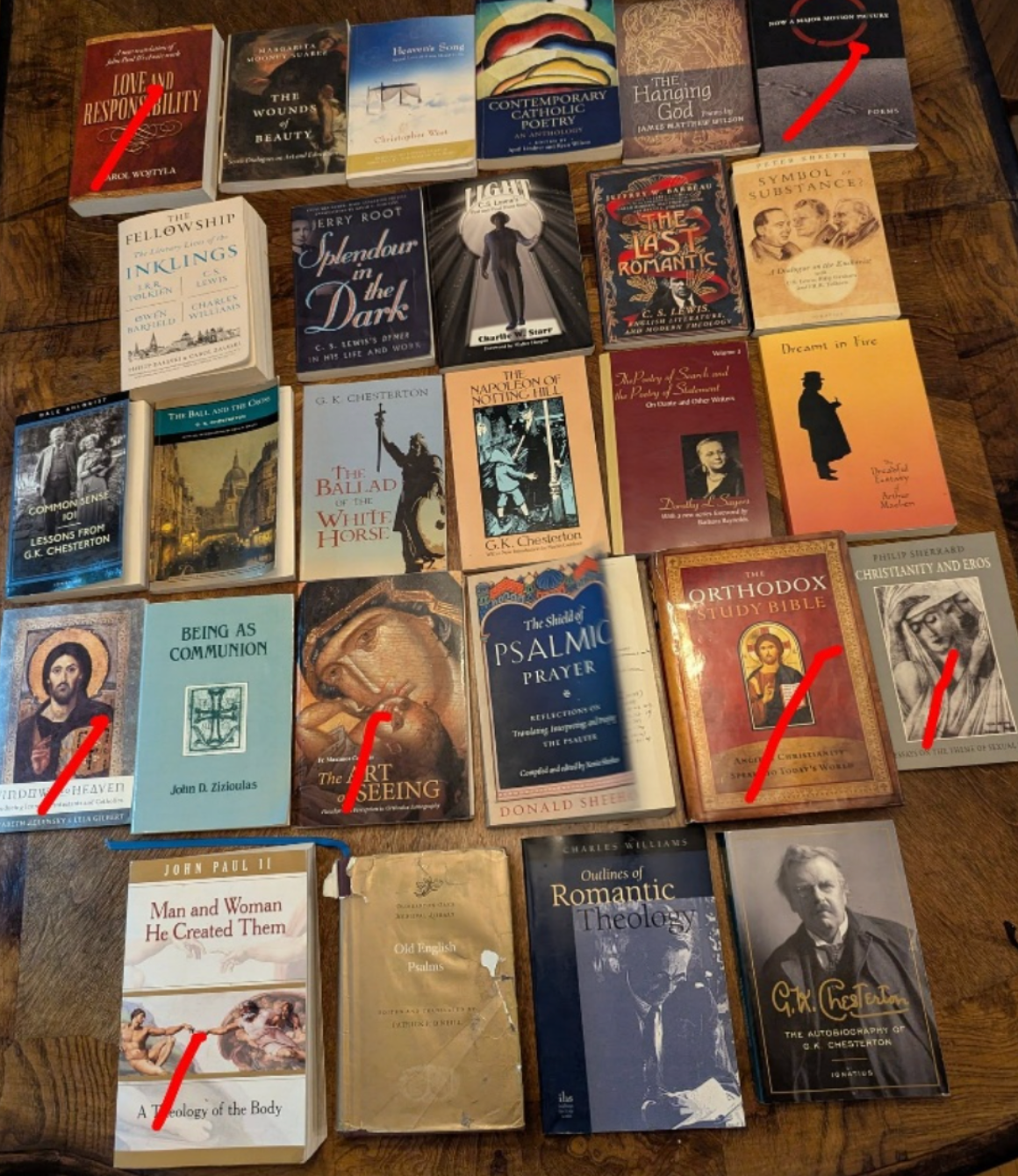
Late-Night Bookstores and Spiritual Reading
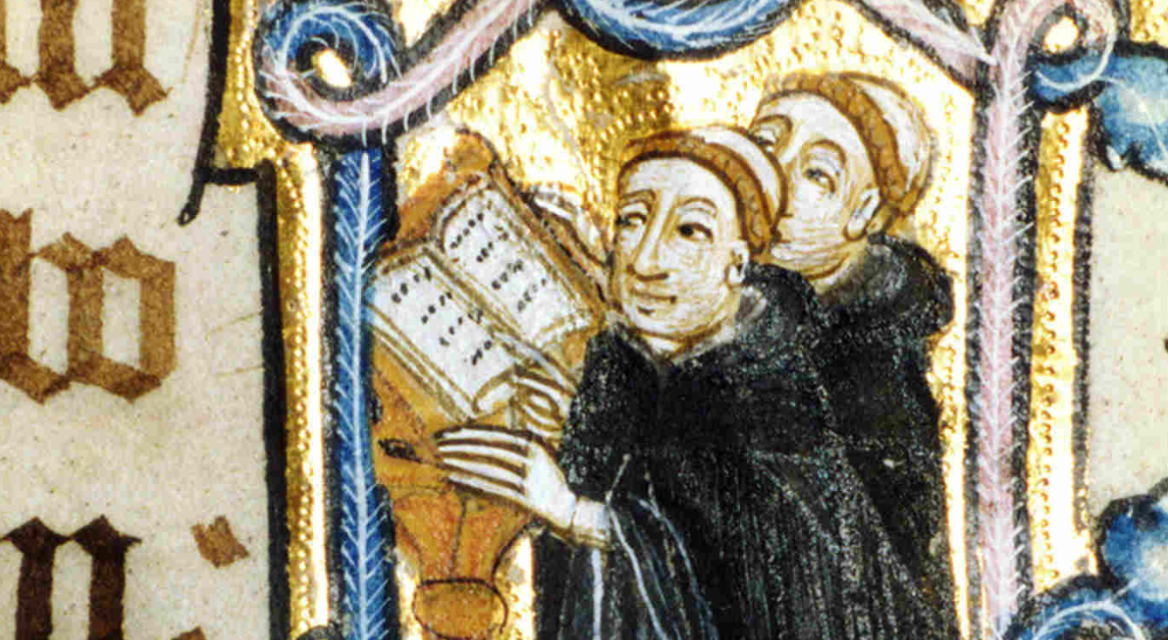
On St. Benedict and the Making of Vows

The Pursuit of Truth in the Age of AI

On the Theology of Raising Chickens
G.K. Chesterton and Raising Small Children
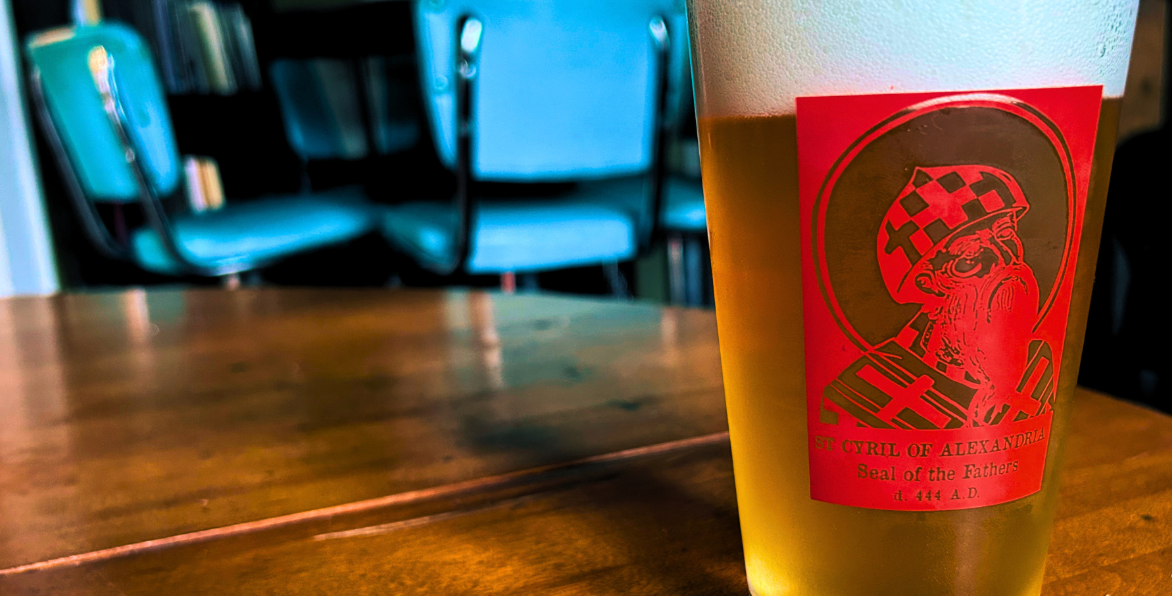
"Seal of the Fathers"
In Memory of Warren Farha, 1955-2026
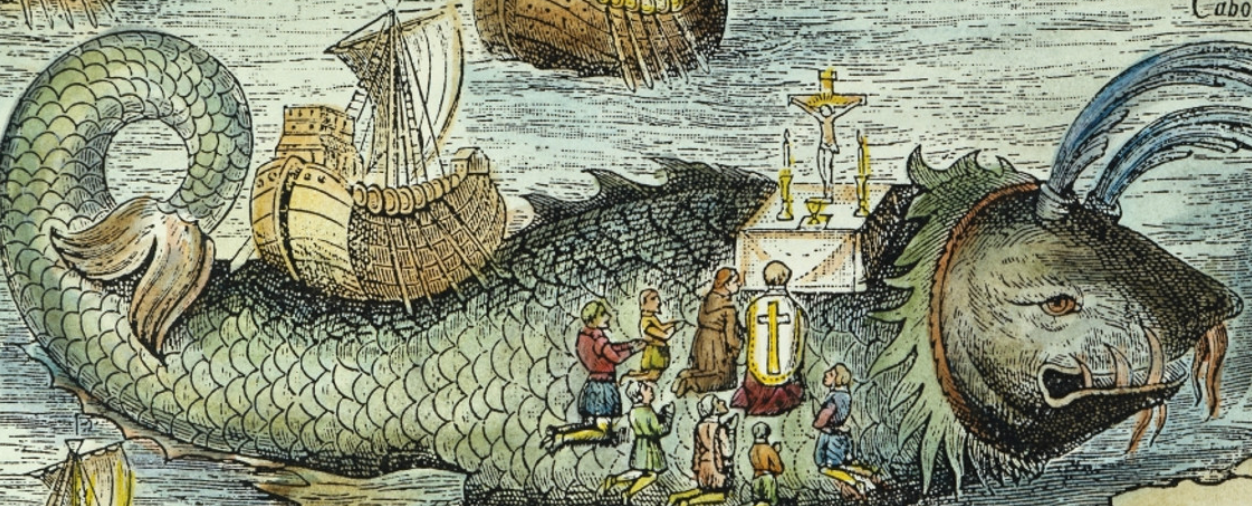
An Ode to St. Brendan the Voyager