Friendship as a Source of Hope
by Erin Doom
Feast of St Paul of Thebes
Anno Domini 2021, January 15
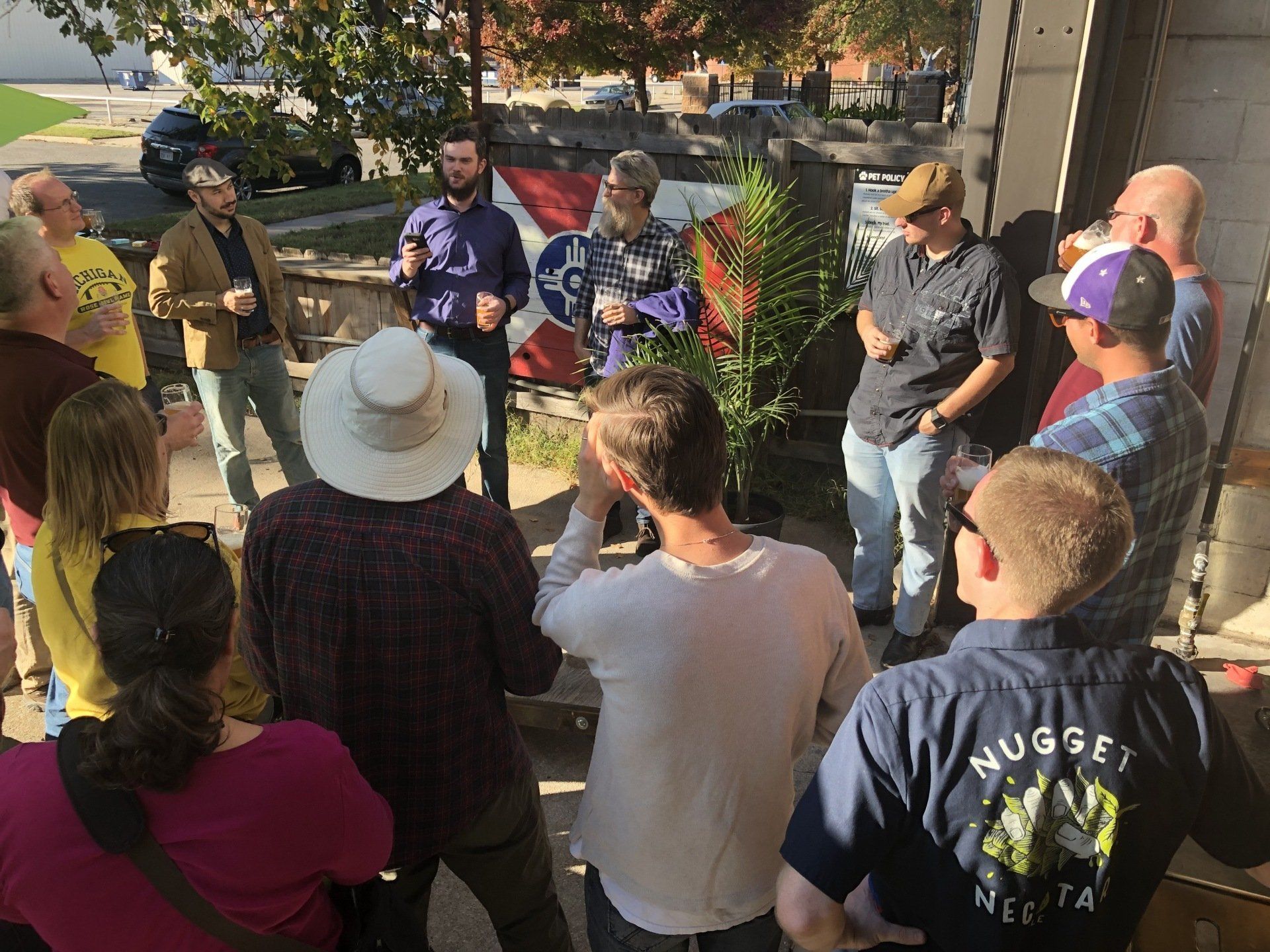
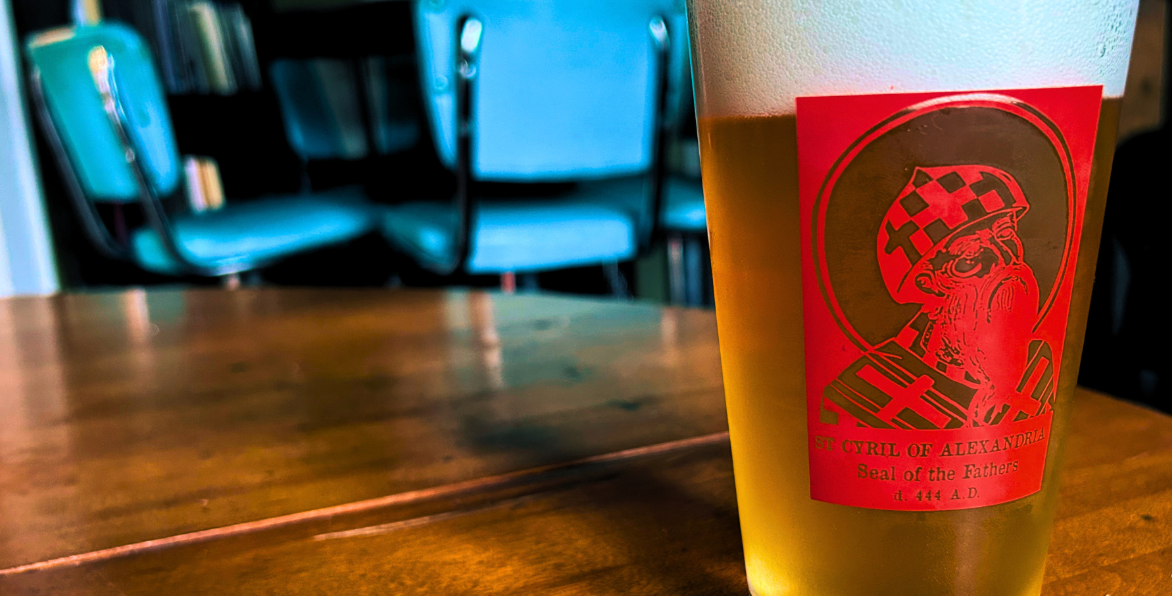
Eighth Day Friends Toasting the Inklings
For the last ten years, a community of friends would have already gathered at the bookstore last evening for a Symposium welcome reception. And in a few hours, the Symposium would officially begin with that same community of friends gathering for the next two days to contemplate “Hope in the Age of Anxiety.” As sad as it makes me to not be able to come together in person this year, the friendships that have been forged over the last ten symposia (and at other EDI events) are a significant source of hope for us all. For, as Aelred of Rievaulx puts it in his work Spiritual Friendship (see below), our friendships “begin in Christ, [are] maintained in Christ, and have [their] end and value referred to Christ.” And as Fr Georges Florovsky once insisted in a homily, “It is only in Christ and through Him that we have any title for hope.” With that in mind, today’s issue of Microsynaxis focuses on friendship, not only as a source of cultural renewal, but also as a source of hope in our age of anxiety.
But before digging in, I’ve made some huge progress in organizing a video library on the Symposium theme. We have 15 presentations in the works by Fr. Calinic Berger, Bradley Birzer, Erin Doom, Peter Leithart, Shailesh Mark, Louis Markos, Fr. Gabriel Rochelle, Richard Rohlin, Fr. John Strickland, Joshua Sturgill, Matthew Umbarger, Jessica Hooten Wilson, and Ralph Wood. Click here to see the full list of presentations.
On January 29, we’ll send that full library of videos to:
- Anybody who donates $50 or more here; or
- Anybody who becomes a new member at any level here; or
- All the new members who recently joined during the membership campaign...76 of you so far! We're still shooting for 100.
In February, we’ll post three of the fifteen video presentations on the members’ digital library page. So if you want the full Symposium video library, donate $50 or more OR become a member today.
Now dig in...
1. Bible & Fathers: “What Is Friendship” by Aelred of Rievaulx
Proverbs 17:17: A friend loves at all times, and a brother is born for adversity.
Sirach 6:16: A faithful friend is the medicine of life and immortality: and they that fear the Lord, shall find Him.
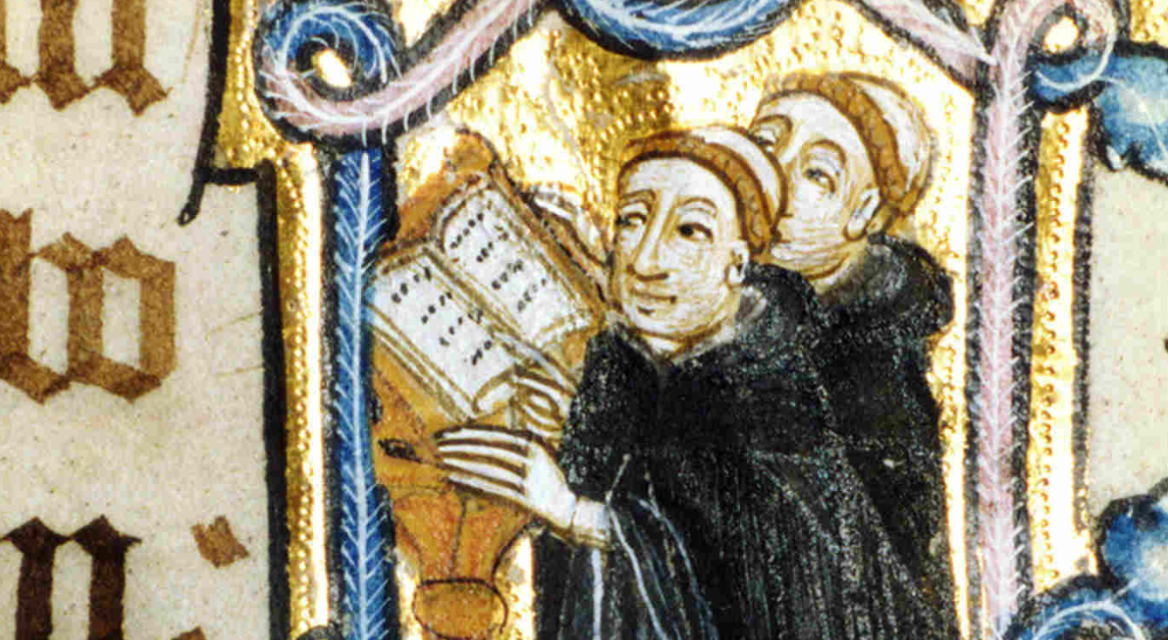
Aelred was the abbot of the great English Cistercian abbey of Rievaulx from A.D. 1147-1167. Spiritual Friendship, the best known of his thirteen surviving works, is a three-book Ciceronian dialogue in which Aelred defines friendship as sacramental, beginning in creation, linking friends to Christ in this life, and culminating in friendship with God in beatitude. Here’s a glimpse into the early part of the dialogue between a monk and the abbot Aelred:
Cicero’s volume On Friendship is not too unknown to me, since at one time I took the greatest delight in it. But since the day that some drops of sweetness began to flow my way from the honeycombs of holy Scripture, and when the mellifluous name of Christ claimed my affection for itself, whatever I read or hear, however subtly argued, has neither flavor nor light without the salt of heavenly letters and the seasoning of that most sweet name.
Therefore I would like such propositions as are in harmony with reason, or others whose usefulness your explanations reveals, to be proved to me by the authority of Scripture. Similarly I want to be more fully taught about the right kind of friendship between us, which should begin in Christ, be maintained according to Christ, and have its end and value referred to Christ. It is obvious indeed that Cicero was ignorant of the virtue of true friendship, since he was completely ignorant of Christ, who is the beginning and end of friendship.
Click here to read the Prologue and more of Book One. And then purchase a copy from Eighth Day Books.
2. Books & Culture: Spiritual Friendship by Aelred of Rievaulx
Here’s a brief Eighth Day review of the justly famous text you tasted above.
3. Essay: “The Trinity: Friendship’s Alpha and Omega” by Joseph Pearce
Back in 2018, at the 8th annual Symposium, we contemplated “Friendship in a Fractured Age.” Joseph Pearce was one of our plenary speakers and prior to the event he offered us a written reflection on friendship. Here’s how he opened:
What is friendship? Why is it important and why is it worth cultivating? These axiomatic questions form the heart of the Eighth Day Institute’s Symposium, of which I am honored to be a part. They also form a significant part of the thought and writing of C. S. Lewis and G. K. Chesterton.
You’ll have to read the full piece to see what Lewis and Chesterton say. But in the meantime, Pearce here provides a summary of their thought:
The words of Lewis and Chesterton point to the fundamental need we all have for friendship, the origins of which go right back to the beginning of history, to the first man in the first Garden who desired the first friend. Eve was necessary for Adam precisely because she was his alter ego. She does not merely reveal to him that he is not alone in the world; nor does she merely bridge the abyss between isolation and having one ally. More important than these two fundamental necessities of human life, she shows Adam that he is not all that there is. It’s not all about him. His egocentrism is challenged by her existence. She is his alter ego because she literally alters his ego, turning him out from himself so that he can see the beauty of the other, of that which is beyond himself. She allows him to cease being selfish and to embrace the selflessness that is the heart and dynamic of love.
Pearce concludes by turning to the Trinity as the source and telos of all friendship. Read the whole piece here.
In next week’s issue of Synaxis for Eighth Day Members:
- Liturgy: Feast of St. Maximus the Confessor
- Fathers: St Macarius the Great of Egypt
- Poetry: "Canto XXV on Hope" by Dante
- Books & Culture: The Feast of Friendship by Fr. Paul O’Callaghan
- Essays et al: “The Obscurity of Hope and Despair” by Josef Pieper
- Essays et al: New Archive in The Moot: “The Christian Hope” by Kathleen Bliss
- Essays et al: New Florovsky Archive: “On Starets Silouan in The Undistorted Image” by Fr. Georges Florovsky
If you’ve been encouraged, challenged, enlightened, or found any value whatsoever in my labor of love through Microsynaxis (or any of the other many EDI endeavors), please do consider supporting the work of renewing culture by joining the community of Eighth Day Members. Help us reach our goal of 100 members or donate $50 or more and we'll send you that video library of presentations on "Hope in the Age of Anxiety."
Share this Post on Your Preferred Platform