Death Must Find Us Ready

by Elder Ephraim of Arizona


Synaxis of All Saints of Alaska

Anno Domini 2020, September 24
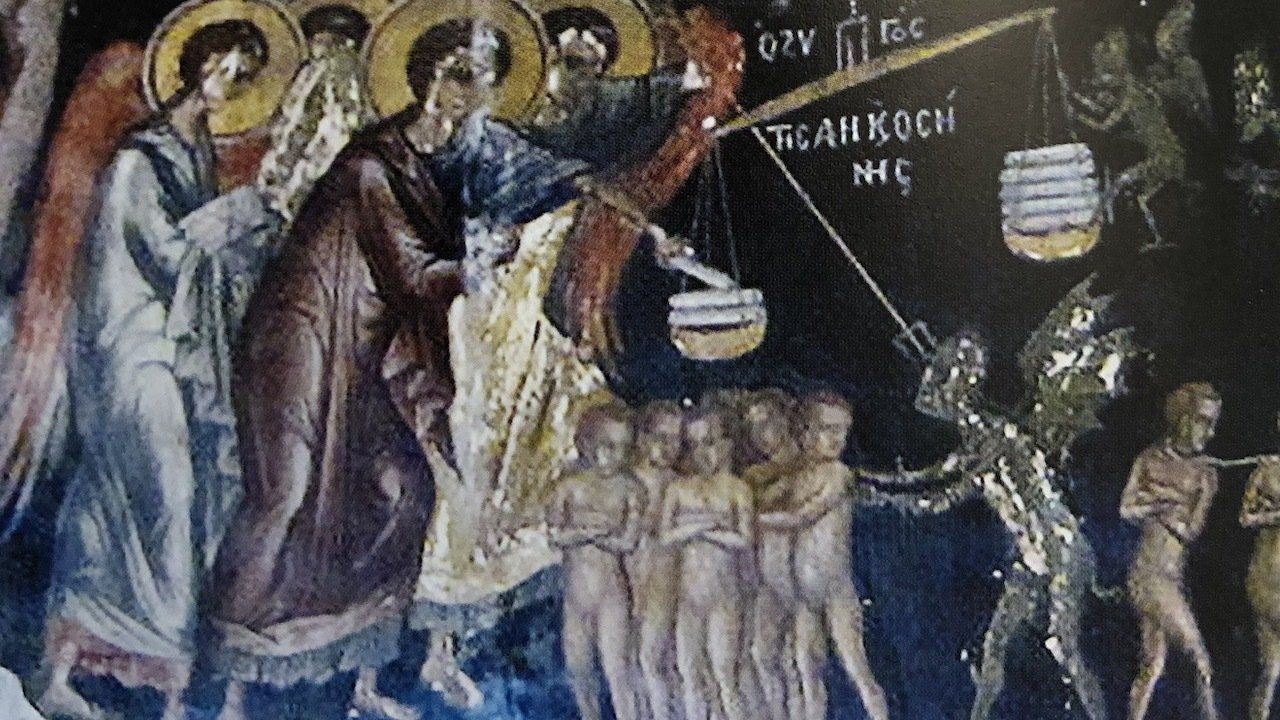

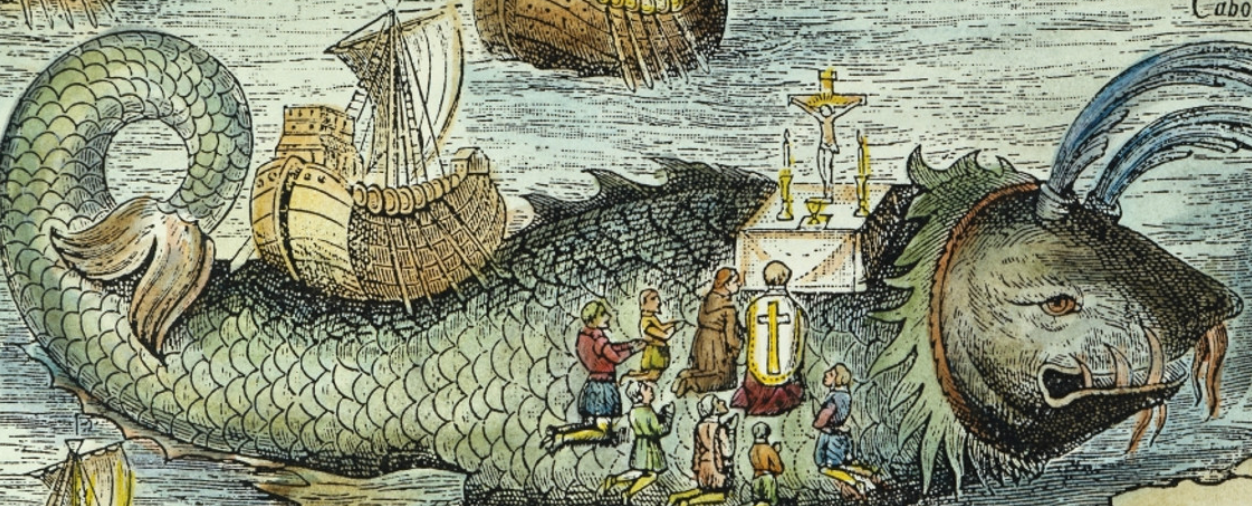
Last Judgment - 16th century at St. Nikolaos Anapafsas Monastery, Meteora, Greece


“For if we would judge ourselves, we should not be judged.” ~1 Corinthians 11:31


After death, eternity follows. Every person at a certain moment will abandon his body on the earth and proceed with his soul to eternity, to the life that has no end. Man’s soul will remain without the body until the Second Coming of Christ, at which time the bodies of both the righteous and the unrighteous will be resurrected in order to be judged. It is a fact that after death, man’s soul is separated from the body and lives in a unique state.


For this reason, we should—and I first—seriously take into account this reality and regulate our life accordingly. Let us correct our lives in order to avoid eternal Hell and instead acquire (through God’s mercy and compassion) the Kingdom of Heaven. We must take a long, hard look at our salvation and realize that it is not a game; it is not something we can ignore; it is not a joke.


Let us stare our salvation straight in the eyes, no matter how alarming and disconcerting it is. Let us correct our life. Let us thank God from the depth of our heart, and let us offer Him praise and doxology because we are still alive and we can attend the matters related to our soul and prepare ourselves. We do not know, as we see in practice, the day, the hour, or the moment of our departure from this world. Let us do our prayer rule. Let us not neglect our vigil. Let us not be sluggish when it comes to attending church and the Liturgy. Let us love one another, because love is god, and “he who abides in love, abides in God and God in him” (1 Jn. 4:16). Who loves God? He who keeps His commandments. The first and foremost commandment is to love God; the second, to love our neighbor and brother.


Let us condemn and humble ourselves before God. Let us humble ourselves before our Crucified Christ and beseech Him for forgiveness. Let us correct ourselves so that our petition for His Divine Blood to wash and cleanse us, and for His death to become life for us, may be fulfilled. We must thank God from the depth of our heart for keeping us alive until now and granting us time to correct ourselves.


We leave from this world and we go to the other world. The afflictions of this world, because they are temporary and short-lived, are insignificant compared to the reward for these pains which is given in the other world. However, they frequently appear to us as very heavy, unbearable, and never-ending. This reveals our human weakness and also the work of the devil, who presents things to. us in a different way to surely lead us to despair and the hopeless thought that the torments will never end. But they do end, and often in a moment of time. And immediately, with the closing of our eyes, in front of us open the theoria, the reality of the spiritual world. While before we were seeing people, immediately now, in a moment, we see spirits either bright or dark, either angels or demons.


As soon as the eyes of the flesh close, the eyes of the soul open instantly and the person sees those things that he could not see previously with the eyes of the body. Death is the bridge that transports us from this world to the other.


We must undertake the right struggle, the correct confronting of this reality that we are here temporarily and we are departing to the other world for eternity. Here we perceive Christ with the feeling of our soul. There, if the mercy of God saves us, we will see Him face to Face.


The soul that struggles, that persists, that believes with unshakable faith in the existence of God, in the other life, in the days of grace, feels that she is armed with the weapons of the light, of grace, of divine eros. She feels as if she is standing before the throne of God ready to do battle against those who oppose Him Whom she worships and champions. Sometimes she also feels dressed as the bride of the Heavenly Bridegroom, adorned with the beauty of Heaven and possessed of the love and the yearning for when she will be united eternally with the Heavenly Bridegroom.


May our good God enlighten each one of us and give us the strength to settle and arrange any outstanding debts. Let us exert ourselves; let us not be negligent. The present life is not a time for negligence and procrastination.


No one is sinless except our Holy God. No holy person left the earth without some small sin; however, this did not impede their salvation and holiness. Incidental mistakes do not detract from a person’s holiness. This is why only God is sinless. The great Fathers advise us to depart having committed as few sins as possible. Insignificant sins do not hinder our salvation. For when the scale pan is full of virtue, it will tip the scale, and these small sins will be tossed into the air.


May God, through His infinite mercy, permit all of us to be found together in the joy and bliss of His eternal Kingdom.


*Epilogue to The Departure of the Soul according to the Teaching of the Orthodox Church: A Patristic Anthology (Florence, AZ: St. Anthony’s Greek Orthodox Monastery, 2017), pp. 987-989. This massive anthology (1111 pages) is available for purchase at Eighth Day Books.

Share this Post on Your Preferred Platform
By Luke Taylor Gilstrap July 31, 2026
"What is it that has ordered the things of heaven and those of earth, the things which move through the air and those which move in the water; nay, rather the things which proceeded them: heaven and earth and the natures of fire and water? What is it that combined and arranged them...set them into motion and put them on their unceasing and unhindered course?..But who is the architect of these things? Or did not he who made them also bring them into being? We shall certainly not attribute such power to spontaneity." On the Orthodox Faith, Chapter 3 This comes after St. John of Damascus sets out to delineate between the created and the uncreated, a fact which, while at the core of existence, seems for him to be, for this very reason, the simplest to believe. Everything but God is created and, thus, susceptible to change. This means people, but this also means demons, angels, the rest of the created order across the entire cosmos. Everything is vulnerable to unrest. Except for God. If you have ever tried to explain the Holy Trinity to a child for the first time, maybe you have felt as I have the weightier, inexpressible side of God's unchangeability: how do I possibly communicate this essential fact to the person in front of me? (This is usually when my faint stutter starts to pop up again.) I like that here, like St. Patrick reaching for a three-leaf clover, St. John brings us back to earth to better understand the cosmos. Fire and water are no less mysteries than heaven and earth. And yet here we are, cooking and washing, eating and drinking, filled and sustained on what we can neither fully explain nor claim to have created. Only God is unchanging. Vice versa, God is the only constant we need. Maybe the rest is better left unsaid. LUKE TAYLOR GILSTRAP is Vice President of the Board of Directors for Eighth Day Institute. His poems have appeared in Spiritus, Ekstasis (Christianity Today), and Relief Journal, among others. He lives happily in Wichita, Kansas with his wife and three sons.
By Luke Taylor Gilstrap July 24, 2026
"Now, one who would speak or hear about God should know beyond any doubt that in what concerns theology and the Incarnation not all things are inexpressible and not all are capable of expression, and neither are all things unknowable nor are they all knowable. That which can be known is one thing, whereas that which can be said is another, just as it is one thing to speak and another to know. Furthermore, many of those things about God which are not clearly perceived cannot be fittingly described, so that we are obliged to express in human terms things which transcend the human order. Thus, for example, in speaking about God we attribute to Him sleep, anger, indifference, hands and feet, and the like." On the Orthodox Faith, Chapter 2 When I was studying Fiction in graduate school, one of the first methods I learned to really situate the reader in the story you were about to tell them was disorientation; if you wanted to ground them in one story, first you had pull the rug out from under their feet. So it's fitting that in the beginning of St. John Damascene's On the Orthodox Faith, before rebuilding our foundation, he first puts us squarely in limbo, seesawing back and forth between certainty and uncertainty. To paraphrase, there is no doubt (certainty) that about God some things can be expressed...but not all things (uncertainty). Some things about God are truly knowable (certainty), but some are unknowable (uncertainty). Oh, and while we're speaking about God (certainty), let's admit there's a gap, too, between what we say and what we know (uncertainty). My favorite line in this spiraling excerpt, "...it is one thing to speak, and another to know," takes me back to the final lines in Wendell Berry's poem, "How to Be a Poet," which he wrote primarily as a reminder to himself: Accept what comes from silence. Make the best you can of it. Of the little words that come out of the silence, like prayers prayed back to the one who prays, make a poem that does not disturb the silence from which it came. Wherever your preferences fall on the cataphatic or apophatic spectrum of theology (whether you lean more toward what we can say about God or what we cannot), Berry's poem, I think, would nod along with St. John: before we say too much, let our words be preserved by the silence from which they came. I'm thinking of the silence, that filling, restorative quiet I feel when I step into a cathedral or in some of my favorite moments with my kids in the early hours. Even before praying, can we hear the One already praying in us? ​​​​​​​Let's start there. LUKE TAYLOR GILSTRAP is Vice President of the Board of Directors for Eighth Day Institute. His poems have appeared in Spiritus, Ekstasis (Christianity Today), and Relief Journal, among others. He lives happily in Wichita, Kansas with his wife and three sons.
By Mark C. Watney July 20, 2026
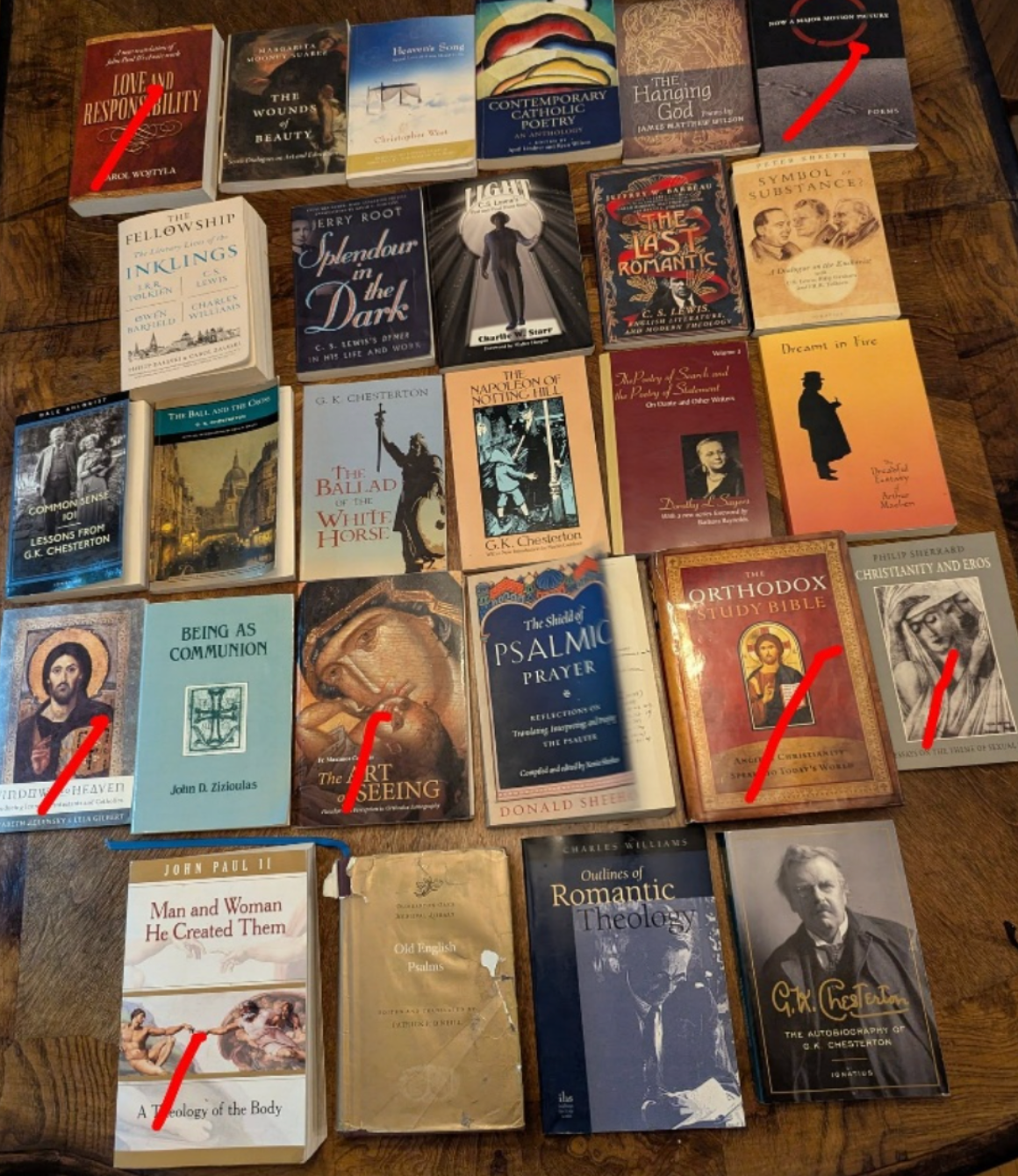
Late-Night Bookstores and Spiritual Reading
By Sarah Orner July 20, 2026
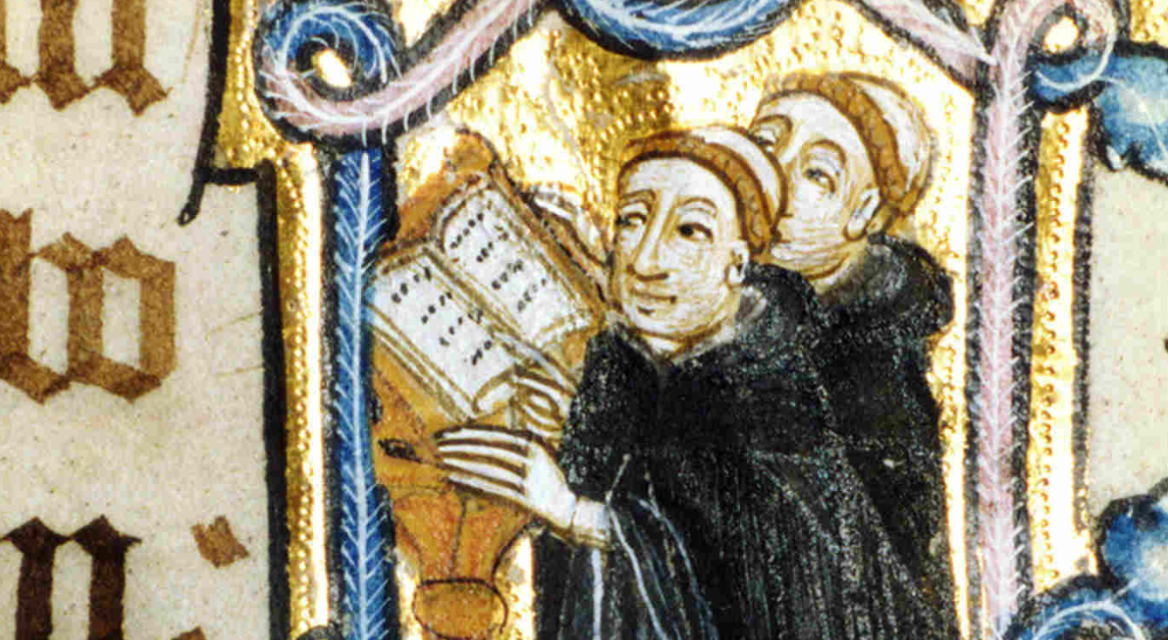
On St. Benedict and the Making of Vows
By Luke Taylor Gilstrap July 20, 2026
The Pursuit of Truth in the Age of AI
By Michael Simmon July 20, 2026
On the Theology of Raising Chickens
By Luke Taylor Gilstrap July 20, 2026
G.K. Chesterton and Raising Small Children
By Fr. Mark Lovett June 9, 2026
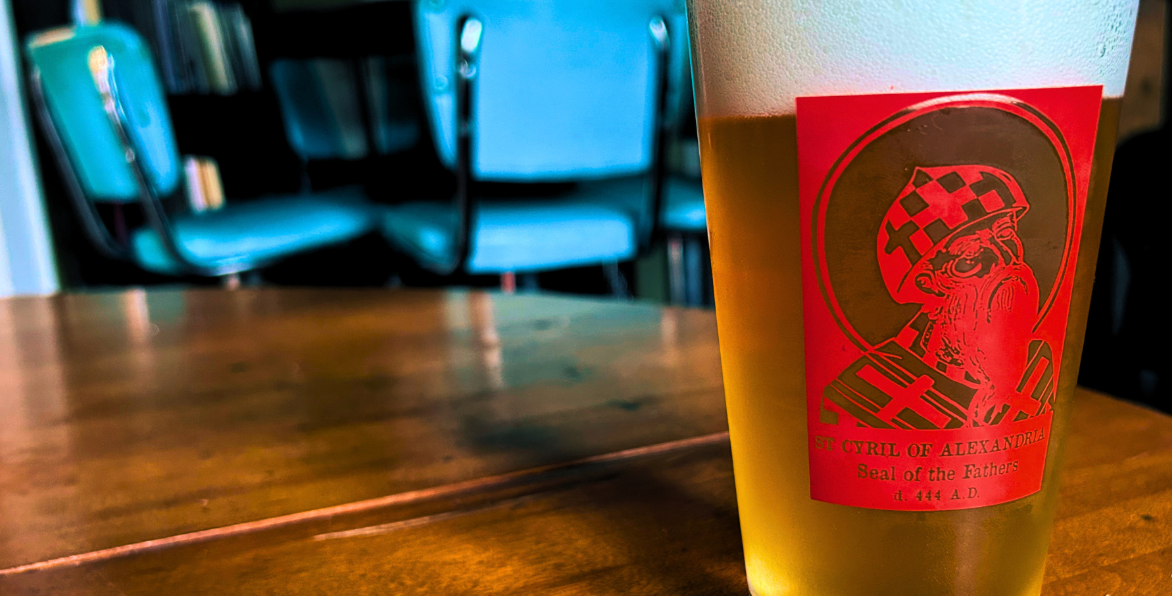
"Seal of the Fathers"
By Luke Taylor Gilstrap June 9, 2026
In Memory of Warren Farha, 1955-2026
By Jeremy Wagner May 15, 2026
An Ode to St. Brendan the Voyager
More Posts