An Eighth Day Institute Backyard Ultra
by Erin Doom
Feast of St Clement of Rome and Peter of Alexandria
Anno Domini 2021, November 24
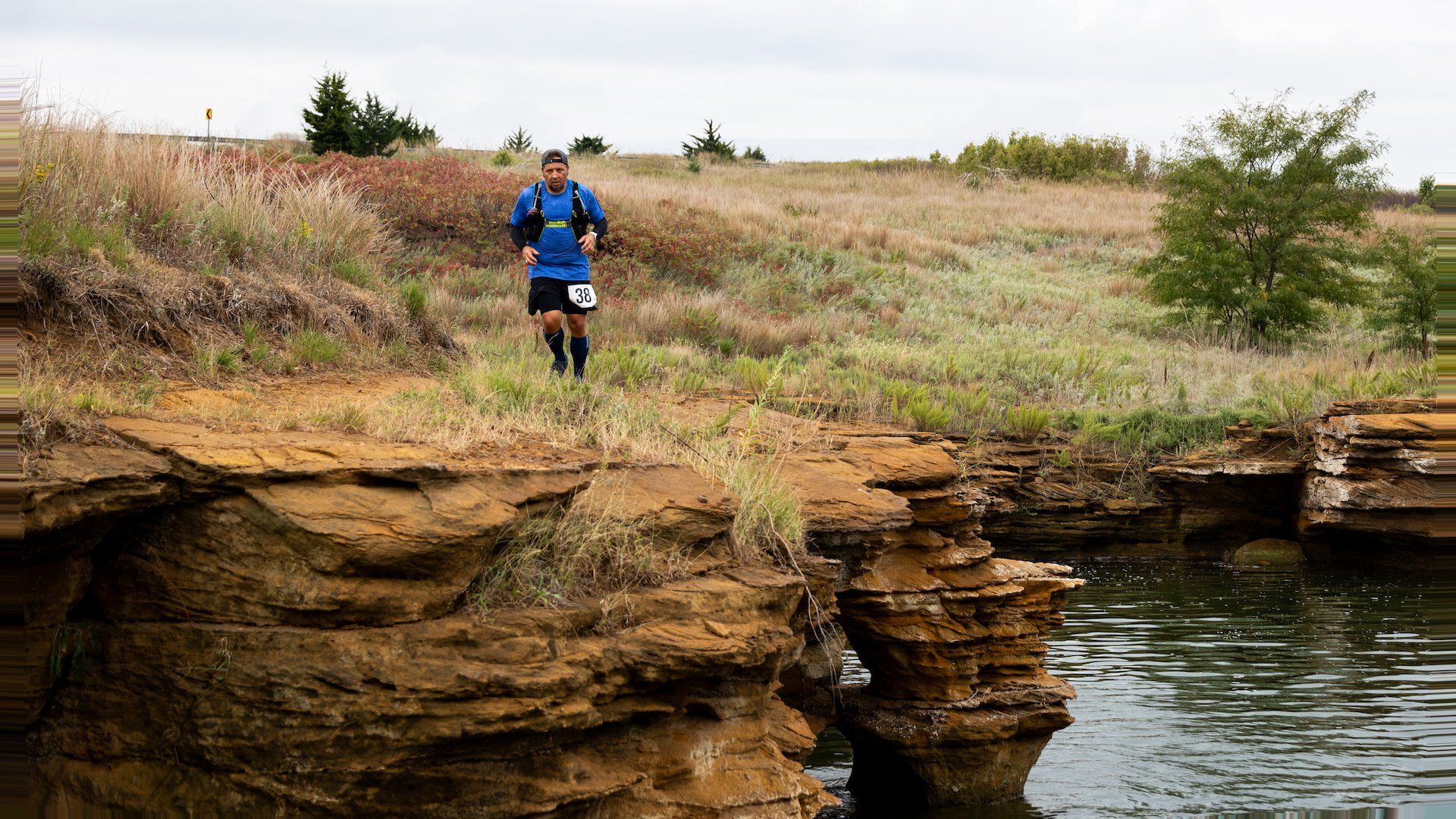
As attacks on Western Civilization intensify daily, Eighth Day Institute stands firmly on the rock of Christ, His Church, and its ancient traditions. The work and mission of Eighth Day Institute is needed more than ever. We boldly uphold our mission to “bring all Christians together for a dialogue of love and truth by returning to the common heritage of ancient Christianity and the Western tradition through events and publications to overcome divisions and renew culture through faith and learning.” By sponsoring the 24 laps/hours (for total of 88 miles) Director Doom will run, you’ll be affirming that mission and supporting the work of Eighth Day Institute.
EVENT DETAILS
On Nov 29, I’m going to start running in my home’s “backyard,” i.e. the College Hill neighborhood. I’ll depart from and return to my home for each loop.
- I’m going to complete a 3.67 mile loop every hour on the hour for at least 24 hours
- I’m accepting pledges for miles completed but I must complete the loop within the hour for it to count. So, if I complete 12 loops but fail to return in time for the 13th loop, the total miles will be 44 (12 x 3.67 = 44miles).
- My goal is to do 24 loops which, yes, that means 24 hours and 88 miles. It took me 20 hours to run 62 miles in my first 100k seven weeks ago. You'll soon be able to read about that experience here.
- You can also make a flat donation if that’s your preference. I appreciate all forms of pledge support for this campaign that will support Eighth Day Institute’s important work of renewing culture through faith and learning.
My fundraising goal is $20k but I’m hopeful we can beat that. Obviously the more people pledge the less I theoretically have to run but I’m going after at least 88 miles no matter what.
Q&A
Q: I want to help but am not sure how much to pledge.
A: Start with a dollar. If I pull this off then you’ve donated $88 at the most and, if you’re not an EDI member, EDI will throw in a Friend membership. Having never done more than 62 miles and knowing what 62 miles feels like, it’s going to be a HUGE SACRIFICIAL effort to hit the goal. Pledging less than a dollar per mile is also fine…every penny counts! You can make a pledge or tax-deductible donation here.
Q: Can I pledge more than a dollar?
A: Of course! Hopefully you understand the format and what each dollar pledged can mean. I’m really hoping and praying for a solid number of pledges in the $5 or more range. $5 for 88 miles is $440 (and an Eighth Day Patron membership for new members). $10 and 88 miles is $880 and a Pillar membership for new members.
Q: What else can I do to help?
A: Three things:
- Send and share this page or the pledge / race site page (https://pledgeit.org/running-for-renewal) to friends who you think might be interested in supporting Eighth Day Institute’s mission “to bring all Christians together for a dialogue of love and truth by returning to the common heritage of ancient Christianity and the Wester tradition through events and publications to overcome divisions and renew culture through faith and learning.” I’ve set a modest goal of 88 pledges to keep the theme of 88 pledges for 88 miles. But I’m really hoping to beat that pledge count.
- Join me for a loop. I’d love to have your company. Sign up for a lap (or laps) here and email me at erin@eighthdayinstitute.org so I can send you my address.
- Stop by my house any time and cheer me on. I’ll be arriving from each loop around 10-15 minutes before each hour. I’ll even supply beer to encourage you to join me! Email me at erin@eighthdayinstitute.org and I’ll send you my address.
Q: What will I get in return?
A: If you pledge $88 or more, a pound of Eighth Day Winter blend coffee from Local Roasters (our neighbors in Wichita). And if you’re not already an Eighth Day Member, $88 gets you a discounted Friend membership, $440 gets you a discounted Patron membership, and $880 gets you a discounted Pillar membership. You can check membership perks out here.
Q: Realistically, how many miles will you run?
A: I don’t know. 62 miles was REALLY hard to pull off in 20 hours. While it was on rolling hills, it was also on dirt trails, which are much easier on the feet than the roads in my neighborhood (but I will have three hills in my loop). I’m also fighting some new knee pain. So the only thing I know is that just about every lap is probably going to hurt. And everything over 25 miles is going to be an exercise in sheer mental toughness to pull off “one more loop.” I'm sacrificing my body...will you sacrifice your pocketbook?
Q: Are you going to sleep?
A: NO! I’m hoping to have some company both during the loops and during my 5-15 minute breaks between laps at my front-yard “aid station.” I plan on being on my own for most of the time but company will not only help pass the time but will also keep me motivated to keep pressing on. You can sign up to run a lap (or some laps) with me here. Since I’m starting each loop on the hour every hour, I’ll have some time to refuel, change gear, rest my legs, etc.
Q: Where can I get updates so I know how much I’m donating?
A: There will be updates on the EDI Facebook page throughout the days of Nov 29-30 (not so much during the night). Once I’m done I’ll post a final update and will include that update in our series of Giving Tuesday emails.
Q: What happens after I make my pledge?
A: You will receive a confirmation email from “Pledge It” which states a final invoice will be shared after the conclusion of the event and after the miles completed have been submitted. You can then follow along our campaign and get periodic updates.
If you’ve read this far, I’m DEEPLY GRATEFUL for your interest. I’ll be even more grateful if you’ll support Eighth Day Institute by making a pledge, sharing this campaign with friends, and contributing to our goal!
Share this Post on Your Preferred Platform